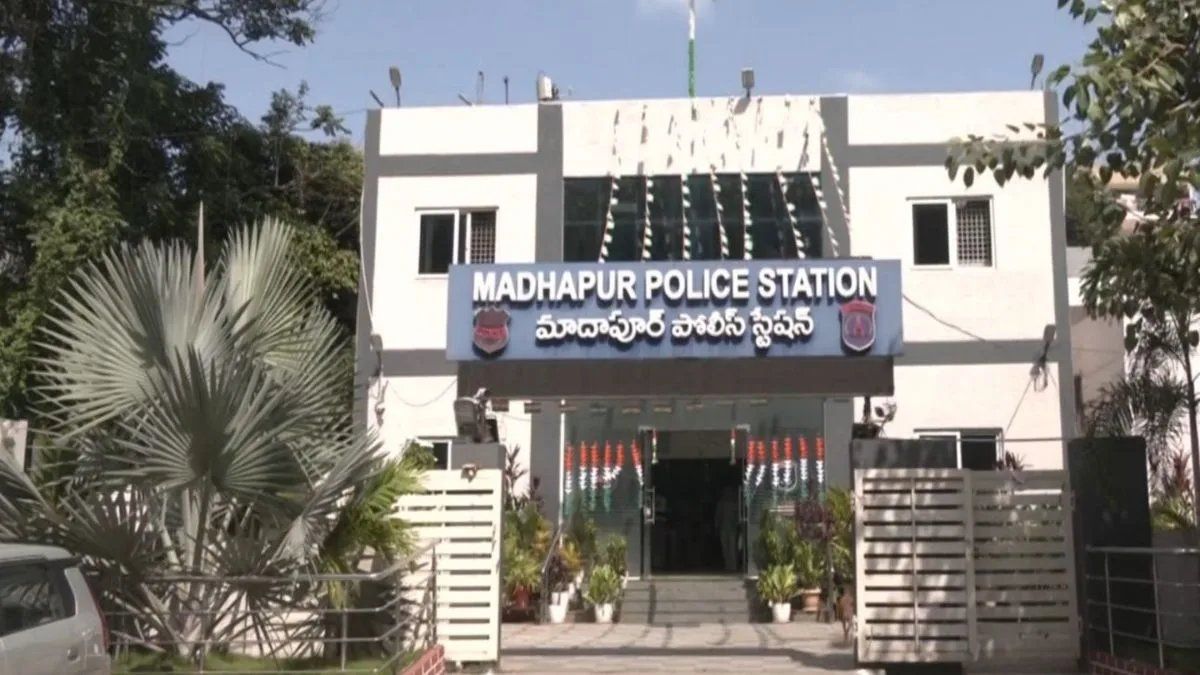
The son of Jana Sena Party MP Lingamaneni Ramesh has received station bail in connection with a fatal traffic incident at Hyderabad's Inorbit Mall, where an Aston Martin allegedly driven by him struck and killed a 26-year-old woman. The tragic collision occurred on August 16 around 3 p.m. in the Madhapur area, claiming the life of Bharati Mukhi, who was employed at a Lifestyle store within the mall complex.
Bharati was returning from a nearby food collection errand with a colleague when the high-speed vehicle allegedly driven recklessly struck her as she crossed the road. She sustained severe head injuries and was rushed to Apollo Hospital in Jubilee Hills, where she was pronounced dead. The circumstances surrounding the crash—described by police as involving excessive speed and negligent driving—have brought scrutiny to the initial investigative response and the subsequent granting of bail to the accused.
Lingamaneni Sanjush, identified as the 21-year-old driver, was apprehended on the same day of the incident. As part of standard investigative protocols, he underwent sobriety and drug testing, with blood samples subsequently forwarded to the Forensic Science Laboratory for comprehensive examination. Police have formally registered a case under Section 106(1) of the Bharatiya Nyaya Sanhita, which pertains to causing death through rash or negligent conduct. The vehicle involved in the collision has been seized as evidence.
Beyond the immediate legal proceedings, Sanjush has been served a notice under Section 35(3) of the Bharatiya Nagarik Suraksha Sanhita, a provision commonly used during traffic-related investigations. The Madhapur police confirmed the procedural steps taken, including the notice service and subsequent station bail authorization, as part of their ongoing investigation into the circumstances of the fatality.
The incident has rapidly evolved into a political flashpoint, with opposition parties questioning both the investigative transparency and the speed of bail proceedings. YSRCP national spokesperson Karthik Yellapragada has alleged that authorities deliberately suppressed information about the case, noting that five days elapsed following the incident's registration before substantive public discussion or official statements emerged. Yellapragada's allegations extend beyond mere investigative concerns, suggesting coordination between state administration and ruling coalition partners to minimize scrutiny of the case.
Yellapragada specifically referenced Telangana Chief Minister Revanth Reddy and alleged an understanding with TDP leader Chandrababu Naidu, implying that political alignments may have influenced the handling of the fatal incident. The spokesperson demanded immediate justice and called attention to what he characterized as differential treatment being applied depending on the social status or political connections of those involved. Such accusations, while unsubstantiated by independent verification, underscore the broader perception problem that high-profile traffic fatalities involving politically connected individuals often generate across India.
The fatal crash raises questions about accountability and equal application of law in India's traffic safety framework. While the investigative process appears to have followed procedural requirements—including testing, sample collection, and case registration—the rapid grant of bail has invited scrutiny regarding whether individuals from privileged backgrounds receive expedited processing compared to ordinary citizens facing similar charges. The distinction between procedural compliance and substantive justice remains contested in public discourse surrounding such incidents.
For Malaysian observers, the Hyderabad incident echoes persistent concerns about traffic justice across South Asia. India, like Malaysia, grapples with balancing rapid court processing against thorough investigation in fatal accident cases. The intersection of high-speed driving, inadequate road safety enforcement, and questions of privileged access to bail mechanisms represents a universal challenge for traffic safety regimes seeking both accountability and fairness. The political dimensions of this particular case highlight how fatal incidents can become magnified when those accused possess established political networks.
The investigation into Bharati Mukhi's death remains ongoing, with police collecting postmortem examination reports and continuing their forensic analysis. The eventual outcome—whether through conviction, acquittal, or settlement—will likely carry significance beyond the immediate legal sphere, shaping public perceptions regarding the consistency and equity of India's justice system in handling traffic fatalities involving politically prominent families. The case serves as a reminder that procedural regularity, while necessary, does not automatically guarantee public confidence in outcomes when political considerations appear to influence how cases are managed.

