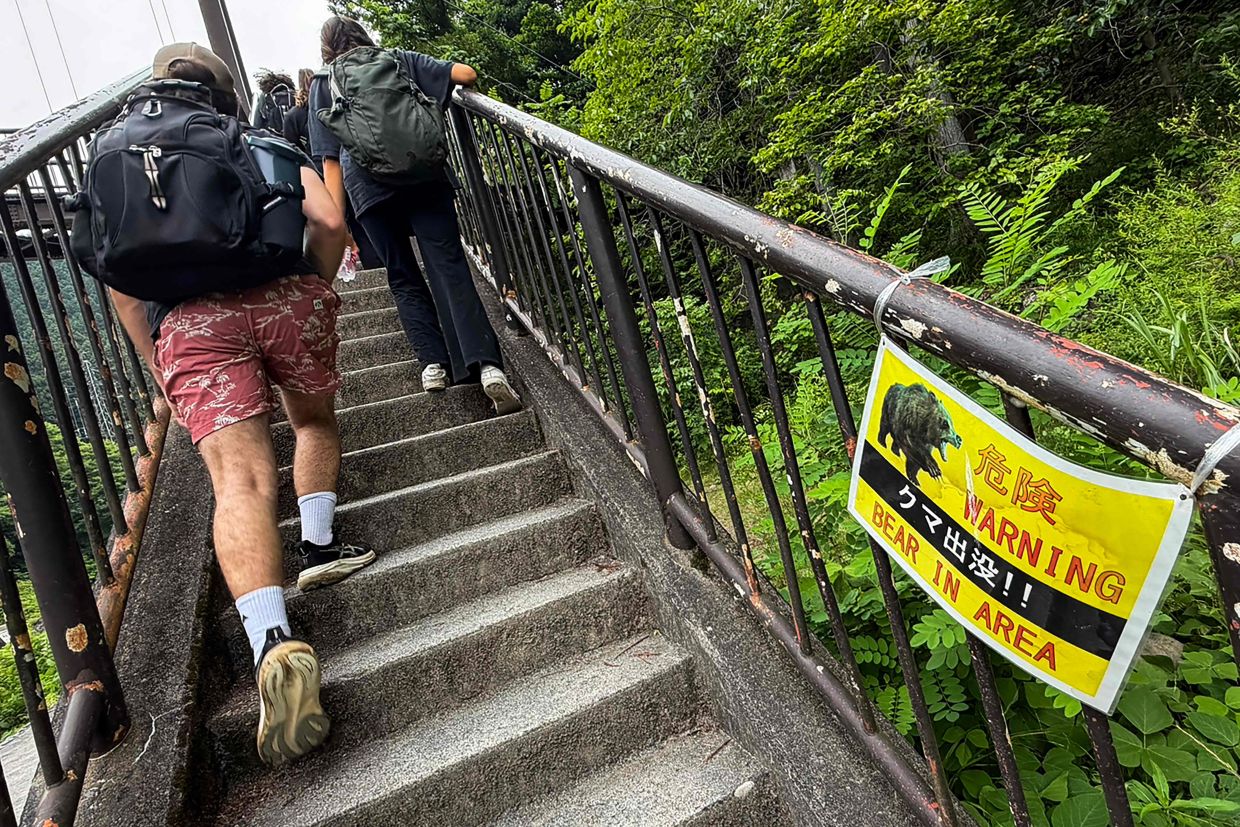
Japan has launched an ambitious wildlife surveillance programme, deploying hundreds of high-tech cameras throughout its mountainous regions in response to an alarming spike in bear-related fatalities. The initiative, announced by Tokyo authorities this week, represents a significant escalation in the country's approach to managing human-wildlife conflict as attacks reach levels not seen in recent decades.
The crisis has been particularly acute in Tohoku, the mountainous northern region that has become the epicentre of bear encounters. Since April alone, at least five people have been killed by bears in this region, continuing a trend that saw a record 13 fatal attacks across the entire nation during the previous fiscal year. These statistics underscore a fundamental shift in the relationship between Japan's urban population and its wildlife, with bears increasingly venturing into areas that were once exclusively human territory.
The environment ministry's response focuses on precision data collection rather than reactive emergency measures. Over 800 cameras will be strategically positioned throughout Tohoku's six major bear populations as an initial phase, with the survey expanding nationally over a four-year period. According to Yu Takahashi, an official with the ministry, this standardised approach addresses a critical gap in existing knowledge. Previously, individual local governments had conducted bear population counts using inconsistent methodologies and timeframes, resulting in fragmented and potentially inaccurate data that hampered comprehensive planning.
The monitoring technique itself reveals both ingenuity and an acknowledgement of bear behaviour patterns. Researchers are positioning honey-laced wine in jars at approximately human head height, a temptation designed to draw bears upright on their hind legs. As the animals rear back to investigate the scent, the cameras capture distinctive white chest markings unique to each individual, allowing researchers to build a comprehensive database of the regional population without requiring physical capture or tagging.
The severity of the situation has permeated Japanese public consciousness. Media outlets in Tohoku provide daily bulletins on bear sightings at shopping centres, public parks, and school grounds, creating an atmosphere of persistent anxiety among residents. This constant news cycle reflects genuine safety concerns rather than sensationalism—bears have been documented entering urban environments with alarming frequency and in increasingly brazen circumstances.
Scientists have identified several contributing factors to the population surge and escalating human encounters. The declining number of people living in rural and mountainous areas has allowed bears to expand their traditional ranges. As agricultural communities shrink and human activity retreats from peripheral regions, bears have consequently spread into territories they had previously avoided. Additionally, the emergence from hibernation in recent months has coincided with a marked increase in sightings, with more animals straying into urban peripheries in search of food sources.
The practical danger extends beyond the mountains. In June, authorities in Utsunomiya, located north of Tokyo, required four days and coordinated efforts from dozens of police officers, hunters, and city officials to successfully trap a single bear that had entered the city. The operation forced widespread school closures, illustrating how deeply urban life has become disrupted by bear incursions. In an earlier incident that captured national attention, a bear described as unusually intelligent managed to navigate an urban environment with sophisticated behaviour—opening a window and operating a tap—before attacking four people at two separate factory locations in Fukushima. The animal evaded capture for days, highlighting the adaptive capacity of these creatures and the inadequacy of conventional containment approaches.
The government has implemented a multi-layered public safety strategy. Authorities recommend that residents avoid solitary mountain excursions and instead travel in groups through forested areas that comprise approximately 80 percent of Japan's total land mass. Those who venture into bear country are encouraged to attach bells to their bags, providing auditory warning of human presence. Bear spray has become increasingly common among outdoor enthusiasts, though its effectiveness depends on proper deployment—a lesson underscored by an incident this week in Nagoya city.
A 22-year-old Vietnamese national, Huynh Nhat Duy, was arrested on Thursday for obstruction of business after accidentally discharging anti-bear spray inside a post office on Wednesday. The incident hospitalised five people, demonstrating that defensive measures themselves pose secondary risks in densely populated areas. Duy claimed the discharge was unintentional, according to media reports, though authorities proceeded with charges. The bear spray products sold in Japanese outdoor stores contain capsaicin, the compound responsible for chilli peppers' characteristic burning sensation, and are designed to incapacitate or deter aggressive bears through respiratory and ocular irritation.
The escalating confrontations between Japan's expanding bear population and its human settlements represent a broader challenge facing developed nations with significant wilderness areas. Unlike countries with more established wildlife management traditions or lower population densities, Japan must navigate the tension between preserving ecological balance and protecting urban residents from genuine physical threats. The camera surveillance programme signals a commitment to evidence-based management rather than reactive culling or avoidance strategies.
Authorities are also investigating what may be a sixth fatality following the discovery of a man's body bearing bite marks in a mountainous area of Tohoku, suggesting that the official death toll may underestimate the actual impact of bear attacks. This potential case highlights the challenge of tracking incidents in remote regions where discovery may be delayed and cause of death difficult to establish definitively.
The implications of Japan's wildlife crisis extend beyond Tohoku's borders. Southeast Asian nations with similar mountainous terrain and expanding human populations face comparable risks of increasing human-wildlife conflict. Malaysia, with its extensive rainforests and growing urban sprawl into previously undeveloped areas, may observe Japan's experience with interest. The success or failure of Japan's camera-based monitoring system will likely inform regional approaches to wildlife management across Asia, particularly as urbanisation continues to encroach upon traditional animal habitats throughout the continent.

