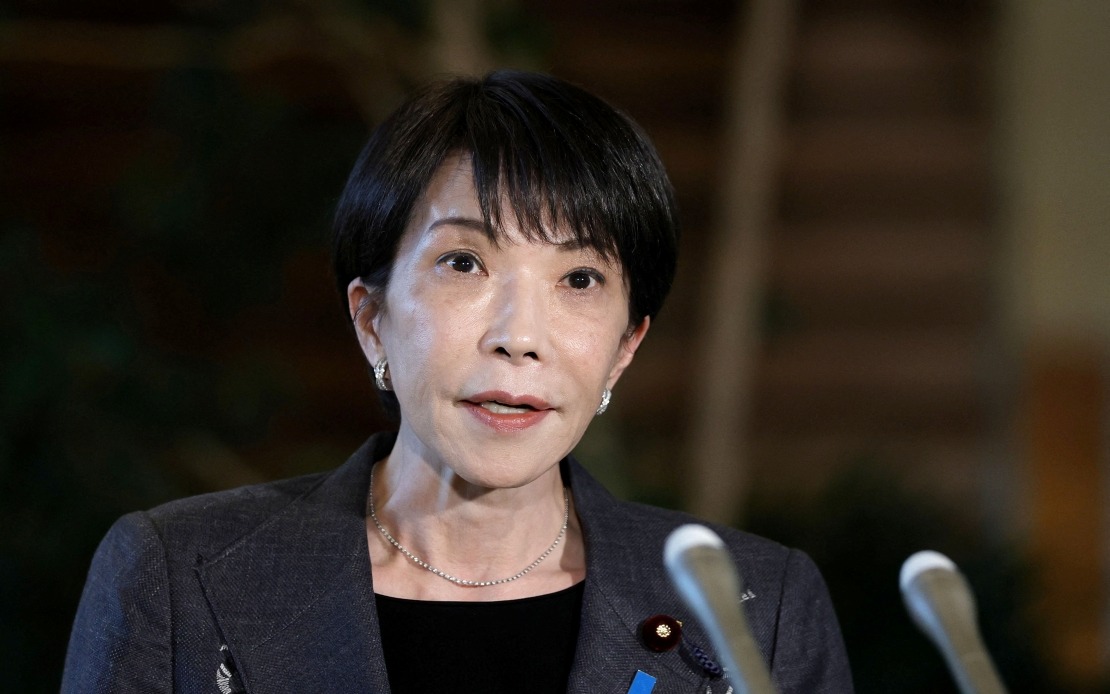
Japanese Prime Minister Sanae Takaichi marked the 81st anniversary of the end of World War II on Saturday by sending a ritual offering to the Yasukuni shrine in Tokyo, a decision that underscores the contentious relationship between Japan's commemoration of its war dead and the diplomatic sensitivities it generates across East Asia. Rather than visiting the site in person, Takaichi, as president of the ruling Liberal Democratic Party, arranged for the offering to be presented from her own funds, according to party officials. Meanwhile, Defence Minister Shinjiro Koizumi attended the shrine directly, becoming the first sitting defence minister to do so on the actual anniversary since Minoru Kihara's visit last year—Kihara now serves as chief Cabinet secretary in Takaichi's administration.
The Yasukuni shrine has long occupied a fraught position in Japan's post-war political landscape, functioning as a focal point for disputes over historical memory and national identity across the region. The religious institution honours Japanese military personnel who died in the country's wars, but it also enshrines fourteen wartime leaders as deities, among them General Hideki Tojo, the prime minister who was executed in 1948 for crimes against peace. The 1978 enshrinement of these Class-A war criminals—individuals convicted through international legal proceedings—has transformed the shrine into a lightning rod for criticism from nations that suffered Japanese imperial aggression.
For Malaysia and other Southeast Asian countries with historical experience of Japanese occupation, these pilgrimages carry particular resonance. Japan's territorial expansion before and during the war extended across wide swathes of China and included the colonisation of the Korean Peninsula from 1910 to 1945, but the occupation also extended through Southeast Asia, affecting Malaysia, Singapore, Indonesia, and the Philippines. These commemorative visits therefore touch upon unresolved historical grievances that persist in the regional consciousness, even as contemporary diplomatic relations have largely normalised.
Peking and Seoul have consistently protested such visits, viewing them as inadequate acknowledgement of wartime atrocities and as potential indicators of nationalist sentiment that could reshape Japan's strategic posture. China and South Korea have each mobilised diplomatic complaints whenever high-ranking Japanese officials pay respects at the shrine, characterising such actions as revisionist attitudes toward history. The pattern has become so established that the international response to Takaichi's offering strategy appears calculated to thread a difficult needle—acknowledging war dead whilst attempting to minimise the diplomatic fallout that would accompany her physical presence at the site.
Takaichi's approach since assuming office last October reveals this balancing act in action. Prior to becoming prime minister, she visited Yasukuni regularly during seasonal festivals and on the August 15 anniversary itself. Since taking office, however, she has refrained from making personal visits to the shrine, instead opting for the less visually prominent method of sending monetary offerings. This distinction may seem technical, yet it carries symbolic weight in the context of regional diplomacy, where the physical presence of sitting premiers at the shrine has triggered the most forceful responses from neighbouring capitals.
Other cabinet members continued the pilgrimage tradition regardless of these diplomatic considerations. Hitoshi Kikawada, who serves as state minister overseeing issues related to the Northern Territories—the disputed islands off Hokkaido that remain at the centre of Japan's territorial disagreement with Russia—visited the shrine personally. His attendance reflects how domestic political constituencies within Japan, particularly those concerned with territorial disputes and security matters, view shrine visits as expressions of nationalist sentiment and historical vindication. The Northern Territories issue has become increasingly salient as Japan reassesses its security environment in light of Russia's invasion of Ukraine and China's military assertiveness.
Senior party officials from the Liberal Democratic Party also made the pilgrimage, including Secretary General Shunichi Suzuki, General Council head Haruko Arimura, and Election Strategy Committee chairman Yasutoshi Nishimura. Their participation underscores how the shrine visit has become embedded in conservative political culture and party identity within Japan's ruling establishment. For these figures, the visit represents continuity with post-war conservative governance and an assertion of Japan's right to honour its war dead according to its own cultural and religious traditions.
The broader context of these shrine visits involves Japan's evolving security posture and military spending trajectory. Since the war's conclusion, Japan has anchored itself constitutionally to pacifism through its war-renouncing Constitution, which has historically constrained military spending and deployment. In recent years, however, Tokyo has significantly accelerated defence spending and capability development, citing what it characterises as an increasingly severe security environment. The shrine visits, whilst ostensibly about historical commemoration, also reflect how contemporary Japanese policymakers are recalibrating the nation's relationship with its military heritage as geopolitical pressures mount from China and Russia.
For regional observers, particularly in Southeast Asia, these annual rituals present a puzzle. Japan remains a crucial economic and security partner to nations across the region, yet its management of historical memory generates friction with China and to some extent Korea, both of which wield considerable regional influence. The question for Southeast Asian policymakers becomes how to calibrate their own responses to Japanese historical commemoration—whether to remain silent, express mild concern, or actively protest. Malaysia's own experience of Japanese occupation and the presence of significant Japanese economic interests create competing considerations that complicate any straightforward diplomatic position.
The shrine visit pattern also illuminates divisions within Japan's political establishment regarding how to balance historical nationalism with regional diplomacy. Takaichi's decision to send an offering rather than visit in person suggests awareness that personal attendance by a sitting prime minister would trigger significant international criticism, potentially complicating Japan's diplomatic agenda on security matters, trade negotiations, and alliance management. Koizumi's attendance as defence minister, by contrast, appears aimed at signalling to domestic constituencies that the government takes security and military matters seriously, even if it moderates the symbolic provocation of premiership-level visits.
As Japan continues to navigate the tensions between historical memory, nationalist sentiment, and regional diplomatic relationships, the Yasukuni shrine will likely remain a site of contestation. The annual August 15 commemorations will continue to generate diplomatic cables and public statements from concerned neighbours, yet Japan's post-war elites have shown limited appetite for fundamentally altering their approach to honouring war dead. For Southeast Asian nations watching these dynamics unfold, the challenge lies in pursuing beneficial relationships with Japan whilst managing the historical and contemporary complications that shrine visits periodically bring to the surface.

