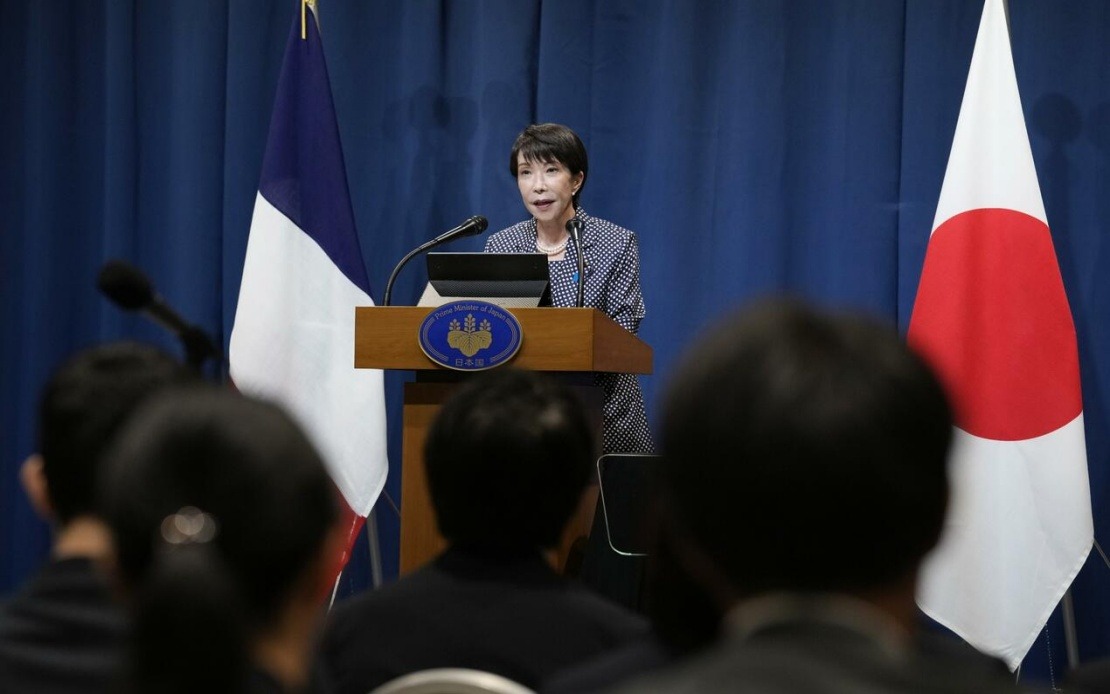
Japanese Prime Minister Sanae Takaichi's political standing has weakened to a new low-water mark, with her cabinet's approval rating dropping to 55.8 per cent according to a Kyodo News poll conducted over the weekend. This represents the poorest performance since Takaichi assumed the premiership in October, reflecting mounting public unease over Japan's economic trajectory and external security challenges in an increasingly volatile global environment.
The deterioration in public support arrives at a particularly sensitive moment for the Takaichi administration, which must navigate persistent economic headwinds while managing Japan's strategic interests in an unstable Middle East. The nation, heavily reliant on energy imports and deeply integrated into global supply chains, faces compounded challenges from lingering inflation at home and renewed geopolitical tensions abroad. For Malaysian observers, the parallels are instructive: like Japan, Southeast Asian economies share vulnerability to energy price volatility and depend on unobstructed maritime trade routes for prosperity.
The survey revealed stark differences in public opinion regarding Japan's potential military involvement in Middle Eastern waters. A clear majority of 54.7 per cent of respondents oppose dispatching Self-Defence Forces to safeguard commercial shipping through contested waterways, viewing such intervention as unnecessary or overly risky. Conversely, 36.6 per cent support such deployment, signalling genuine internal division over how assertively Japan should project power beyond its immediate neighbourhood. This debate reflects Japan's ongoing struggle to balance its pacifist constitution with contemporary security realities—a tension that resonates across Asia as regional powers calibrate their military postures.
Timing proved significant in framing public attitudes. The survey occurred shortly after Washington and Tehran announced preliminary peace negotiations that would reportedly include Iranian reopening of the Strait of Hormuz, a waterway critical to global energy flows. This diplomatic development may have influenced respondents' calculations about necessity: if tensions ease through negotiation, Japanese intervention appears superfluous. However, the durability of any Iran-US agreement remains uncertain, and the brief window of optimism may evaporate if diplomatic efforts stall, potentially reshaping public demands for Japan's maritime role.
Domestic economic grievances emerged as a dominant concern shaping the Takaichi cabinet's standing. Japanese households continue absorbing elevated prices across essential goods, a persisting squeeze on living standards that governments worldwide have struggled to address through policy alone. The survey probed public receptiveness to potential tax relief, specifically whether reducing the consumption tax on food and beverages from 8 per cent could gain acceptance if implemented swiftly. Remarkably, 43.9 per cent of respondents endorsed this compromise proposal, suggesting willingness to accept a partial reduction rather than waiting indefinitely for full relief.
Demands for more dramatic action also surfaced meaningfully in the data. Some 22.6 per cent of survey participants called for eliminating consumption tax on food and beverages entirely, aligning with pledges made by Japan's ruling coalition partners. This bifurcation of opinion—between pragmatists accepting incremental improvement and idealists demanding comprehensive solutions—complicates policy formulation. The Takaichi administration must weigh the political benefits of delivering quick, partial relief against pressure to fulfil more ambitious campaign commitments.
The consumption tax issue carries particular weight in Japan's economic policy landscape. Unlike value-added tax systems in many nations, Japan's consumption tax applies broadly and has been repeatedly raised to address fiscal pressures. At 8 per cent, it remains moderate by international standards, yet imposes genuine hardship on lower-income households spending large shares of income on food. For Malaysian readers familiar with their own cost-of-living debates, Japan's struggle illustrates how even wealthy societies face distributional challenges when inflation outpaces wage growth and policy responses lag behind public expectations.
Takaichi inherited a complex political inheritance when assuming office last October. She succeeded Fumio Kishida after his tenure, inheriting both his policy agenda and underlying structural challenges. Initial honeymoon effects that typically boost new leaders' approval have clearly exhausted themselves within eight months, giving way to hardened public judgment based on actual performance and results. The 55.8 per cent rating, while still reflecting majority support, suggests the cabinet has lost momentum precisely when international uncertainties demand strong domestic consensus.
The interconnection between external security concerns and domestic economic distress warrants deeper analysis. When households struggle with grocery bills and heating costs, they naturally prioritize bread-and-butter issues over geopolitical abstractions. Public reluctance to deploy Self-Defence Forces in Middle Eastern waters partly reflects this calculus: why spend resources abroad when fellow citizens suffer inflation at home? This dynamic has constrained every Japanese government since the 1990s, forcing prime ministers to demonstrate tangible improvements in living standards to maintain political capital for other initiatives.
For Southeast Asian economies watching Japan's predicament, several lessons emerge. First, sustained inflation disproportionately damages even wealthy governments' political standing, requiring not just policy announcements but visible, rapid results. Second, public opinion on security deployments shifts markedly based on whether threats appear imminent or manageable through diplomacy. Third, tax policy involving essential goods carries outsized political weight relative to its fiscal magnitude, making it a potent tool for rebuilding popularity but a dangerous arena for perceived government failure.
Looking ahead, Takaichi faces pressure to deliver concrete improvements in Japanese household finances while maintaining strategic composure internationally. The narrow window between partial tax reductions winning plurality support and more ambitious relief proposals gaining traction suggests limited room for half-measures. Simultaneously, diplomatic developments in the Middle East will likely shape public attitudes toward military engagement. If the Iran-US negotiations falter and tanker attacks resume, Japanese public opinion may shift toward supporting Self-Defence Forces involvement, improving Takaichi's standing as a decisive leader addressing genuine threats.
The cabinet's approval trajectory will largely depend on whether Takaichi can orchestrate genuinely felt improvements in household purchasing power while avoiding entanglement in Middle Eastern conflicts. Her current 55.8 per cent support, though still respectable, represents a shrinking runway before more significant political damage accumulates. The coming months will determine whether this dip represents a temporary fluctuation or the beginning of terminal decline in public confidence.

