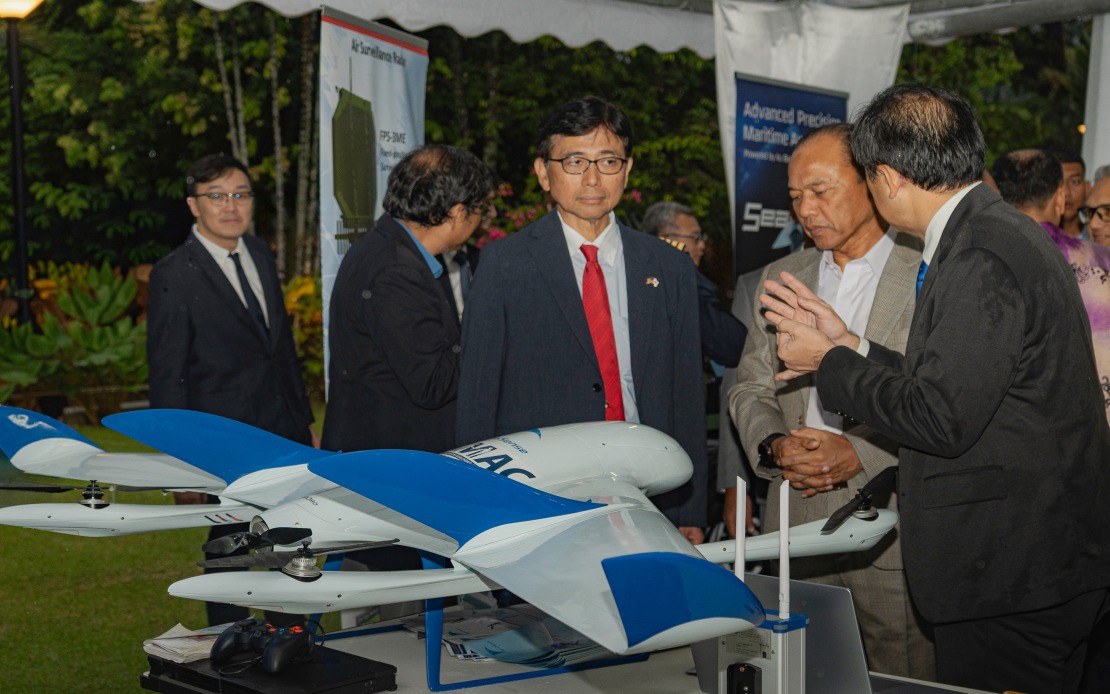
Japan is positioning itself for significantly expanded military and defence engagement with Malaysia, according to Ambassador Noriyuki Shikata, who outlined an increasingly ambitious agenda for bilateral security cooperation at the 72nd Japan Self-Defence Forces Day Reception in Kuala Lumpur on Wednesday. The ambassador's remarks reflected the momentum generated by Prime Minister Anwar Ibrahim's recent visit to Tokyo, where he and counterpart Sanae Takaichi reaffirmed shared strategic objectives centred on defence and security matters. The timing of these statements suggests Japan views Malaysia as a critical anchor for its broader regional security architecture during a period of mounting geopolitical tensions in Southeast Asia.
The elevation of Japan-Malaysia relations to a Comprehensive Strategic Partnership status in 2023 represents a watershed moment in bilateral ties, and Ambassador Shikata indicated that the upcoming 70th anniversary of diplomatic relations next year would serve as a platform for deepening cooperation across multiple domains. This commitment carries particular significance for Malaysia, which faces its own security challenges including maritime surveillance requirements and the need to modernise defence capabilities. The ambassador explicitly stated Japan's readiness to work "even more closely" with Malaysia, language that suggests both countries recognise mutual benefits from closer defence integration.
Central to the partnership's practical expression is the alignment between Japan's Free and Open Indo-Pacific vision and ASEAN's Outlook on the Indo-Pacific, a convergence that transcends bilateral concerns and touches on broader regional stability. For Malaysian policymakers, this alignment offers opportunities to position the country as a bridge between Japan's security priorities and ASEAN consensus-building, a role that carries both diplomatic capital and tangible security benefits. The shared vision emphasises keeping sea lanes open and secure while upholding international law, principles that resonate strongly with Malaysia's interests as a major maritime nation dependent on unimpeded regional commerce.
The existing MALPAN exercise, conducted regularly between the Japan Maritime Self-Defence Force and the Royal Malaysian Navy in the South China Sea and Strait of Malacca, has become a cornerstone of bilateral military cooperation. The April inclusion of the Royal Malaysian Air Force in MALPAN represents a significant expansion of scope, moving cooperation beyond maritime domains into the air domain and signalling the partners' intention to develop comprehensive cross-domain interoperability. These exercises serve dual purposes: they build genuine operational compatibility between forces while simultaneously projecting a message about the two countries' commitment to regional security norms and freedom of navigation principles that align with broader Indo-Pacific stability concerns.
Japan's Official Security Assistance programme, launched in 2023 with Malaysia as one of its inaugural recipients, demonstrates a willingness to provide tangible military support beyond training and joint operations. The provision of unmanned aerial vehicles and rescue boats last year represented concrete contributions to Malaysia's maritime security capabilities. Under the OSA 2025 initiative, Japan has committed to supplying equipment for ceasefire monitoring to the ASEAN Observer Team and will provide a diving support vessel to the Royal Malaysian Navy, reflecting the programme's evolution toward addressing specific Malaysian operational requirements and broader ASEAN peacekeeping mandates.
The diving support vessel deserves particular attention as a symbolic and practical contribution. Such vessels are essential for maritime search and rescue operations, underwater infrastructure inspection, and naval operations in Malaysia's complex archipelagic waters. By providing this capability, Japan addresses a genuine operational gap while simultaneously deepening integration between the Japanese and Malaysian navies. The ceasefire monitoring equipment provided to the ASEAN Observer Team underscores Japan's commitment to supporting ASEAN-led conflict prevention and resolution mechanisms, a dimension often overlooked in discussions of bilateral military cooperation.
Defence industry engagement represents another pillar of the strengthening relationship. The participation of ten Japanese companies in Defence Services Asia 2026 in Kuala Lumpur signals genuine interest in the Malaysian defence market, while the signing of a Terms of Reference for bilateral defence industry dialogue during the same event opens pathways for technology transfer, joint development initiatives, and commercial partnerships. For Malaysia, such engagement offers opportunities to upgrade defence technologies while potentially accessing manufacturing and maintenance expertise. For Japan, the Malaysian market and regional location offer strategic advantages as Japanese defence companies expand footprints across Southeast Asia.
The positioning of General Tan Sri Malek Razak Sulaiman, the Armed Forces chief, at the reception emphasised Malaysia's institutional commitment to deepening these military ties. His presence alongside the Japanese ambassador signalled that expanded cooperation enjoys endorsement from Malaysia's highest uniformed leadership, removing potential institutional obstacles to implementation of new initiatives. This alignment between diplomatic statements and military leadership support is crucial for translating rhetorical commitments into tangible operational changes.
For Malaysian observers, these developments warrant careful assessment within the broader context of great power competition in Southeast Asia. Japan's activism reflects its own security concerns regarding regional stability and its desire to build coalitions of like-minded nations committed to rules-based order and open commerce. Malaysia's engagement with this agenda offers concrete security benefits through advanced capabilities, training opportunities, and integration into Japan's technology ecosystem. However, deeper defence ties simultaneously complicate Malaysia's balancing act between major powers and require careful management to preserve the country's non-aligned positioning and strategic autonomy.
The emphasis on regional stability and de-escalation in Ambassador Shikata's remarks deserves scrutiny as well. While framed as neutral commitments to international law and open seas, these principles carry implicit geopolitical content in contemporary Southeast Asia, where maritime disputes and great power interests intersect. Malaysia's adoption of these frameworks through enhanced partnership with Japan represents both a genuine commitment to regional peace and an implicit alignment with Japan's vision of regional order. This multivalent nature of security partnerships reflects the complexity that Malaysian policymakers navigate in the contemporary Indo-Pacific.
Looking forward, the 70th anniversary milestone of Japan-Malaysia diplomatic relations provides both countries with opportunities to institutionalise cooperation mechanisms and expand into new domains. Ambassador Shikata's commitment to taking bilateral cooperation "to the next level in every field, including defence and security" suggests that discussions may be broadening beyond traditional military exercises into cyber defence, space capabilities, or intelligence sharing arrangements. The trajectory of partnership suggests that Malaysia will increasingly integrate with Japan-led security architectures across Southeast Asia.
The concrete initiatives outlined—MALPAN exercises, Official Security Assistance programmes, defence industry dialogue—demonstrate that Japan-Malaysia cooperation has moved beyond symbolic gestures into practical implementation. For Malaysia, these programmes provide genuine security benefits and access to advanced technologies. For Japan, the relationship offers a strategic foothold in Southeast Asia and a partner aligned with its regional vision. The partnership thus serves both countries' interests while contributing to broader regional security architectures, though it also reflects and reinforces the geopolitical divisions characterising contemporary Asia-Pacific security dynamics.

