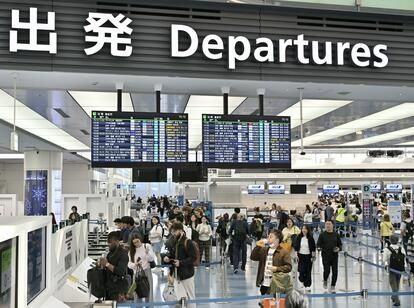
Japan has implemented a significant overhaul of its travel-related levies and visa charges, effective Wednesday, July 1, as the country grapples with unprecedented visitor numbers straining infrastructure and public spaces. The departure tax, officially termed the international tourist tax, has been increased threefold from 1,000 yen to 3,000 yen (approximately US$18) per departing passenger, regardless of nationality. Simultaneously, the Japanese government has raised visa fees for foreign nationals entering the country for the first time in nearly five decades, with single-entry visas climbing fivefold to 15,000 yen and multiple-entry visas doubling to 30,000 yen.
The timing of these adjustments reflects Japan's struggle to balance the economic benefits of mass tourism with the growing friction it creates in urban centres and cultural heritage zones. Over the past few years, popular destinations from Kyoto's geisha districts to Mount Fuji have experienced severe overcrowding, with tour groups and selfie-seeking visitors sometimes overwhelming local communities and damaging the very attractions they come to experience. Rather than restricting access outright—a politically contentious option—Japanese policymakers have chosen to increase costs strategically, hoping both revenues and slightly reduced visitor growth will alleviate pressure.
The departure tax revenue, anticipated to generate approximately 130 billion yen in fiscal 2026 compared to 49 billion yen in the previous fiscal year, will be channelled into carefully targeted interventions. The government plans to establish cordoned viewing areas at heavily photographed locations, allowing visitors to enjoy famous spots while minimising congestion and preservation damage. This approach acknowledges that some crowding is inevitable at iconic sites but seeks to manage it through better spatial planning and crowd flow management.
Beyond congestion relief in major cities, the revenue scheme includes a substantial regional redistribution component. Local railways will be repackaged as tourist attractions, while station buildings in secondary cities will undergo renovation and modernisation. This strategy effectively incentivises visitors to venture beyond Tokyo and Osaka, spreading economic activity across prefectures that have historically received smaller tourism shares. For rural and ageing communities facing demographic decline, enhanced railway heritage tourism and improved transportation hubs could provide meaningful economic stimulus and revitalisation opportunities.
The visa fee increases, the first in forty-six years since 1978, were justified by Foreign Minister Toshimitsu Motegi as necessary adjustments for inflation and currency depreciation. He noted that Japan's visa charges had remained conspicuously low relative to those imposed by other Group of Seven nations, effectively subsidising travel to Japan at the public expense. The government has emphasised that the increases are not expected to deter foreign visitors significantly, suggesting the ministry views current pricing as having been unrealistically depressed.
To offset the departure tax burden on Japanese nationals, the government simultaneously reduced domestic passport application fees. Standard passport applications at designated centres for ten-year passports dropped dramatically to 9,300 yen from 16,300 yen for adults, while five-year passports for minors were standardised at 4,800 yen. Applicants completing applications online receive further discounts: 8,900 yen and 4,400 yen respectively. This dual approach reflects political sensitivity to imposing new travel costs on Japanese citizens while pursuing revenue-raising measures that predominantly affect foreign visitors.
The passport fee reductions serve a secondary policy objective: increasing Japan's passport ownership rate, which remains conspicuously lower than comparable developed economies. By reducing financial barriers to obtaining travel documents, the government hopes to encourage more Japanese citizens to travel abroad, potentially boosting outbound tourism spending and cultural exchange. This simultaneous pursuit of both inbound and outbound tourism growth, managed through differential pricing, exemplifies sophisticated fiscal policy design.
Certain traveller categories receive exemptions from the departure tax, reflecting both administrative practicality and humanitarian considerations. Children under two years are excluded, recognising that infants generate minimal congestion impact. Travellers in transit who spend fewer than twenty-four hours in Japan are similarly exempt, acknowledging that hub passengers contribute little to overtourism problems at destination sites. Passengers who purchased tickets before Tuesday, June 30, were grandfathered under the original 1,000 yen rate, providing a brief transition period.
The collection mechanism leverages existing commercial infrastructure rather than creating new bureaucratic capacity. Airlines, cruise operators, and travel agencies collect the tax at point of ticket purchase and remit revenues to the government through the Japan Tourism Agency. This system minimises administrative overhead while ensuring comprehensive coverage across departure modes. The approach has proven effective, as demonstrated by the tax's ability to raise substantial revenues since its introduction.
For Southeast Asian readers and governments, Japan's experience offers instructive lessons in managing tourism volatility. Many regional destinations—Thailand, Indonesia, the Philippines—face similar overtourism challenges in popular sites alongside underutilised secondary regions. Japan's combination of targeted taxation, geographic redistribution, and infrastructure investment provides a replicable framework. However, implementation requires political will to impose user costs that may temporarily affect demand, balanced against long-term sustainability objectives that protect cultural heritage and local quality of life.
The broader implications extend to Japan's economic strategy. As demographics shift and the working-age population declines, tourism revenue becomes increasingly important for regional economies and national prosperity. These tax adjustments represent Japan's attempt to maximise tourism's economic contribution while minimising its social and environmental costs. Success will depend on whether visitor numbers remain resilient at higher price points and whether revenue deployment genuinely addresses overtourism rather than simply capturing extraction value from tourism activity.
The policy also signals Japan's confidence in tourism demand elasticity, betting that modest price increases will not significantly suppress visitor numbers. Given Japan's status as a unique cultural destination with limited substitutes for many experience categories, this confidence appears justified. Nevertheless, sustained monitoring of visitor patterns, spending behaviour, and regional distribution will be essential to assess whether these measures achieve their dual objectives of revenue generation and congestion mitigation.

