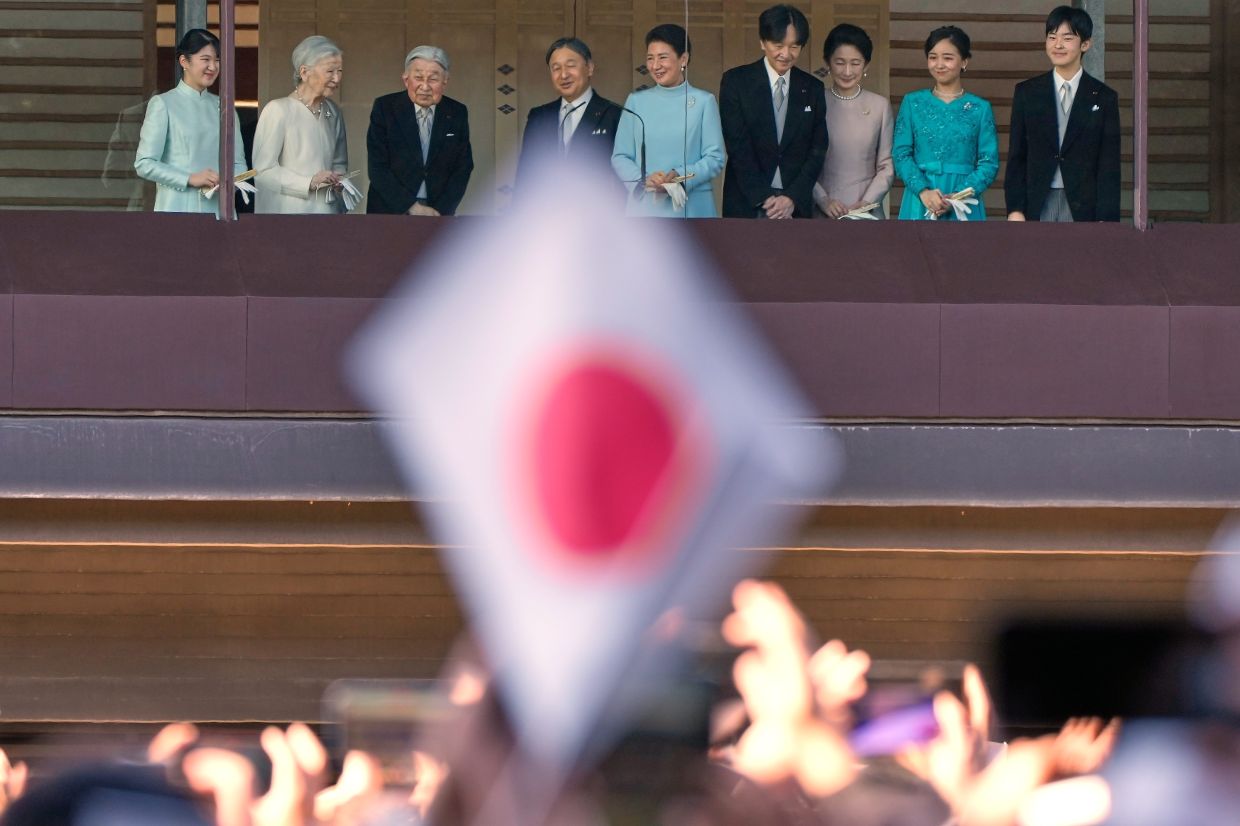
Japan's parliament has reformed its imperial succession framework, yet paradoxically entrenched one of its most contentious restrictions. The upper house passed legislation on Friday that introduces modest flexibility into the rules governing the imperial household, a institution steeped in mythology and bound by strict constitutional conventions since 1947. However, the reforms deliberately preserve the fundamental barrier preventing women from ascending the Chrysanthemum Throne—a decision that stands at odds with Japanese public opinion and reflects persistent tensions within the ruling establishment over how Japan's 2,600-year-old monarchy should evolve.
The legislative package addresses an immediate demographic crisis within the imperial family. The succession currently rests precariously on Prince Hisahito, a 19-year-old who remains unmarried and studying biology and entomology at university. Under existing law, if Hisahito produces no male heir, the imperial bloodline will sever entirely, collapsing an institution considered central to Japanese national identity and continuity. This stark possibility has forced policymakers to contemplate measures they had long resisted, yielding the compromise legislation that passed by overwhelming majorities but satisfied few observers across the political spectrum.
The reforms introduce two significant innovations. First, the law now permits the adoption of male distant relatives aged 15 or older into the imperial family, provided they remain unmarried. This mechanism theoretically draws from 11 imperial branch families that departed the imperial register following World War II, potentially replenishing the dwindling male pool. Second, the legislation allows women who marry commoners to retain their royal status—a provision already extended to male family members but previously denied to female relatives, reflecting longstanding gender asymmetries within the institution.
Yet these adjustments deliberately circumvent the proposal that would resolve the succession problem most directly: permitting women to ascend the throne. An Asahi Shimbun poll conducted in May revealed that 72 percent of Japanese respondents favour amending the rules to allow female succession, reflecting generational shift in attitudes and the practical reality that Japan has been governed by female leaders in other contexts. The legislation's passage came only after considerable friction within the ruling Liberal Democratic Party, where Prime Minister Sanae Takaichi—herself Japan's first female prime minister—actively opposed any expansion of women's succession rights, creating an apparent contradiction that has not escaped public notice.
The exclusion of prominent candidates like Princess Aiko, the 24-year-old daughter of Emperor Naruhito and generally admired for her intellectual accomplishments and dignified public presence, crystallized opposition to the status quo among both ordinary citizens and establishment figures. Seiichiro Murakami, a veteran LDP legislator, delivered a scathing assessment after the lower house approved the bill on July 10, denouncing the continued prohibition on Aiko's candidacy as "utterly outrageous." Even the Yomiuri Shimbun, a major newspaper traditionally supportive of the LDP, recently critiqued the government's handling of the succession question in editorial commentary that underscored the disconnect between public sentiment and official policy.
Criticism of the adoption mechanism itself reveals deeper practical obstacles to implementing the reforms. Asahiro Kuni, an 81-year-old former imperial family member and one of the branch family representatives, has publicly questioned whether distant male relatives would realistically accept re-entry into the imperial household. Speaking to the Asahi Shimbun, Kuni observed that by age 15, a person has "grown up breathing the air of freedom," rendering adaptation to the extraordinary constraints of imperial life implausible. His comments reflect generational and cultural shifts that render the imperial institution's peculiar demands increasingly at odds with contemporary life expectations.
Kuni's scepticism carries particular weight given that he descends directly from the branch families targeted by the legislation. He articulated a sobering assessment: while some individuals might theoretically express willingness to join the imperial family, exposure to "the hardships of life as a royal member" would likely extinguish any genuine enthusiasm. This observation suggests that even if the law formally permits adoption of distant relatives, the mechanism may prove ineffective in practice, leaving Japan's succession problem substantially unresolved despite the parliamentary action.
The imperial family's current composition underscores the demographic fragility motivating legislative action. The household presently numbers 16 members, of whom only five are male: retired Emperor Akihito (92), his brother (90), the reigning Emperor Naruhito (66), Naruhito's brother, and Prince Hisahito. This distribution demonstrates how severely the institution has contracted, with no buffer of younger male heirs beyond Hisahito available to ensure continuity. The absence of alternative male candidates within the immediate imperial family has forced consideration of mechanisms that would previously have been unthinkable, yet lawmakers have balked at the most straightforward solution.
The constitutional and legal frameworks constraining these decisions reflect Japan's post-war political settlement and the complex relationship between the imperial institution and democratic governance. The Imperial Household Law, enacted in 1947 during the Allied occupation, deliberately preserved the monarchy while subjecting it to parliamentary oversight. However, this same law embedded gender restrictions that have become increasingly difficult to defend on practical or principled grounds, creating a situation where formal legal authority to reform the system exists, yet political will to exercise that authority remains insufficient.
The regional implications of Japan's imperial succession question extend beyond domestic constitutional debates. Other Asian monarchies face comparable succession challenges and public expectations regarding female succession rights, making Japan's approach a potential reference point. Malaysia itself navigates complex questions regarding royal succession, ritual, and contemporary governance, observing how Japan manages its equivalent tensions offers pertinent perspective on balancing institutional tradition with modern democratic values.
The passage of the July 17 legislation represents a political compromise that preserves the status quo on women's succession while making modest technical adjustments to the adoption mechanism. However, this settlement appears fragile, unlikely to resolve the underlying succession problem, and increasingly at variance with public preferences and practical realities. The near-certainty that future crises will force renewed debate over female succession suggests that Japan's imperial institutions will eventually confront the fundamental choice that this legislation avoided, potentially making the 2024 reforms a temporary respite rather than a durable solution.

