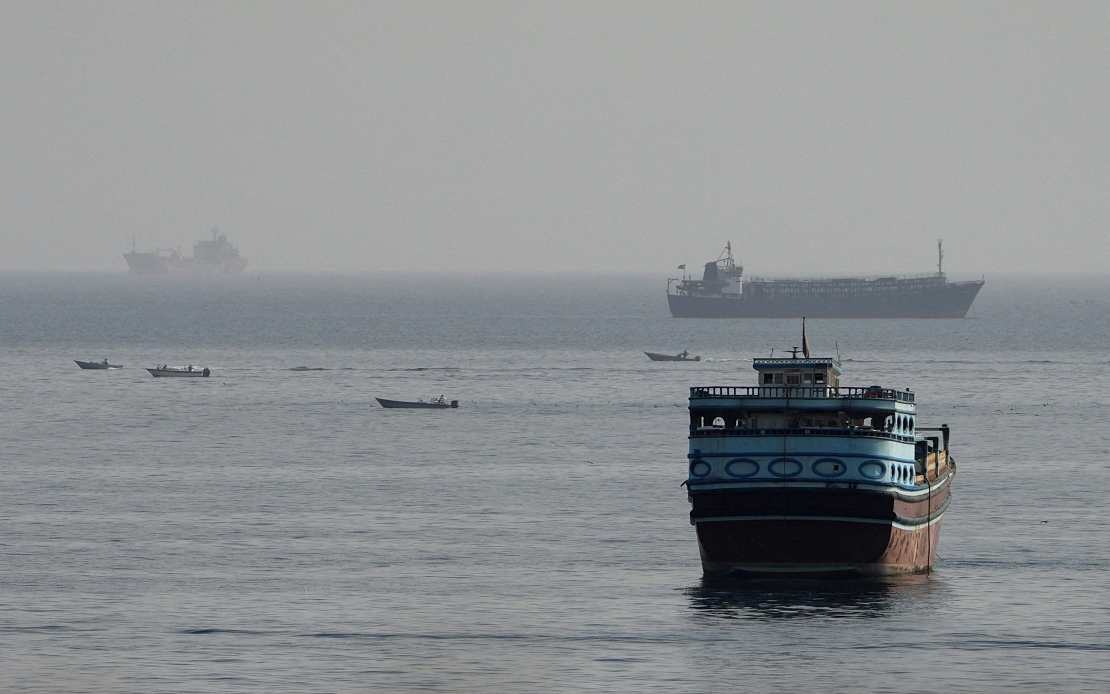
Japanese Prime Minister Sanae Takaichi has directly appealed to Iran's President Masoud Pezeshkian to maintain the Strait of Hormuz as a toll-free passage for international maritime commerce, underscoring Japan's concerns about disruptions to this vital global shipping lane. The request came during a telephone conversation between the two leaders on Wednesday, marking their first engagement since June and occurring against the backdrop of ongoing regional tensions linked to the broader US-Israeli conflict with Iran that intensified in late February.
The strategic significance of Takaichi's message reflects Japan's acute vulnerability as an energy-dependent economy heavily reliant on oil imports flowing through the Persian Gulf. The Strait of Hormuz, which separates Iran from Oman and controls access to the Gulf, handles roughly a third of the world's seaborne crude oil trade—a lifeline for Japanese refineries and power generation facilities. Any additional financial burden imposed on transiting vessels would ripple through Japan's energy costs and ultimately affect manufacturing competitiveness and consumer prices across the region.
Takaichi's diplomatic engagement reveals Japan's delicate balancing act in Middle Eastern geopolitics. Although Tokyo remains a steadfast ally of the United States, it has historically cultivated pragmatic relations with Tehran, recognising that antagonism serves neither party's long-term interests. This telephonic intervention demonstrates Japan's willingness to leverage its diplomatic channels directly with Iranian leadership rather than relying solely on American pressure, a nuanced approach that acknowledges both alliance commitments and independent strategic interests.
Parallel to discussions about Hormuz transit, the Japanese Prime Minister raised grave concerns regarding escalating maritime violence in the Bab el-Mandeb Strait, the narrow waterway lying between Yemen and the Horn of Africa that has emerged as an increasingly critical alternative route for crude oil transport. She specifically pressed President Pezeshkian to exert influence over the Houthi movement, the Tehran-aligned Yemeni rebel faction that has declared what it calls a "maritime blockade" and has reportedly launched attacks on commercial cargo vessels traversing these waters.
The Houthi insurgency's stated blockade, announced in July, ostensibly targets vessels associated with Saudi Arabia, but the indiscriminate nature of recent strikes against international shipping has alarmed maritime nations globally. A deadly Houthi assault on a cargo ship in the Bab el-Mandeb just this week exemplifies the escalating dangers that shippers now face. For Japanese operators managing supply chains and oil procurement, these attacks compound existing uncertainties, forcing calculations about rerouting vessels through longer, costlier passages around Africa—a measure that increases shipping costs and carbon emissions alike.
The deterioration of maritime security in the Bab el-Mandeb represents a concerning downstream consequence of the broader regional instability. As the Strait of Hormuz has become increasingly congested and uncertain due to US-Iran tensions, shippers have sought alternative routes through the Arabian Sea toward the Red Sea and beyond. This shift has made the Bab el-Mandeb a de facto alternative energy corridor, yet one now targeted by militant actors, creating a compounding vulnerability in global supply chains.
Japan's intervention carries implicit recognition that regional actors, particularly those wielding influence over non-state militias like the Houthis, bear responsibility for maintaining freedom of navigation. By directing Takaichi's appeal toward Iranian leadership and requesting Tehran's intercession with the Yemeni rebels, Japan implicitly holds Iran accountable for the actions of its proxy forces—a diplomatic move that preserves the appearance of dialogue while establishing clear expectations.
For Southeast Asian nations, Japan's diplomatic activism holds instructive value. The region's own dependence on unobstructed sea lanes through the Strait of Malacca and beyond means that disruptions to Middle Eastern shipping corridors carry direct consequences for ASEAN economies. Malaysia, Singapore, Indonesia, and other maritime nations face similar vulnerabilities to supply chain disruption, making Japan's proactive engagement with regional powers a model of alliance-building around shared economic interests.
The timing of Takaichi's outreach also signals Japan's calibrated response to broader geopolitical developments. Rather than retreating into passive observation, Tokyo is actively shaping the regional conversation about maritime security and international commerce norms. This approach suggests Japan recognises that addressing the root causes of regional tension—including legitimate grievances driving militant movements—requires sustained diplomatic engagement even with controversial actors.
Looking forward, the effectiveness of Japan's appeal will depend on whether Iran demonstrates willingness or capacity to moderate Houthi operations. The recent escalation in attacks suggests that Tehran's control over its proxies may be limited, or conversely, that political elements within Iran's decision-making structures see advantage in maintaining pressure on global shipping. Takaichi's intervention therefore represents both a statement of Japanese interests and a test of Iran's commitment to stability in critical international waterways.
For regional observers and fellow maritime trading nations, Japan's diplomatic move underscores an emerging consensus that freedom of navigation and resistance to arbitrary levies on international commerce remain non-negotiable principles. As great power competition and regional conflicts reshape Middle Eastern geopolitics, middle-power nations like Japan are finding ways to assert their interests through principled advocacy for established international norms rather than through military force.

