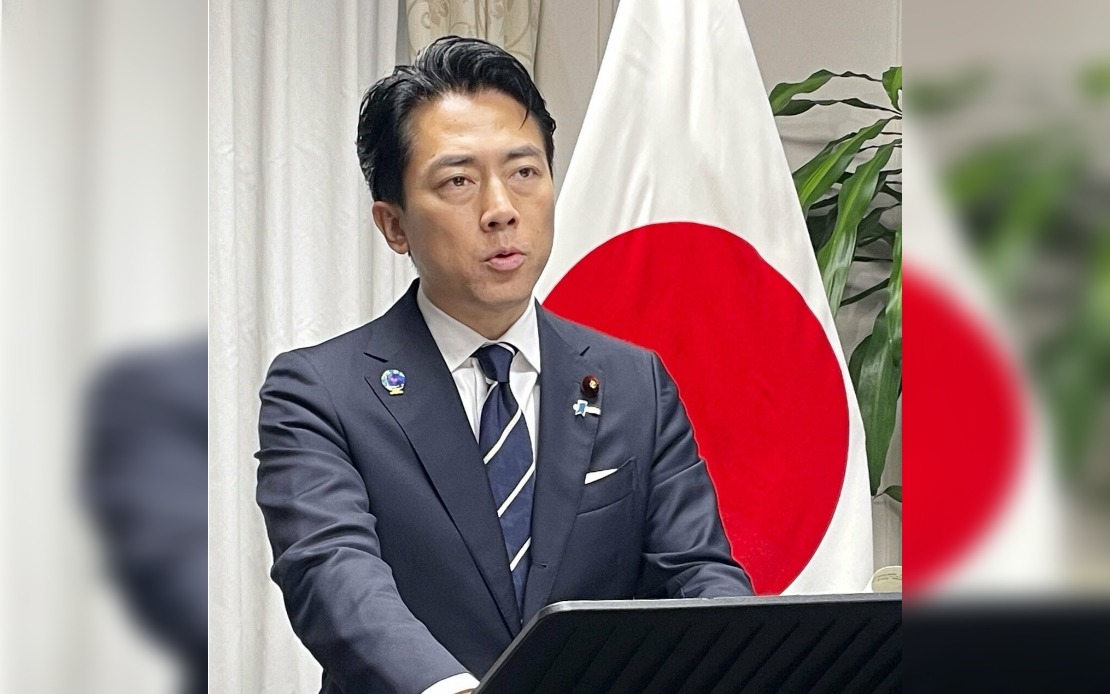
Japan's Defence Minister Shinjiro Koizumi has opened the door to a contentious conversation about nuclear weapons, arguing that his country cannot indefinitely avoid discussing the topic as its strategic environment grows increasingly precarious. Speaking during an online programme released on Friday, Koizumi suggested that Japan needs to broaden the scope of acceptable security discourse, particularly as several European nations are actively pursuing enhanced nuclear deterrence capabilities. His remarks carry significant weight given the government's plans to overhaul three critical national security documents before year's end, a process that will likely shape Japan's defence posture for the coming decade.
The Defence Minister cited developments in Europe as context for reconsidering Japan's position. Finland's parliament approved legislation in June that would enable the country to host nuclear weapons on its territory, a striking reversal for a nation historically cautious about nuclear armament. Similarly, French President Emmanuel Macron announced in March that France intends to expand its nuclear warhead stockpile, signalling Europe's recalibration toward greater reliance on atomic deterrence. These moves reflect how rapidly the security calculus is shifting globally, driven by Russia's invasion of Ukraine and concerns about Beijing's military expansion. For Tokyo, which remains under the American nuclear umbrella through the bilateral security alliance, such developments raise uncomfortable questions about Japan's own long-term security architecture.
Japan's current stance on nuclear weapons is anchored in three foundational principles: the country will neither produce, possess, nor permit nuclear weapons on its territory. This non-nuclear policy has remained virtually sacrosanct since the nation's post-war constitution was adopted, reinforced by Japan's singular trauma as the only country to experience atomic warfare. The atomic bombings of Hiroshima and Nagasaki in 1945 killed approximately 210,000 people by year's end and left lasting scars on the national psyche. Yet Koizumi's intervention signals that even this deeply entrenched commitment is now subject to reassessment in policy circles, at least as a matter of serious strategic consideration.
The Defence Minister's framing is strategic and deliberate. Rather than directly advocating for Japan to acquire nuclear weapons, Koizumi positioned his argument around the need to remove taboos from policy discussions. He contended that Japan's security environment has deteriorated sufficiently to warrant examination of previously untouchable subjects. This rhetorical approach reflects a broader shift among Japan's security establishment toward treating nuclear policy as a legitimate topic for expert analysis and democratic debate, rather than as a matter closed by historical precedent and constitutional interpretation. By emphasising the necessity of dialogue, Koizumi seeks to legitimise the conversation itself, which represents a meaningful departure from established practice.
This willingness to broach the subject has precedent within Japan's defence bureaucracy. Itsunori Onodera, who served as Defence Minister before Koizumi, stated late last year that Japan ought to engage in serious discussion about the future of its non-nuclear principles. More significantly, a policy adviser working under Prime Minister Sanae Takaichi's government proposed in December that Japan should consider possessing nuclear weapons, a statement that provoked fierce criticism from opposition parties and diplomatic complaints from other nations. These successive interventions by senior defence officials suggest a coordinated effort to shift the terms of debate, gradually normalising the notion that Japan's nuclear status might be reconsidered.
The political context surrounding these statements is crucial for understanding their implications. Takaichi's government has been pursuing a comprehensive revision of Japan's security strategy documents, a process that typically occurs only once per decade or more. This revision period provides an institutional opportunity to introduce new concepts into official policy frameworks. By raising the nuclear question now, Koizumi and others are attempting to ensure that atomic policy forms part of the discussion, even if no concrete policy changes emerge from the current round of deliberations. The timing is therefore no accident; it represents a deliberate effort to expand the boundaries of what Tokyo considers acceptable security strategy.
Regionally, Japan's nuclear posturing carries implications for the entire East Asian security architecture. South Korea, which faces its own nuclear threat from North Korea, watches Japanese policy developments closely. Taiwan, increasingly concerned about military pressure from China, also monitors Tokyo's strategic choices. Within ASEAN, nations without nuclear weapons themselves nevertheless understand that any Japanese shift on nuclear policy would alter the regional balance significantly. Malaysia and other Southeast Asian countries have consistently supported nuclear non-proliferation regimes and the Nuclear Non-Proliferation Treaty, so any indication that Japan might reconsider its commitment to non-nuclear status would generate substantial diplomatic concern across the region.
The North Korean dimension deserves particular emphasis in any assessment of Japan's nuclear calculus. Pyongyang has conducted multiple nuclear tests and possesses a growing arsenal of ballistic missiles capable of reaching Japanese territory. While the American nuclear guarantee theoretically extends to Japan's defence, Tokyo has grown increasingly uncertain about the credibility of that commitment, particularly as American political divisions deepen and questions about extended deterrence mount. For many Japanese security analysts, the case for maintaining an independent nuclear deterrent rests on the possibility that American support might prove insufficient in a future crisis. This concern, while perhaps exaggerated, nevertheless animates much of the current strategic debate.
China's military modernisation adds another layer to Japan's strategic recalculation. Beijing has substantially upgraded its nuclear arsenal and military capabilities over the past two decades, and its increasingly assertive posture in the East China Sea has alarmed Tokyo. The situation surrounding the Senkaku Islands, which both nations claim, has periodically escalated into military confrontations. Japan's defence planners worry that China's conventional military superiority, combined with its nuclear arsenal, might eventually place Japan in an untenable strategic position. Whether Japan itself acquiring nuclear weapons would actually improve security outcomes remains deeply contested among strategic analysts, yet the concern clearly motivates some elements of the security community.
Opposition to any nuclear rearmament remains substantial within Japan itself. Public opinion surveys consistently show that majorities of Japanese citizens oppose nuclear weapons acquisition, reflecting deeply rooted antimilitarism and the memory of nuclear devastation. Opposition parties, particularly on the left, have already criticised Koizumi's remarks as dangerous and contrary to Japan's pacifist tradition. Civil society organisations focused on disarmament have condemned the drift toward normalising nuclear discussions. Religious communities, including Buddhist and Christian organisations with substantial followings in Japan, have also expressed alarm. This domestic political constraint means that any actual shift toward nuclear acquisition would require either a dramatic change in public opinion or a willingness by Japan's political leadership to act against substantial majority sentiment.
The international legal dimension also complicates Japan's nuclear options. Japan is a signatory to the Nuclear Non-Proliferation Treaty, and any effort to acquire nuclear weapons would constitute a violation of that commitment. Such a move would trigger international sanctions, damage Japan's diplomatic relationships, and potentially destabilise regional security arrangements. These costs would be severe and would likely outweigh any security benefits that a Japanese nuclear arsenal might provide. Consequently, even if Tokyo's security elite increasingly favours reopening the nuclear question, actually pursuing nuclear acquisition would represent an extraordinary gamble with immense consequences.
Koizumi's remarks should therefore be understood less as a proposal for immediate nuclear rearmament and more as an effort to place nuclear policy on Japan's strategic agenda for serious consideration. By arguing that the security environment has deteriorated sufficiently to warrant debate, the Defence Minister seeks to shift the boundaries of acceptable discourse. Whether this effort ultimately leads to substantive policy changes remains to be seen, but it certainly signals that Japan's post-war non-nuclear consensus, while still dominant, is no longer immune to challenge from within the security establishment. For regional observers in Malaysia and throughout Southeast Asia, monitoring this debate remains essential, as any significant shift in Japanese nuclear policy would reverberate across East Asia and reshape the strategic environment in which ASEAN nations operate.

