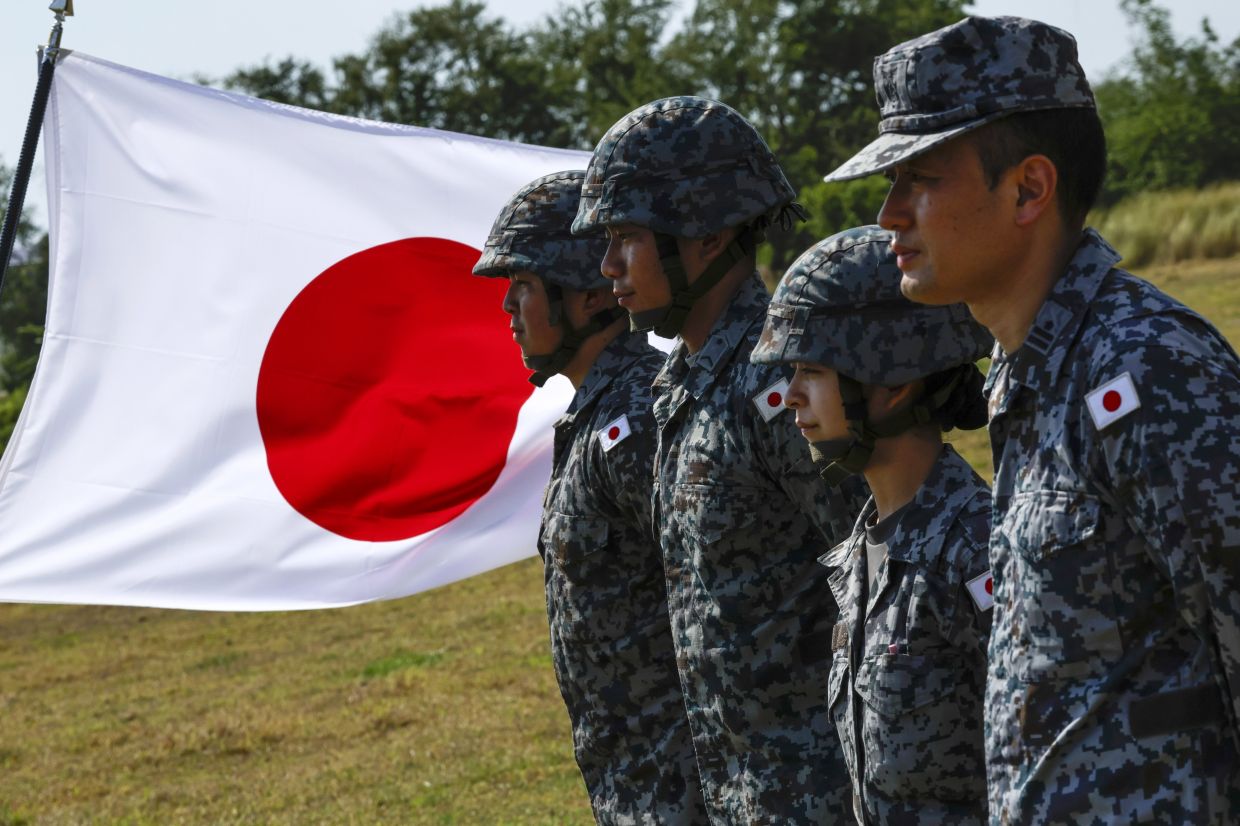
Japan's Defence Minister Koizumi's high-profile appearance at Singapore's major security forum in May underscored Tokyo's determination to position itself as a stabilising force in the Indo-Pacific—a bid that gained particular weight when the scheduled session allowing China to showcase its regional partnerships was abruptly cancelled. The theatricality of Koizumi's encounter with US Defence Secretary Pete Hegseth served multiple purposes: reassuring Japan's anxious electorate that Washington remains committed to Asia, whilst simultaneously revealing the underlying tension that drives Japanese strategy: profound concern about waning American reliability in the region.
Beyond ceremonial diplomacy, Japan is undertaking a structural transformation of its defence posture that represents a historic departure from decades of pacifism and restraint. The floated proposals for domestically constructed nuclear-powered attack submarines, contingent on revisiting Japan's nuclear taboo, signal how seriously Tokyo takes the challenge posed by Chinese military modernisation. These submarines would represent a quantum leap in Japan's autonomous defence capabilities—a signal that Tokyo cannot rely indefinitely on American guarantees and must develop power projection capacity independent of Washington's strategic decisions.
The centrepiece of Tokyo's regional strategy involves constructing an intricate web of bilateral and minilateral security arrangements that function as a counterweight to Beijing's growing influence. New Zealand's acceptance of an upgraded Mogami-class frigate, along with similar defence partnerships being forged throughout Southeast Asia and the Pacific, reflects Tokyo's systematic attempt to create overlapping security architectures that bind regional players to Japan rather than leaving them vulnerable to Chinese coercion. What emerges is not a Cold War-style alliance structure but rather a flexible, multi-layered network designed to preserve freedom of manoeuvre for participating nations whilst simultaneously raising the cost of alignment with Beijing.
Yet the fundamental strategic challenge remains stark: Japan lacks the financial firepower to compete with China across the full spectrum of economic and military competition. This recognition has prompted Japanese strategists to embrace a deliberately different approach. Rather than attempting to match Beijing's massive infrastructure investments dollar-for-dollar, Tokyo is combining security assistance with development financing and energy security initiatives—essentially offering regional partners a more holistic package that addresses their immediate development needs whilst simultaneously strengthening strategic ties with Japan. This calculated pivot acknowledges that many Southeast Asian and Pacific Island governments prioritise roads, ports, and economic growth over abstract security concepts, making development investment a more politically durable foundation for long-term partnerships.
The recalibration of Japan's flagship Free and Open Indo-Pacific framework under Prime Minister Sanae Takaichi illustrates this strategic evolution. Moving away from the principle-based language emphasised by Shinzo Abe in 2016, the updated framework emphasises practical deliverables: securing undersea cable infrastructure, stabilising energy supply chains, and enhancing maritime security capabilities. This shift reflects recognition that rhetorical appeals to rules-based order resonate poorly among nations dealing with daily economic survival; concrete projects demonstrating Japan's commitment to regional prosperity prove far more persuasive than abstract values-based frameworks.
A particularly innovative dimension of this strategy involves Japan's Official Security Assistance programme, which sidesteps Japan's constitutional constraints on military aid by providing development assistance directly to defence establishments of strategic partners. This mechanism enables Tokyo to supply advanced radar systems, surveillance drones, and maritime domain awareness capabilities to nations that lack capital for conventional weapons purchases. The programme has expanded remarkably, growing from four recipient countries managing 2 billion yen in 2022 to twelve countries receiving 18.1 billion yen by 2025, demonstrating both Japan's seriousness about regional engagement and the strong demand among Indo-Pacific nations for precisely this type of assistance.
Infrastructure investment serves triple duty within this framework: it genuinely addresses recipient nations' development needs, provides strategic assets capable of supporting coastguard and maritime security operations, and proves more politically acceptable domestically than explicit military aid. When Japan funds port expansion or airport modernisation, recipient governments can justifiably present these projects to their populations as developmental achievements rather than geopolitical alignments—a crucial distinction in nations with substantial populations sympathetic to Beijing or wary of entrapment in great power competition. Simultaneously, these infrastructure projects create physical assets that inherently support maritime security missions and defence logistics, establishing strategic capabilities through development-friendly mechanisms.
Japan's April decision to lift its ban on lethal weapons exports opens entirely new dimensions for this strategy. Tokyo can now sell defence equipment to 17 countries, including six ASEAN members: the Philippines, Malaysia, Indonesia, Vietnam, Thailand and Singapore. The June agreement with Jakarta to discuss export of Asagiri-class destroyers to Indonesia exemplifies how this liberalised export regime enables Japan to bind major regional powers through defence procurement relationships. These arrangements create mutual interests—recipient nations gain vessels meeting their maritime security needs whilst Japanese defence industries gain export markets and operational experience that strengthens domestic defence capabilities.
Defence industrial considerations subtly but significantly shape Japan's regional engagement strategy. By providing advanced radar systems, drones, and potentially ships to regional partners, Tokyo creates proving grounds for Japanese military technology whilst expanding Japanese firms' roles in the international defence market. This industrial dimension dovetails neatly with Japan's broader economic pivot toward technology-intensive sectors, allowing defence exports to function simultaneously as strategic tools, industrial development initiatives, and commercial opportunities. The Power Asia initiative launched in April—a US$10 billion package addressing energy security concerns amid Strait of Hormuz vulnerabilities—similarly combines genuine development assistance with the consolidation of long-term strategic partnerships.
Nevertheless, critical constraints limit how far Japan's strategy can extend. Expert analysis emphasises that Tokyo must carefully avoid overtly anti-China branding in its regional messaging, recognising that many Southeast Asian governments maintain significant economic relationships with Beijing and cannot afford to appear hostile to Chinese interests. This requirement for diplomatic finesse—building defence relationships whilst avoiding explicit confrontation with Beijing—creates inherent tensions within Japan's strategy. Moreover, despite impressive growth, Japan's defence and development assistance budgets remain marginal compared to the scale of Chinese investment flowing into the region through Belt and Road Initiative mechanisms and other channels.
The underlying logic driving Japan's strategic reorientation reflects justified concerns about American reliability. The Trump administration's insistence that allies dramatically increase defence spending, combined with imposition of tariffs on strategic partners like India and uncertainty about Washington's long-term commitment to regional security, has prompted Tokyo to develop capabilities and partnerships capable of functioning with reduced American involvement. Japan's strategy essentially hedges against both Chinese expansion and American withdrawal—ensuring that regardless of US policy shifts, Tokyo maintains sufficient partnership networks and indigenous capabilities to preserve regional stability and prevent any single power from achieving hegemony.
Pratnashree Basu of the Observer Research Foundation captures the essential quality of Japan's emerging approach: integrating security assistance with infrastructure financing and energy transition support whilst avoiding the perception of pure military balancing. This holistic framework acknowledges that regional stability depends not merely on military equilibrium but on economic resilience, development prospects, and the ability of smaller nations to maintain genuine autonomy amid great power competition. For Southeast Asian and Pacific Island nations, Japan's refined strategy offers something genuinely valuable: security partnerships that do not require choosing sides in a zero-sum China-versus-West competition, but rather enable hedging strategies that preserve flexibility and maximise access to benefits from multiple partners.
As Japan continues implementing this multifaceted regional engagement strategy, success ultimately depends on sustained commitment despite inevitable setbacks and the capacity to maintain strategic coherence whilst adapting to shifting regional circumstances. The framework represents a fundamental recalibration of Japan's post-war strategy, moving from exclusive reliance on American security guarantees toward active, independent regional leadership. Whether this approach can adequately counter Chinese influence whilst respecting the legitimate development needs and strategic autonomy of regional partners remains the defining question for Indo-Pacific stability in coming years.

