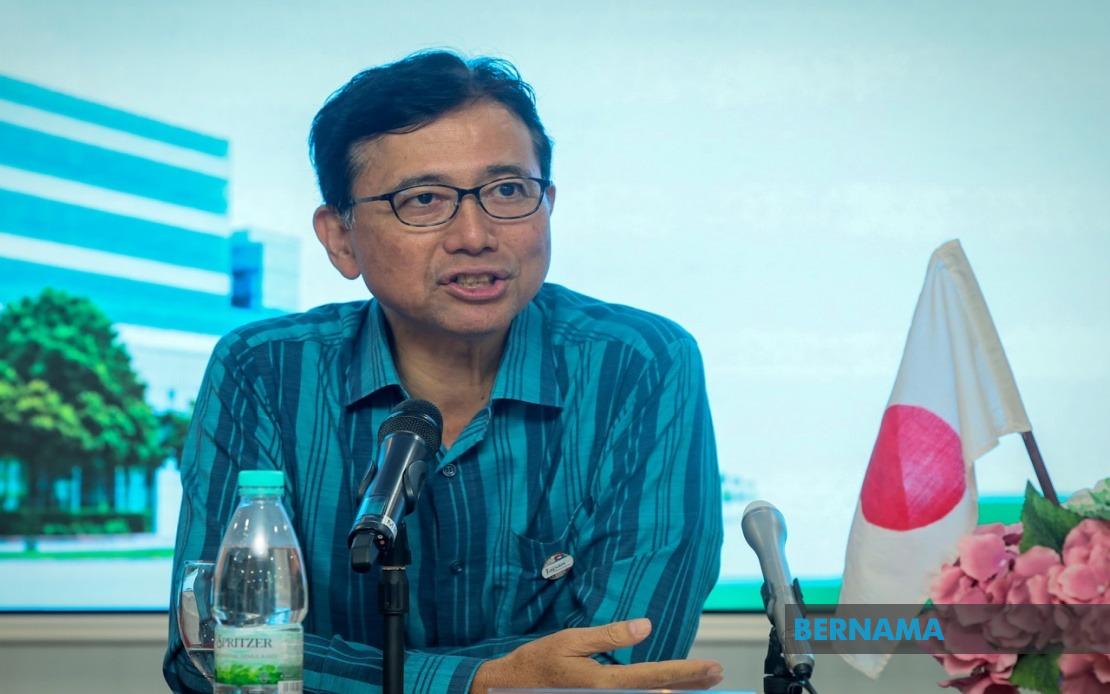
Japan's updated Free and Open Indo-Pacific framework represents a significant alignment with Malaysia's broader aspirations to cement its position as a premier regional technology and digital hub, according to Japanese Ambassador to Malaysia Noriyuki Shikata. The ambassador's assessment underscores how Tokyo's evolving Indo-Pacific vision can serve as a catalyst for deepening bilateral ties and positioning Malaysia at the heart of Asia-Pacific technological advancement. For Malaysian policymakers and businesses, this convergence signals a new phase of strategic partnership built on shared economic interests rather than traditional manufacturing relationships.
Prime Minister Sanae Takaichi unveiled the refreshed FOIP framework in May, marking a deliberate departure from the foundational vision introduced by former Prime Minister Shinzo Abe in 2016. Where the original iteration emphasised broader regional peace and stability, Takaichi's iteration adopts a more economically focused approach, targeting concrete outcomes in capacity building and technological cooperation. The updated framework identifies artificial intelligence, secure data management, undersea cable infrastructure and satellite communications as priority sectors, recognising that regional prosperity increasingly depends on mastery of digital technologies and information security.
According to Ambassador Shikata, the remodelled FOIP strategy represents not merely an incremental adjustment but a fundamental reorientation of Japan's regional approach. The framework pivots towards economic security and industrial resilience as central pillars, moving beyond the traditional security-first lens. Importantly, this evolution incorporates meaningful engagement with Global South nations, a recognition that sustainable regional development requires inclusive partnership models. This positioning directly harmonises with ASEAN's own Outlook on the Indo-Pacific, demonstrating Tokyo's commitment to working within the broader regional consensus rather than imposing external frameworks.
The financial architecture underpinning the refreshed strategy carries particular significance for Southeast Asian nations. The POWERR Asia initiative represents a US$10 billion commitment designed specifically to strengthen ASEAN's energy security and resilience in critical supply chains. Through this mechanism, partner nations gain access to fuel procurement support, enhanced energy reserves and secure pathways for sourcing essential materials. For Malaysia, already a crucial energy player and semiconductor manufacturer, this framework offers opportunities to deepen energy cooperation whilst simultaneously securing supply chain advantages in sectors critical to its industrial future.
The practical implications for Japan's business community in Malaysia extend beyond conventional investment channels. Shikata indicates that the updated framework creates a more stable and predictable operational landscape for Japanese enterprises, encouraging them to redirect capital away from labour-intensive manufacturing towards higher-value technological ventures. This represents a conscious strategy to elevate the bilateral relationship beyond the historical Look East Policy paradigm, which fundamentally rested on technology transfer in conventional industries. Instead, Japanese firms increasingly view Malaysia as a sophisticated partner capable of collaborative innovation rather than merely a manufacturing base.
Malaysia's established position in semiconductor manufacturing stands at the centre of this strategic recalibration. Japanese companies recognise Malaysia's critical role within global semiconductor supply chains and see substantial growth potential in advanced packaging technologies, AI infrastructure deployment and cloud computing services. This sectoral focus reflects broader shifts in global technology markets, where value increasingly accumulates in sophisticated design, architecture and intelligence layers rather than commodity chip production. By investing in these higher-margin segments within Malaysia, Japanese corporations position themselves to capture emerging opportunities whilst contributing to Malaysia's industrial upgrading objectives.
The Comprehensive Strategic Partnership established between Japan and Malaysia in December 2023 provides the formal institutional framework through which these technological ambitions can materialise. This agreement explicitly moves beyond the manufacturing-centred relationship that defined earlier decades of bilateral engagement. Instead, it establishes innovation, knowledge transfer and strategic collaboration as the partnership's central animating principles. The shift from the original Look East Policy—which focused on Japanese manufacturing expertise and management discipline—to a partnership emphasising co-creation and technological advancement reflects the maturity of Malaysia's own technology sector and capacity to engage Japan as a peer rather than merely a mentor.
Recent high-level engagement between Malaysian Prime Minister Datuk Seri Anwar Ibrahim and leading Japanese industrial figures demonstrates tangible momentum behind these strategic intentions. Anwar's interactions with executives from Mitsubishi Corporation, ENEOS, DENSO, IBM and Marubeni provided concrete evidence that Malaysia's political leadership actively courts Japanese technological and capital resources. These meetings established clear signals that Malaysia welcomes Japanese investment in next-generation technology domains and recognises the value of Japanese industrial expertise in sectors beyond traditional manufacturing. The diplomatic choreography surrounding these engagements underscores the seriousness with which both governments approach technology sector cooperation.
The convergence of Japanese technological capabilities and Malaysian market positioning creates genuine opportunities for co-development initiatives in cutting-edge domains. Artificial intelligence and quantum computing represent particularly promising collaboration areas, sectors where Japanese research institutions and corporations maintain significant competitive advantages whilst Malaysian talent pools and market access offer complementary strengths. Through structured partnerships between Japanese technology leaders and Malaysian firms, both nations could develop solutions tailored to Asian market conditions rather than merely adopting offshore technologies designed for Western contexts.
Critical infrastructure protection and supply chain security emerge as equally important cooperation vectors within this framework. The geopolitical uncertainties affecting global technology markets—including semiconductor supply disruptions, undersea cable vulnerabilities and energy transition challenges—create mutual interests in developing resilient systems. Japan's advanced capabilities in infrastructure protection and Malaysia's strategic geographic position make collaboration mutually beneficial. By developing joint initiatives to safeguard critical systems, both nations reduce exposure to external disruptions whilst building capacity to serve broader regional needs.
For Malaysian stakeholders, the ambassador's characterisation of Japan as a reliable and forward-looking partner carries substantial weight given the alternative partnership models available in the region. Unlike some technology partnerships that come laden with political conditionality or extractive commercial terms, the Japan-Malaysia engagement framework emphasises reciprocal benefit and shared prosperity. This approach resonates with Malaysia's own stated preference for multi-stakeholder technology ecosystems unconstrained by exclusive geopolitical alignment requirements. The Japanese framework thus offers Malaysia strategic autonomy whilst accessing world-class technological resources and capital.
The broader implications for Southeast Asia extend beyond bilateral Japan-Malaysia relations. As Malaysia positions itself as a regional technology hub, successful collaboration with Japan could establish models and demonstrate outcomes that inspire deeper tech partnerships throughout ASEAN. Japanese investment in Malaysian AI infrastructure, semiconductor packaging and quantum computing would create demonstration effects, showing other Southeast Asian nations the feasibility of technology sector upgrading through strategic partnerships. This potential multiplier effect means that enhanced Japan-Malaysia technological cooperation contributes to region-wide economic transformation, not merely bilateral advantage.

