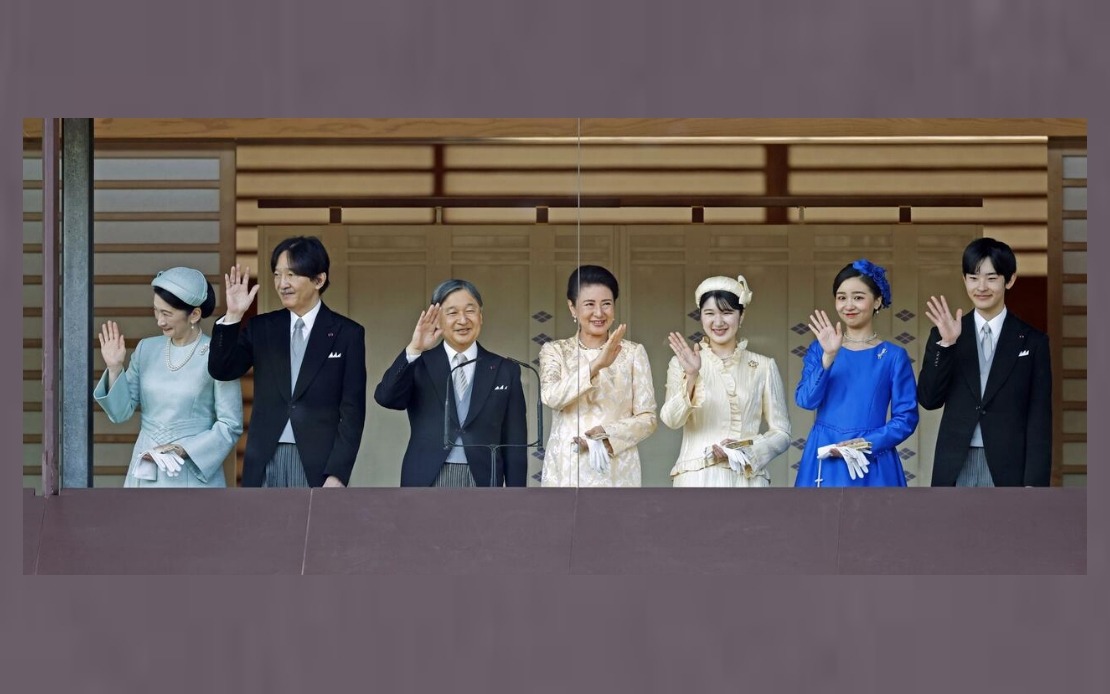
Japan's historic recalibration of its imperial succession framework has left staff supporting the imperial institution grappling with fundamental questions about their future responsibilities, even as the constitutional mechanism designed to preserve the world's longest-serving hereditary monarchy takes effect. The overhaul, which parliament passed on Friday, represents the first substantial amendment to the Imperial House Law since 1947, yet the path forward remains obscured by implementation uncertainties and conflicting visions about what the institution should become.
At the heart of the legislative change lies a pressing demographic challenge: the imperial family has dwindled to just 16 members, a trajectory that conservative leadership including Prime Minister Sanae Takaichi views as existentially threatening to institutional continuity. The amendments attempt to reverse this decline by introducing two significant mechanisms—allowing men descended from 11 former imperial branch families that lost royal status in 1947 to be formally adopted back into the imperial lineage, and permitting female imperial members to retain their titles if they choose to remain unmarried or, if married, to decide independently whether to keep their royal status. These provisions mark a pragmatic departure from strictly patrilineal conventions, yet their actual deployment remains speculative.
Imperial Household Agency officials express cautious optimism about the law's potential while acknowledging the uncharted terrain ahead. One unnamed official noted that the legislation finally creates "a path toward securing a stable number of imperial members," adding that the organisation stands ready to support any adopted individuals who eventually join the family. Yet this institutional readiness masks deeper anxieties about whether outsiders can genuinely embody the symbolic role the Japanese Constitution assigns the emperor—a ceremonial yet profoundly cultural position that demands not merely formal participation but genuine public affection and understanding of the institution's subtler purposes.
The prospect of actual adoptions appears remote, however. Asahiro Kuni, an 81-year-old member of the Kuninomiya branch family eligible under the new rules, expressed frank skepticism about whether any candidate would willingly embrace such a demanding and intrusive existence. His pessimism reflects a practical reality: adopting into the imperial family means surrendering privacy, submitting to ceremonial obligations, and accepting indefinite media scrutiny—burdens that may deter even those with historical claims to royal lineage. Imperial Household Agency personnel privately worry whether potential adoptees could develop the deep institutional knowledge and philosophical alignment necessary to represent the emperor's constitutional role authentically to the Japanese public.
Yet the most contentious dimension of the reform involves what it deliberately excludes. Critics observe that the amendment, while technically expanding the succession pool, strategically forecloses the possibility of female emperors or succession through female lines—outcomes that public opinion polling consistently indicates many Japanese citizens would welcome. Princess Aiko, the only daughter of Emperor Naruhito, remains constitutionally ineligible to succeed her father despite widespread public affection and demonstrated understanding of her ceremonial duties. An aide working with one female imperial family member articulated the painful calculus now confronting five unmarried women in the imperial household: if they marry outside the institution, they must choose whether to abandon royal status, yet remaining unmarried to preserve that status foregoes personal autonomy and family formation. This dilemma, the aide noted, effectively represents "a rather harsh choice" that reflects the government's apparent determination to protect male-only succession regardless of public preferences.
The incongruence between government strategy and popular sentiment became evident in responses from ordinary citizens. Shinichi Kokubun, a 76-year-old who encountered Emperor Naruhito and his family during their April 2024 visit to tsunami-affected Fukushima Prefecture, expressed conditional acceptance of adoptions, provided such individuals could demonstrate genuine commitment to serving the Japanese people with the same dedication the reigning emperor has demonstrated. Yet younger citizens voiced stronger objections to the legislative process itself. Miyu Nakao, 22, from Hiroshima pointed to opinion polls indicating substantial support for female succession, criticizing the government for unilaterally determining the imperial system's future without meaningful public consultation. A 20-year-old university student in Osaka articulated a broader complaint: most Japanese citizens lack familiarity with the Imperial House Law, and the government conducted insufficient public outreach or debate before implementing transformative changes affecting an institution that symbolizes the nation itself.
This generational divide reflects deeper questions about democratic legitimacy in constitutional design. While imperial succession technically remains a matter for governmental action and parliamentary legislation, the imperial family occupies extraordinary cultural and symbolic space in Japanese national identity. The decision to narrow succession parameters while nominally expanding the potential pool of members—allowing adoptions while preventing female succession—appears to many observers as elite-driven governance disconnected from evolving social values. The aides and officials most directly responsible for supporting the imperial institution express anxiety not merely about practical implementation but about whether the revised framework reflects genuine institutional sustainability or merely postpones inevitable succession questions.
The revised law's provisions regarding female imperial members who marry commoners introduce further complications that agency staff find troubling. When a princess retains royal status following marriage to a non-imperial spouse, their children and spouse remain commoners, creating unprecedented family hierarchies that violate conventional domestic arrangements. This structural awkwardness—where parents might possess formal royal status while children do not—strikes officials as potentially destabilizing to family dynamics and confusing to the public about what imperial membership actually signifies. The provision, while technically offering women greater agency, may paradoxically make marriage more complicated rather than liberating.
Sustainability concerns animated official and public commentary throughout the reform debate. Officials questioned whether adopted members could authentically understand and perpetuate the "symbolic" imperial role that the postwar Constitution defines—a role demanding not merely ceremonial performance but genuine connection to national sentiment and historical consciousness. The precedent of Empress Masako, a former diplomat who married into the imperial family and has shown evident capacity for compassionate public engagement, suggests that outsiders can integrate successfully; yet her experience also revealed the psychological costs of institutional life for those unprepared for its constraints. Whether potential male adoptees from branch families would fare similarly remains entirely speculative.
For Southeast Asian observers, Japan's imperial succession deliberations offer instructive parallels regarding how established institutions navigate demographic change and generational expectations. The tension between institutional preservation and democratic responsiveness that characterizes Japan's debate resonates across the region, where traditional monarchical systems confront pressures for modernization. The Japanese government's approach—legislatively expanding the potential pool of imperial members while narrowing succession pathways and constraining female participation—represents one model for institutional adaptation. Yet the evident disconnect between elite decision-making and public preferences suggests that such adjustments, however technically sophisticated, may lack the legitimacy and psychological acceptance necessary for long-term institutional health. Japan's imperial family has endured for centuries precisely because it adapted to historical changes while retaining public reverence; whether the current reforms strengthen or ultimately complicate that legacy remains a question that neither parliamentary votes nor agency directives can definitively answer.

