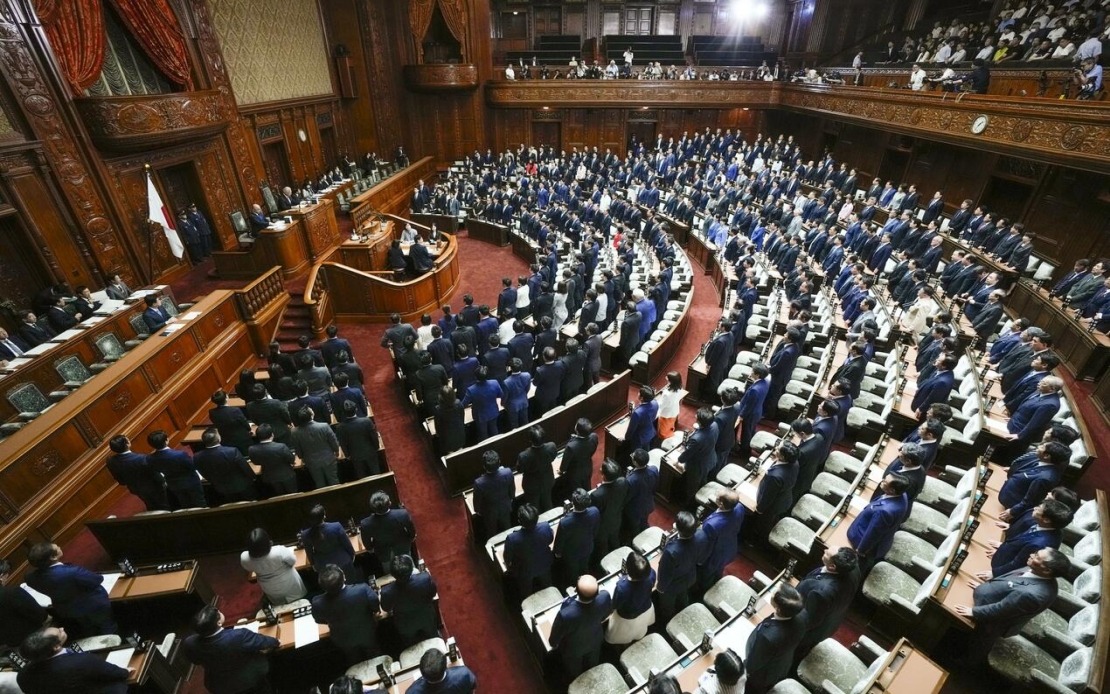
Japan's lower chamber has cleared a pivotal legislative hurdle by approving sweeping changes to the nation's Imperial House Law on Friday, concluding debate in just one parliamentary session. This represents the most significant revision to the constitutional framework governing the imperial institution in over seven decades, addressing mounting concerns about the sustainability of the imperial succession amid a rapidly diminishing pool of eligible heirs. The measure now advances to the upper house, where Prime Minister Sanae Takaichi's coalition government aims to secure final passage before the current parliamentary term concludes on July 17.
The legislative pathway to this point revealed considerable political friction within Japan's Diet, with the passage following weeks of parliamentary deadlock triggered by opposition parties' refusal to engage in substantive debate. The impasse stemmed from broader grievances regarding the ruling coalition's handling of multiple contentious bills simultaneously, including measures to reduce lower house representation and establish a backup capital facility outside Tokyo. This obstruction only dissolved when the ruling Liberal Democratic Party and its junior partner, the Japan Innovation Party, made strategic concessions earlier in the week, including shelving ambitious plans to force through the seat-reduction legislation during the current session.
The bill's centerpiece comprises two interconnected mechanisms designed to stabilize imperial family demographics. First, it permits the adoption of males aged fifteen and above who trace their lineage through the paternal line to previous imperial branch families, specifically drawing from eleven former cadet houses that separated from the main imperial line over preceding centuries. Second, and equally significant, female members of the imperial family may now maintain their imperial status even after marriage to commoners, reversing a convention that has automatically stripped women of their status upon wedding outside the imperial institution. These provisions represent a fundamental departure from rigid patrilineal succession traditions that have governed the imperial household for generations.
Yet the legislation incorporates a crucial asymmetry in its treatment of adoptive succession. While barring adopted males themselves from ascending the throne, it permits their male descendants to become eligible heirs to the Chrysanthemum Throne. This calibrated approach reflects a delicate compromise between institutional continuity and practical necessity, allowing the imperial family to replenish its numbers without disrupting the traditional expectation that direct male succession provides the strongest legitimacy claim. However, the bill notably sidesteps the question of female or maternal-line succession, despite polling indicating substantial public support for such reforms. This omission has drawn criticism from progressive lawmakers who argue the government has not pursued reform sufficiently to address systemic vulnerabilities.
The underlying demographic crisis that prompted this legislative response is undeniable and accelerating. Under existing law, only males possessing an emperor somewhere in their direct paternal ancestry qualify for succession, while female family members automatically forfeit imperial status through marriage to non-imperial spouses. Consequently, both the pool of potential successors and the total imperial family membership have experienced dramatic contraction over recent decades. The current emperor has two children, including only one son, narrowing the succession line and raising legitimate questions about whether the institution can sustain itself without intervention. This convergence of demographic reality and constitutional constraint created irresistible pressure for legislative reform.
The legislative drafting process reflected attempts to build cross-party consensus, at least nominally. The government based its proposal on recommendations compiled by the speakers and vice speakers of both chambers after consulting all thirteen parliamentary parties and groups. That consultative framework theoretically provided legitimacy and inclusivity. However, the final bill incorporates provisions absent from the original inter-party proposal, particularly the allowance for male children of adoptees to become emperor. These additions suggest the ruling coalition ultimately prioritized its preferred policy outcomes over strict adherence to the consensus framework, fueling opposition complaints about heavy-handed governance and contributing to the wider parliamentary tensions that delayed proceedings.
The political context surrounding this legislative moment extends beyond imperial succession mechanics. Updating the Imperial House Law formed one of several explicit commitments within the coalition agreement signed on October 20 between the LDP and Japan Innovation Party, an arrangement that facilitated Takaichi's election as Japan's first female prime minister the following day. This confluence means the imperial reform legislation carries significance beyond constitutional monarchy questions; it represents a test of whether the coalition can effectively execute its governing agenda and whether Takaichi can consolidate her political authority during the crucial early months of her premiership.
The passage also unfolds against a backdrop of simmering controversies regarding media allegations and parliamentary conduct. Opposition parties have demanded accountability from Takaichi concerning reports that her political camp produced online videos attacking political opponents, a matter that intensified parliamentary tensions and contributed to the gridlock. The opposition simultaneously pushed for intensive one-on-one debate sessions between opposition leaders and the prime minister, mechanisms for holding senior executives publicly accountable. These sessions resume Wednesday afternoon following the ruling coalition's Tuesday concessions, suggesting the government calculated that accommodating opposition demands on procedural and accountability matters would facilitate passage of priority legislation.
For Malaysian and broader Southeast Asian observers, Japan's imperial succession challenges offer instructive parallels regarding constitutional frameworks governing hereditary institutions. Many Southeast Asian monarchies similarly grapple with succession planning, female participation in governance, and the tension between traditional patrilineal systems and contemporary democratic expectations. Japan's legislative approach—balancing institutional continuity against demographic necessity through adoption and female retention provisions—presents a case study in how democracies can modernize hereditary institutions while maintaining legitimacy and constitutional stability. The mechanism of cross-party consultation followed by coalition decision-making also reflects broader patterns of how parliamentary systems negotiate sensitive constitutional reforms.
The upper house deliberations will likely proceed swiftly given the ruling coalition's substantial majority and the limited parliamentary calendar remaining before July 17. Opposition parties will have limited capacity to block passage, though they may attempt procedural delays or amendments to address concerns about the adoption provisions and the exclusion of female succession. The Japanese government has already demonstrated its willingness to move decisively when it determines bills constitute genuine necessities, and the imperial succession issue qualifies on those grounds. Implementation following enactment will require administrative procedures to formally identify eligible adoptive candidates from the former branch families and establish protocols for imperial status retention following female family members' marriages.
Broader implications extend to Japan's constitutional future and the trajectory of imperial institution reform. This legislative revision, while substantial, deliberately defers definitive resolution of female succession by merely preserving female status post-marriage rather than opening the throne itself to women or maternal-line heirs. This calculated gradualism suggests future parliaments may confront renewed demands for more comprehensive succession reform should adoption and female retention mechanisms prove insufficient to stabilize the imperial family's long-term viability. The political economy of imperial reform in Japan thus remains unsettled, with this week's legislative achievement representing a necessary but potentially incomplete response to enduring systemic pressures.

