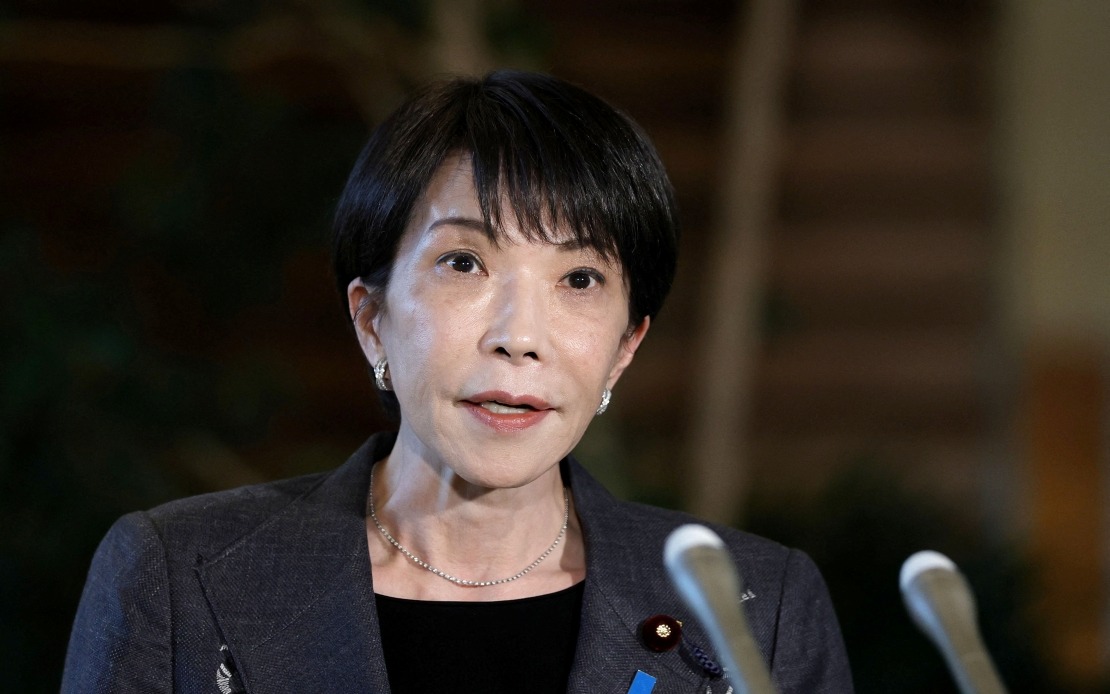
Japan's newly installed Prime Minister Sanae Takaichi has moved to temper expectations about a major tax relief programme, declaring unequivocally that any reduction in consumption levies on food and beverages will be temporary. Speaking at a House of Representatives committee session on Monday, Takaichi stated that the consumption tax rate would be restored to its standard 8 per cent level exactly two years after a planned cut takes effect, signalling an attempt to balance electoral promises with Japan's deteriorating budgetary position.
The commitment represents a significant retreat from the Liberal Democratic Party's pre-election pledge to eliminate consumption tax on food entirely. When campaigning for February's lower house election, the ruling LDP—alongside its coalition partner the Japan Innovation Party and several opposition factions—had promised voters they would slash this burden to zero as a counter-inflationary measure. That populist stance gained traction among households struggling with rising living costs, yet the fiscal arithmetic proved troubling for policymakers once calculations commenced in earnest.
The party's revised proposal, unveiled through the cross-party national council on taxation and social security last week, now targets a reduction to just 1 per cent rather than complete elimination. This scaled-back approach emerged after detailed technical analysis revealed that zeroing the rate would demand extensive reprogramming of point-of-sale systems across Japan's retail sector, creating implementation delays that appeared unacceptable to government planners. The 1 per cent rate, by contrast, could be activated more swiftly within existing infrastructure, allowing the administration to demonstrate progress on its anti-inflation agenda without waiting indefinitely for system upgrades.
During questioning by opposition Democratic Party for the People legislator Ken Tanaka, Takaichi stressed that reverting to the standard rate after twenty-four months represented a firm commitment rather than aspirational language. Tanaka had warned his colleagues that historically, once any tax is lowered, restoring it becomes politically toxic—voters consistently perceive restoration as a hidden tax increase rather than normalisation. His scepticism reflected genuine concern about whether future administrations would possess the political capital to follow through with such unpopular measures, particularly if inflation persisted and public expectations shifted.
To offset the revenue forgone through the consumption tax reduction, the LDP simultaneously proposed distributing cash handouts to households totalling 600 billion yen annually. This figure represents the estimated tax shortfall from applying a 1 per cent levy rather than the standard 8 per cent rate on food products. The direct payment approach offers an alternative means of supporting consumers whilst avoiding permanent structural changes to the tax system, though critics question whether annual fiscal tranches provide the same psychological and practical benefit as permanently lower prices at supermarket checkouts.
The backdrop to these policy machinations is Japan's deteriorating fiscal landscape, which already ranks as the weakest within the Group of Seven advanced economies. Government bond yields have climbed to their highest points in decades, signalling investor anxiety about the nation's debt trajectory and long-term sustainability. Simultaneously, the Japanese yen has remained persistently weak against major currencies, complicating the nation's external economic position. Against this sobering context, any temporary tax reduction threatens to widen fiscal deficits further during a critical period when policymakers ought to be consolidating revenues and restraining expenditure.
For Malaysian observers, Japan's predicament offers instructive lessons about the political economy of tax policy in developed democracies. Malaysia, too, has grappled with questions surrounding consumption taxation and inflation relief, though the domestic policy terrain differs significantly. Japan's experience demonstrates how electoral commitments become constraints once they encounter the realities of fiscal mathematics and implementation logistics. The contradiction between campaign promises of zero-rating and pragmatic revisions downward to 1 per cent illustrates how governments must navigate the gap between voter expectations and bureaucratic possibility.
Takaichi has signalled her determination to move the plan forward rapidly once the cross-party council releases its interim report later this month. The government appears eager to commence the tax reduction by April 2027, roughly nine months after the typical two-year implementation window for major fiscal policy shifts. This accelerated timeline reflects both political pressure to deliver concrete benefits before the next electoral cycle and broader economic anxiety about continued inflation and household purchasing power deterioration.
The broader Southeast Asian context amplifies Japan's challenges. As the region's largest and most mature economy experiences stagnation and fiscal stress, questions about the durability of the regional economic model intensify. Japan's struggles with persistent low inflation, aging demographics, and mounting public debt represent cautionary developments that other advanced and emerging economies in the region monitor closely. Should Japan's tax relief package prove insufficient to revive consumer spending or prove impossible to sustain fiscally, the implications would reverberate throughout Asian financial markets and policy discussions.
Critically, Takaichi's explicit statement about restoration deadlines attempts to resolve the credibility gap that Tanaka identified. By publicly committing to a specific endpoint for the tax reduction, the Prime Minister seeks to insulate the government against accusations of stealth taxation or broken promises when rates eventually rise. Whether this rhetorical positioning proves sufficient to buffer political backlash in 2029 remains uncertain, particularly if economic conditions remain difficult and voters attribute their continued hardship to restored consumption taxes. The two-year window, paradoxically, may prove both long enough to entrench public expectations of low food taxes and short enough to seem like an arbitrary deadline imposed for fiscal rather than economic reasons.

