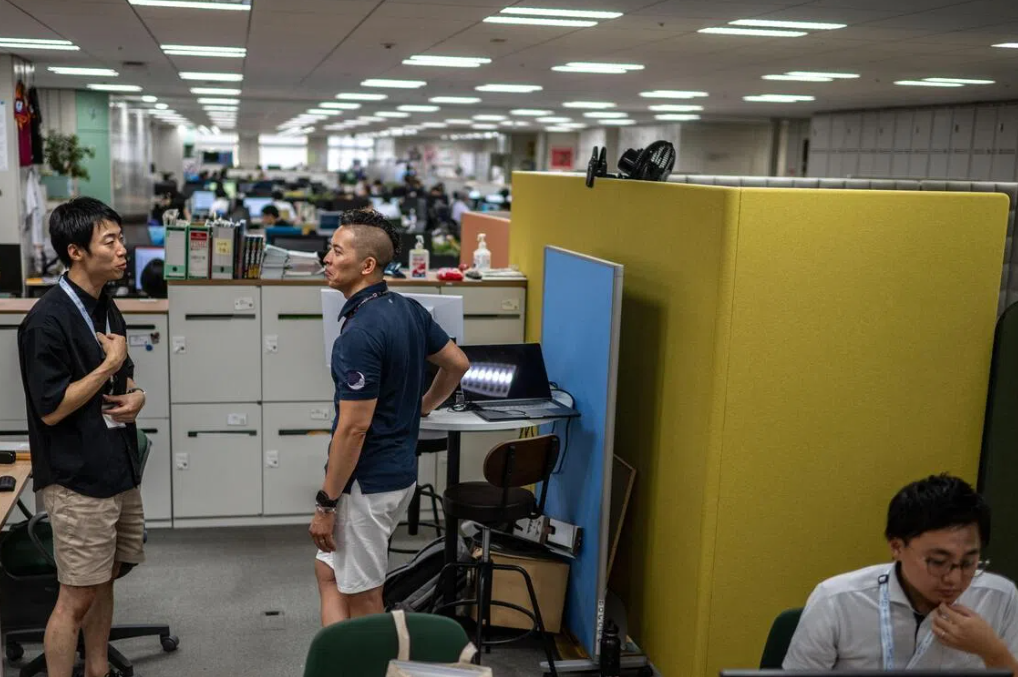
Tokyo's drive to help office workers survive grueling summer temperatures through more relaxed dress codes has collided with unexpected cultural sensitivities around male leg hair in the workplace. The city's metropolitan government expanded its "Cool Biz" initiative in April to permit employees to abandon traditional formal wear in favour of casual alternatives including T-shirts, trainers and shorts—a significant departure from Japan's historically conservative office culture. What officials envisioned as a practical response to extreme heat and humidity has instead ignited conversation about the boundaries of acceptable workplace appearance, revealing deeper anxieties about body standards in Japanese professional settings.
The backlash centred on what has been termed "leg hair harassment" or "sunehara" in online discourse—a concept referring to the alleged discomfort female colleagues experience when observing male coworkers' exposed shin hair. The complaint reflects broader workplace sensitivities in Japan, where appearance standards have traditionally been strictly regulated and enforced. Tokyo environmental official Noboru Watanabe acknowledged the delicate balance officials must strike, telling the BBC that authorities intended to "give people more options in the severe heat, not tell them what to wear," while maintaining that dress standards should simply avoid being "offensive to anyone." His comment underscores the difficulty in defining what constitutes workplace propriety when national policy attempts to modernise institutional practices.
The extent of public resistance became clearer through data collected by Gorilla Clinic, a men's cosmetic treatment chain, which surveyed attitudes toward workplace shorts. The findings revealed a nearly evenly split population: 53.5 per cent of respondents opposed wearing shorts to the office, while 46.5 per cent supported the practice. Among the primary concerns cited by opponents were anxieties about visible body shape and exposed body hair—issues that disproportionately preoccupied female respondents compared with their male counterparts. This gender divide in the survey responses suggests that workplace acceptance of casual summer attire remains deeply gendered in Japan, with women potentially viewing visible male physiology as a workplace intrusion rather than a pragmatic adaptation to climate.
The controversy has triggered unexpected consequences in the cosmetic industry, with some men now viewing body hair removal as a question of "social etiquette" rather than purely aesthetic preference. Akifumi Funatsu, a director at Gorilla Clinic, reported increased demand for laser hair removal services among male clients seeking to appear presentable when wearing shorts. This shift reveals how workplace anxieties can reshape consumer behaviour and self-perception: men have begun internalising concerns that their colleagues might harbour negative reactions to their bodies, prompting them to invest in grooming treatments to navigate professional environments. The phenomenon demonstrates how workplace standards extend beyond explicit policy into the realm of personal bodily management and self-consciousness.
Japan's gradual shift toward informal office wear stretches back nearly two decades. In 2005, then-environment minister Yuriko Koike—now Tokyo's governor—introduced the original Cool Biz campaign, which encouraged workers to abandon jackets and ties in favour of short-sleeved shirts as a means to reduce air-conditioning consumption and lower energy costs. The initiative gained substantial momentum when Prime Minister Junichiro Koizumi publicly endorsed it by appearing without a tie or jacket, lending political credibility to what might otherwise have been perceived as an erosion of professional standards. Following Japan's 2011 earthquake and tsunami, which severely strained the nation's power infrastructure, the government launched an even more permissive variant called "Super Cool Biz," further liberalising workplace dress requirements and establishing casual attire as increasingly mainstream, particularly across start-ups and technology sectors.
The current expansion of the Cool Biz framework to explicitly permit shorts represents a notable progression in this decades-long evolution. Yet the resistance encountered suggests that while office culture has become progressively more informal in certain sectors and regions, traditional attitudes about professional presentation remain deeply embedded, particularly regarding the visibility of the male body. The shorts controversy highlights a fault line between institutional modernisation efforts and conservative workplace sensibilities—a tension that extends beyond mere clothing choices to encompass underlying anxieties about masculinity, propriety and the appropriate boundaries between professional and physical space.
The policy shift arrives at a moment when Japan confronts increasingly severe climatic conditions that make formal summer business attire genuinely hazardous. The country has been grappling with extreme temperatures and high humidity levels that significantly impair the body's natural cooling mechanisms through perspiration. Between July 6 and July 12, the Fire and Disaster Management Agency documented seven deaths attributed directly to heatstroke, with an additional 4,580 individuals requiring hospitalisation during the same seven-day period. These figures underscore the genuine public health dimension underlying the Cool Biz expansion—this is not merely a matter of comfort but a serious safety concern that has already claimed lives and strained healthcare systems.
In response to these dangerous conditions, Japanese consumers and officials have pursued multiple strategies beyond simply relaxing dress codes. Authorities have urged the public to maintain hydration, utilise air-conditioning systems and gradually acclimate their bodies to higher temperatures. The private market has simultaneously responded with innovation, with consumers increasingly purchasing clothing incorporating built-in cooling fans, cooling wipes for bodily application, heat-blocking umbrellas designed to reflect solar radiation, and portable battery-powered fans for personal use. This multifaceted approach reflects the recognition that no single intervention—whether policy change or individual consumer choice—can adequately address the scale of Japan's summer heat challenge.
The leg hair harassment debate, while superficially humorous, ultimately reflects deeper questions about how workplaces negotiate competing demands: the need to protect workers from genuinely dangerous heat versus institutional comfort with existing social and aesthetic standards. The controversy underscores that modernising workplace practices in conservative institutional environments requires more than top-down policy directives; it demands broader cultural recalibration of what constitutes acceptable professional appearance. As Tokyo and other Japanese cities continue refining their approach to summer dress codes, officials will likely grapple with whether policy should accommodate existing social anxieties or actively challenge them. The outcome may determine not only how much leg Japanese office workers can expose this summer, but also how quickly workplace culture can adapt to both climate imperatives and evolving social expectations.

