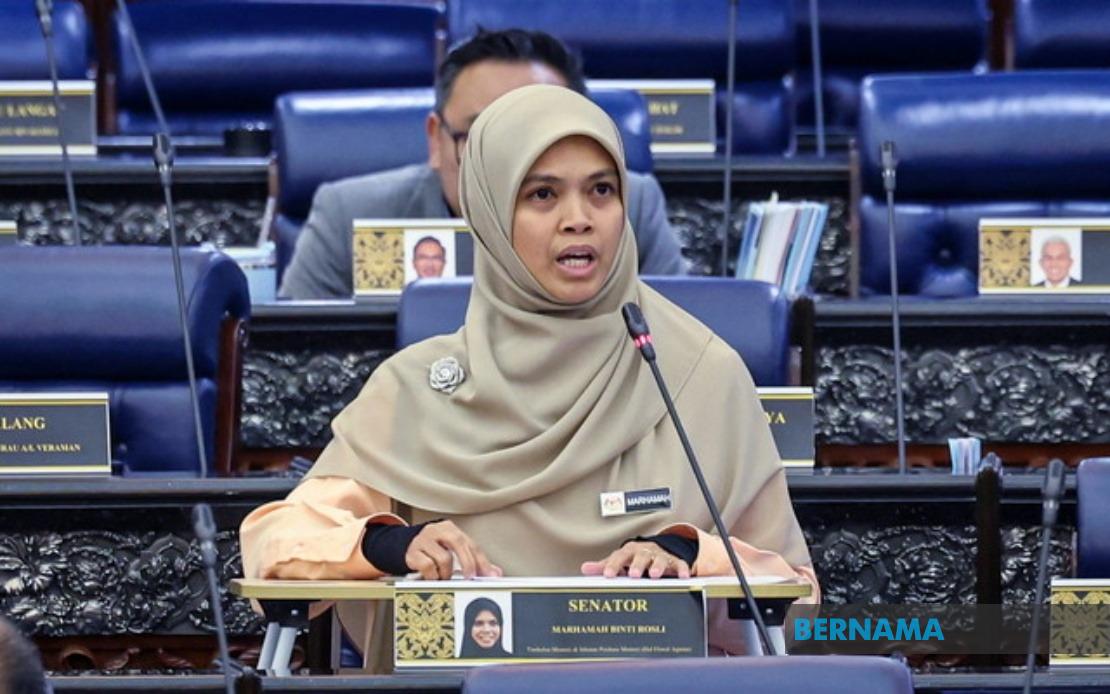
Malaysia's efforts to modernise and expand its Islamic endowment sector are accelerating through a coordinated national strategy. Deputy Minister in the Prime Minister's Department (Religious Affairs) Senator Marhamah Rosli announced on July 29 that the Department of Islamic Development Malaysia (JAWHAR) is spearheading 19 substantial waqf projects nationwide, collectively valued at RM321 million. The initiative represents a concerted push to unlock the economic and social potential of waqf assets, which have historically remained underutilised despite their significance in Islamic financial systems.
Waqf—permanent charitable endowments in Islamic law—constitute a substantial but largely dormant resource across Malaysia. These assets, donated for religious, educational, healthcare, and social purposes, have accumulated over centuries but frequently languish without strategic development or revenue generation. JAWHAR's intervention signals a shift toward professional asset management and commercial development models that maintain the religious character of waqf while generating sustainable income streams. The 19 projects represent a deliberate cross-sector approach, addressing infrastructure gaps and community needs simultaneously.
The announcement came during parliamentary proceedings when Senator Baharuddin Ahmad questioned JAWHAR's track record in supporting waqf management and development. Marhamah's response underscored the department's expanding portfolio and measurable commitment to institutional reform. The specifics of individual projects remain partially undisclosed in her parliamentary statement, though the scale of investment and geographic spread suggest initiatives spanning urban regeneration, agricultural development, education facilities, and healthcare services. Such diversity reflects recommendations from policy circles that waqf modernisation requires portfolio approaches rather than single-sector focus.
Critically, the broader policy architecture supporting these projects—the National Waqf Master Plan (PIWN) 2025–2030—is progressing through government channels. Marhamah confirmed that this comprehensive framework will be presented to both the National Council for Islamic Religious Affairs Malaysia (MKI) and the Cabinet for formal notification during 2024. Though not yet officially launched, the master plan has already circulated among all State Islamic Religious Councils nationwide. Their collective acknowledgment and expressed support represent a significant prerequisite, given that waqf management in Malaysia operates within a federated system where states retain substantial authority over religious endowments.
The unanimity of state-level support for the PIWN 2025–2030 carries substantial implications for implementation prospects. Malaysia's waqf sector has historically suffered from fragmentation, inconsistent governance standards, and limited inter-state coordination. A master plan enjoying consensus backing from all state religious authorities creates the foundation for standardised valuation procedures, transparent asset registers, unified performance metrics, and coordinated capacity building. This alignment has been elusive in previous reform attempts, making the current trajectory noteworthy.
Beyond structural projects, JAWHAR's portfolio includes direct community support mechanisms. Yayasan Waqaf Malaysia (YWM), an operational arm focused on grassroots waqf initiatives, has distributed RM4.38 million to support 92 programmes reaching 53,748 beneficiaries across 8,232 households. While these figures appear modest relative to the RM321 million portfolio, they demonstrate the human-centred outcomes that complementary small-scale interventions can achieve. The household reach illustrates waqf's traditional poverty-alleviation function, which increasingly sits alongside commercial and developmental ambitions.
For Malaysian readers, these developments carry particular significance within the broader context of Islamic finance competitiveness and religious institutional modernisation. Singapore, Brunei, and Indonesian jurisdictions have undertaken parallel waqf reforms, seeking to harness dormant assets for economic development. Malaysia's coordinated federal-state approach, if successfully executed, could position the country as a regional leader in professional waqf management and Islamic social finance. This competitive dynamic is often overlooked in domestic discussions but shapes policy priorities within government and among religious authorities.
The economic implications warrant closer examination. Properly developed waqf assets can generate recurring revenues supporting education, healthcare, and social welfare without recurring budgetary appropriations. They represent counter-cyclical economic buffers during downturns and can absorb surplus capital from high-net-worth individuals seeking compliant charitable vehicles. The RM321 million figure, while substantial, likely understates the total waqf asset base available for development—preliminary estimates suggest Malaysian waqf holdings exceed RM10 billion nationally, though these figures remain contested due to poor asset documentation.
Implementation risks, however, merit acknowledgment. Waqf projects frequently encounter challenges including unclear property titles, aging infrastructure requiring disproportionate capital investment, regulatory ambiguities between Islamic and civil law, and capacity constraints within State Islamic Religious Councils. JAWHAR's centrally coordinated approach may mitigate some governance risks, but execution will require sustained institutional commitment and technical expertise. The master plan's success hinges partly on whether it translates into binding guidelines or remains aspirational.
The parliamentary exchange also illuminates governance questions about waqf transparency and accountability. Public disclosure of project details, implementation timelines, expected returns, and beneficiary metrics remains limited. Enhanced reporting could build public confidence in waqf modernisation and potentially attract additional endowments. Regional jurisdictions increasingly adopt integrated waqf reporting within broader Islamic finance disclosures, a practice Malaysia could emulate.
For Southeast Asian policymakers and international Islamic finance observers, Malaysia's centralised yet federally-respectful approach to waqf reform offers a distinctive model. Unlike unitary systems that can impose standardisation through legislative decree, Malaysia's constitutional framework necessitates negotiated consensus. That all state religious authorities have endorsed the PIWN 2025–2030 framework suggests viable pathways for coordinated reform within federal structures, potentially offering lessons for other Muslim-majority democracies grappling with similar sectoral modernisation challenges.
Looking ahead, the materialisation of these 19 projects and the Cabinet's formal endorsement of the master plan will constitute watershed moments for Malaysia's waqf sector. Success could catalyse a broader institutional renaissance, attracting professional management talent, technological innovation, and commercial partnerships to the space. Conversely, delays or partial implementation could perpetuate existing fragmentation. The coming months will reveal whether this ambitious agenda translates into operational reality or remains a policy aspiration.

