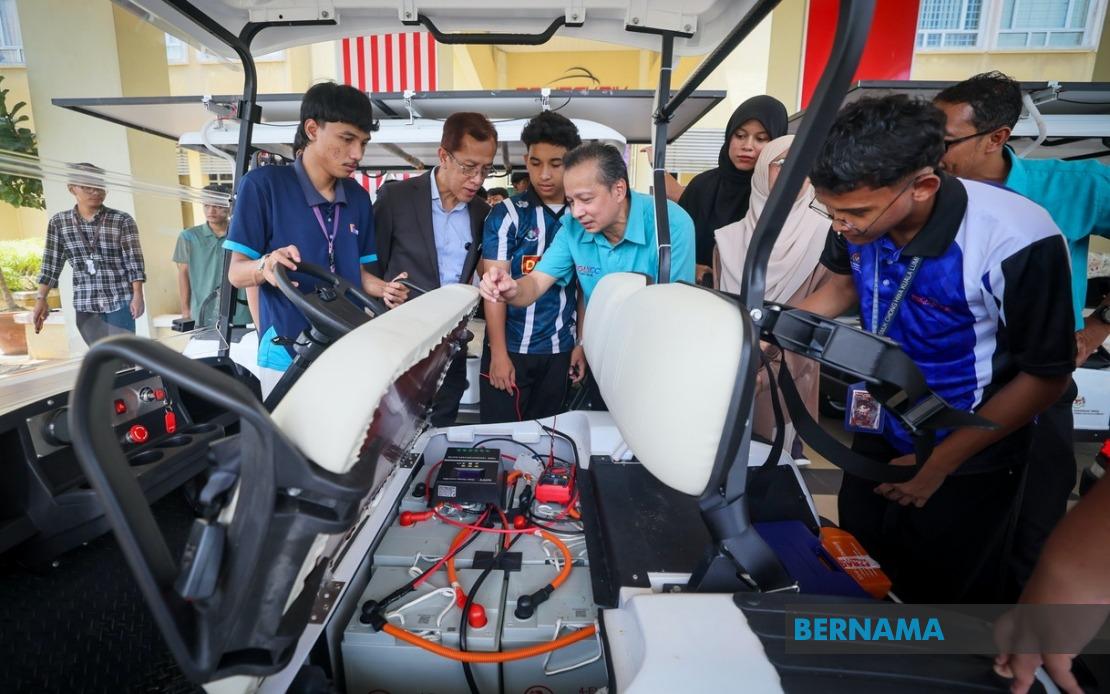
Jeli Kelantan Polytechnic has achieved a significant milestone in renewable energy application by developing and deploying six solar-powered buggy cars, marking the first initiative of its kind in Kelantan. The Solar Buggy Car Technology Innovation Project represents a strategic convergence of hands-on learning and practical sustainability solutions, demonstrating how vocational education institutions can drive green technology adoption at the local level.
The development process combined affordability with technical sophistication. Twenty third-semester students enrolled in the Diploma in Electrical Engineering (Green Energy) programme completed the project within roughly one month, with instructor Chung Boon Chuan overseeing the work. The total investment reached nearly RM300,000, translating to approximately RM40,000 per unit when considering the completed fleet of six vehicles. The fleet comprises four four-seater vehicles and two two-seater units, each equipped with integrated solar panel systems that enable battery charging through renewable energy rather than conventional electrical grids.
For polytechnic director Mohd Zamre Ab Rahman, the project encapsulates the institution's broader commitment to environmental stewardship and green campus operations. The installation of solar technology directly reduces dependence on electricity supply, addressing both operational costs and carbon footprint concerns. This practical approach allows students to synthesize theoretical knowledge accumulated since their first semester into tangible applications, bridging the gap between classroom instruction and industry-relevant problem-solving.
The initiative arrives at a pivotal moment for green energy education in Malaysia. The Diploma in Electrical Engineering (Green Energy) programme, introduced in July of the previous year, has experienced rapid expansion. Student intake has doubled from 40 to 80 places for the current academic year, reflecting both institutional confidence and genuine market demand. This growth trajectory suggests that employers and students alike recognize green energy as a career field offering genuine prospects.
Kelantan's emerging renewable energy landscape provides immediate context for this expansion. The state has witnessed accelerated development of solar infrastructure, including major solar farm projects in Tok Uban and Pasir Mas. These installations require skilled technicians and engineers capable of installation, maintenance, and system optimization—precisely the expertise the polytechnic now cultivates. Local industry development thus directly validates the curriculum offerings and justifies increased enrollment capacity.
Institutional investment in infrastructure demonstrates commitment beyond pilot projects. The Ministry of Higher Education allocated RM2 million to upgrade polytechnic laboratories during the previous financial year, enabling acquisition of specialized equipment and facilities dedicated to green energy instruction. This funding injection transforms the programme from theoretical study into a comprehensively equipped learning environment where students engage with industrial-grade systems and contemporary technology platforms.
The solar buggy cars themselves serve dual pedagogical purposes. Beyond functioning as demonstration vehicles showcasing renewable energy viability to campus visitors and potential students, they represent living laboratories. Students witness how solar panels integrate with battery management systems, voltage regulation, and load distribution—complex engineering concepts rendered visible through daily operational observation. Each unit deployed across campus reinforces the institution's identity as a green campus while continuously educating the broader community.
Commercial viability extends the project's significance beyond educational boundaries. Jeli Kelantan Polytechnic has indicated readiness to accept orders from government agencies and private clients seeking installation of solar panel systems on buggy vehicles. This enterprise dimension positions graduates as potential business entrepreneurs while generating modest revenue streams for the institution. It also signals that the technology achieves sufficient maturity and cost-effectiveness to attract commercial interest.
The wider implications for Malaysia's skills development strategy warrant consideration. Vocational polytechnics often operate in the shadow of universities, yet initiatives like this demonstrate how polytechnic students engage meaningfully with frontier technologies. The renewable energy sector requires both degree-level researchers and diploma-level technicians. By positioning itself at the forefront of green technology application in Kelantan, Jeli Polytechnic addresses a critical supply-side constraint in Malaysia's renewable energy transition—the availability of mid-level technical professionals capable of implementing and maintaining distributed green energy systems.
For Southeast Asia more broadly, Malaysia's polytechnic sector offers a replicable model. Kelantan's experience in developing local renewable energy capacity through vocational training could inform similar initiatives across the region. Many Southeast Asian countries face comparable challenges: rapid energy demand growth, vulnerability to commodity price volatility, and limited domestic technical expertise in emerging green technologies. Polytechnic-led innovation demonstrates how existing educational infrastructure can rapidly pivot toward contemporary challenges without requiring entirely new institutions or overwhelming capital outlays.
Looking forward, the trajectory established by this project suggests potential expansion into adjacent technologies. Battery storage optimization, microgrid integration, and solar thermal systems represent natural extensions of the current curriculum. As Kelantan's renewable energy sector matures, the polytechnic's graduates will increasingly operate alongside engineers from specialized universities, creating hybrid teams capable of addressing complex system-level challenges.
The solar buggy cars ultimately represent more than novelty vehicles. They embody institutional adaptation to economic imperatives, concrete demonstration of sustainable technology viability, and a deliberate strategy to position Kelantan as a center for green technology expertise. For Malaysia's broader energy transition ambitions, such tangible accomplishments at the polytechnic level provide authentic pathways toward skills development and technology domestication that abstract policy frameworks alone cannot achieve.

