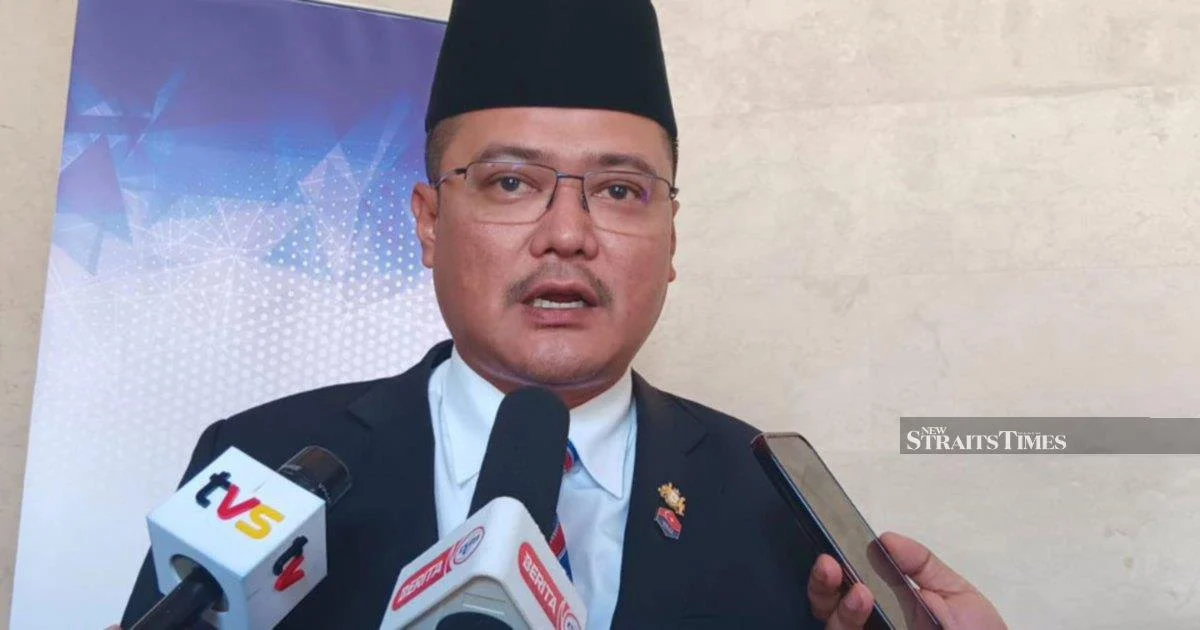
The political temperature in Johor has escalated sharply as the state's Barisan Nasional leadership launched a forceful counter-attack against Datuk Dr Mohd Puad Zarkashi, the former speaker of the Johor state legislative assembly, over his recent public statements. Barisan Nasional officials in Johor have characterised Puad's allegations—particularly those suggesting connections between the royal palace and particular political decisions—as entirely without foundation, representing a grave breach of political decorum and responsibility.
Puad, who previously held significant authority as speaker of the state assembly, has become an increasingly contentious figure in Johor politics in recent weeks. His claims appear to have touched on sensitive institutional relationships, specifically how the palace might influence state political outcomes. Such allegations carry particular weight in Malaysia's constitutional system, where the sultans occupy ceremonial roles with specific defined powers that remain carefully circumscribed under federal and state law.
The coalition's formal rejection underscores deep fractures within Johor's political establishment. Barisan Nasional's swift and emphatic response indicates that party leaders view Puad's statements as not merely disagreeable but as fundamentally destabilising to established political norms. The decision to issue a categorical public rebuke suggests the coalition sees Puad's claims as requiring immediate countering to prevent reputational damage.
Umno Youth, the youth wing of the dominant United Malays National Organisation within Barisan Nasional, has amplified the party's position by asserting that hundreds of individuals have filed police complaints in response to Puad's allegations. This numerical claim serves multiple strategic purposes: it demonstrates grassroots support for Barisan Nasional's stance, suggests widespread public disapproval of Puad's statements, and frames the matter as transcending inter-party rivalry to become a public concern warranting law enforcement attention.
The involvement of law enforcement through multiple police reports signals that the dispute has escalated beyond standard political disagreement. Police reports concerning allegations about palace influence or interference in state politics represent serious institutional matters in Malaysia's constitutional framework. The filing of numerous complaints creates official records and potentially establishes grounds for investigation, though the substantive legal consequences remain uncertain pending police assessment.
Puad's background as former speaker gives his statements particular resonance and sensitivity. As someone who previously occupied a constitutional position of significant responsibility and proximity to state leadership, his current allegations carry credibility that might resonate with sections of the Johor electorate. His departure from these roles and subsequent public statements suggest a fundamental breach within Johor's political establishment that extends beyond normal factional competition.
For Malaysian readers following state-level politics, this confrontation illustrates broader questions about institutional autonomy and political accountability in Malaysian governance. The emphasis on palace involvement in Puad's allegations touches concerns about constitutional boundaries—specifically, how far formal and informal influence from traditional institutions should extend into elected political processes. Barisan Nasional's determined rejection reflects anxieties about challenges to their political dominance in a state where they have traditionally maintained firm control.
The timing of this dispute coincides with broader scrutiny of Johor's governance and political stability. As Malaysia's wealthiest state and a significant economic engine for the country, developments in Johor politics carry implications beyond the state's borders. Investor confidence and administrative continuity depend partly on political predictability and institutional stability, matters that public allegations about palace involvement in political decisions potentially threaten.
Umno Youth's mobilisation of party supporters to file police reports represents a counter-strategy to Puad's public campaign. Rather than engaging directly with the substance of his claims, the coalition approach emphasises institutional loyalty and demonstrates organisational capacity to generate official documentation of disapproval. This tactic also potentially deflects detailed examination of Puad's allegations by framing the issue as one of defamation or breach of constitutional respect rather than substantive political governance questions.
The implications for Johor's political trajectory remain unclear, though the intensity of the response indicates serious concerns among Barisan Nasional leadership. If Puad's allegations gain wider currency or attract media and public attention, questions about palace relationships with state governance could become focal points for political opposition and civil society scrutiny. Conversely, if Barisan Nasional successfully delegitimises Puad's claims, the episode may fade, though institutional damage to internal party cohesion appears already substantial.
Malaysian political observers will be closely monitoring whether this dispute produces formal investigations, legal proceedings, or further public escalation. The involvement of police represents a potential pathway toward judicial or investigative resolution, though Malaysian political history demonstrates that police involvement in high-level political disputes does not always lead to clear institutional outcomes. The balance between constitutional respect for traditional institutions and democratic accountability for elected officials remains fundamentally contested terrain in Malaysian politics, and Johor's current crisis exemplifies these enduring tensions at state level.

