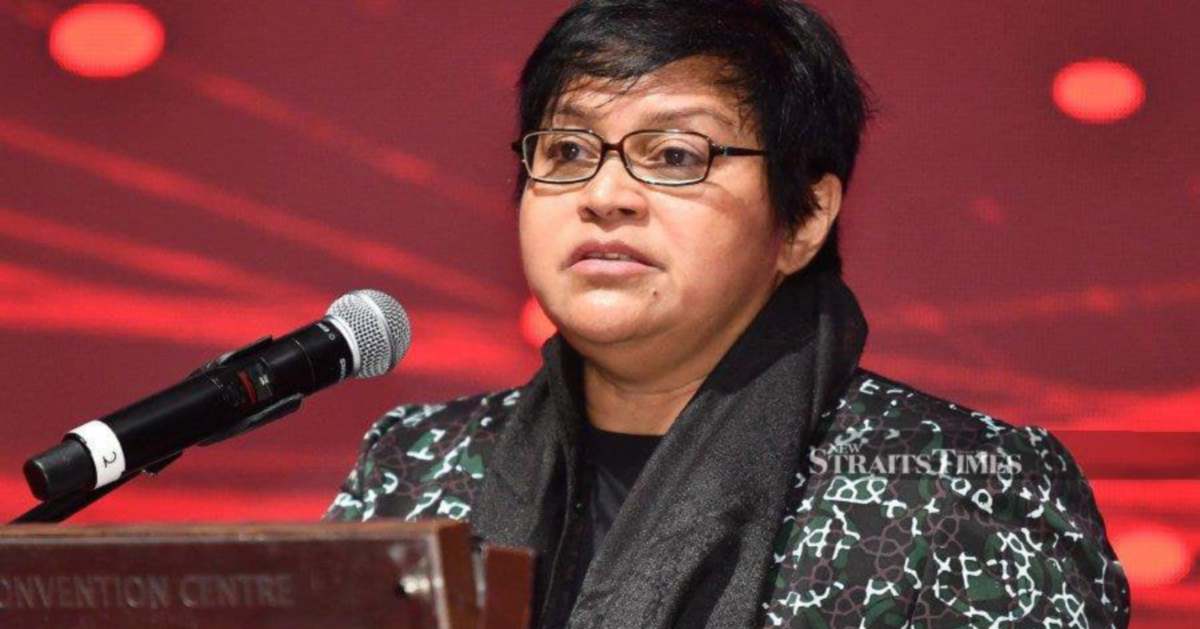
Umno's information chief Datuk Seri Azalina Othman Said has firmly stated that deliberations regarding potential coalition or unity arrangements in Johor must be deferred until after the state election results have been officially declared. Speaking from Putrajaya, Azalina made clear that engaging in coalition negotiations before the electorate has cast its votes would be putting the cart before the horse, effectively undermining the democratic process.
The cautionary remark from Azalina reflects broader tensions within Malaysia's political landscape, where coalition-building has become increasingly complex and fluid in recent years. The traditional post-election coalition formation process—where parties assess their electoral performance and negotiate terms based on actual seat counts—remains the standard democratic practice. However, pre-election speculation about potential alliances has become commonplace, sometimes creating confusion among voters about which parties might work together in government.
Azalina's position underscores Umno's apparent desire to maintain focus on the election campaign itself rather than entertain speculation about post-election arrangements. This approach aims to prevent distraction from the party's core campaign messaging and policy platform. Particularly in Johor, where Umno holds significant historical political influence, the party may be keen to present a unified front centred on its electoral pitch rather than be drawn into detailed discussions about coalition partners or governance structures that might still be uncertain.
The Johor state political arena has seen considerable volatility over the past decade, with various coalitions rising and falling. Understanding the current context is crucial: Johor, as Malaysia's second-largest state and a traditional Umno stronghold, remains strategically vital to the party's broader ambitions. Any state-level government formation in Johor carries implications beyond the state itself, potentially influencing federal-level political dynamics and the balance of power within the Malay-Muslim dominated coalition structures.
Azalina's statement also implicitly cautions against opposition parties or other Umno rivals from making early coalition announcements that might be designed to create pressure or set narratives before the actual results are known. In Malaysian politics, early coalition claims can occasionally be strategic moves to either attract wavering voters or to position parties favourably in potential post-election negotiations. By calling for restraint, Azalina seeks to ensure the election is contested on its merits rather than on the basis of hypothetical power-sharing arrangements.
The timing of such remarks matters considerably. Elections in Malaysia are typically preceded by weeks of intense political activity, campaign rallies, policy announcements, and increasing speculation about post-election scenarios. Media coverage frequently includes analysis of various coalition possibilities, and politicians from different parties often make competing claims about likely alliances. Azalina's intervention signals that at least within Umno's communication strategy, there is an intention to keep the focus on the electoral contest itself.
For Malaysian voters in Johor, this message carries significance insofar as it suggests the party wants them to evaluate candidates and policies without the complicating factor of predetermined coalition calculations. However, the reality is that few voters make decisions in a vacuum—most understand that state governments emerge from coalition negotiations based on how seats are distributed. Azalina's call for patience until results are declared does not eliminate this political reality; it merely requests that formal discussions be postponed.
The statement also reflects international best practice in democratic elections. Many developed democracies maintain clearer separation between campaign periods and government formation periods, allowing coalitions to be negotiated transparently after results are known rather than locked in before voting occurs. Malaysia's system, while less formally structured in this regard, theoretically operates on similar principles: the election determines which parties have mandates, and coalition arrangements follow logically from that outcome.
Within Umno specifically, Azalina's intervention may also serve an internal function. By insisting that coalition discussions remain off-limits until after results are declared, the party leadership can maintain unity among its own members and supporters, avoiding internal disagreements that might arise from premature coalition commitments. Different factions within Umno may have varying preferences regarding potential coalition partners, and deferring such discussions until after the election results provides cover for these latent tensions.
Looking at the broader Southeast Asian context, Malaysia's political fragmentation and coalition dynamics have become increasingly complex compared to earlier decades. Unlike countries with more established two-party or clear multi-party systems, Malaysian state and federal governments often emerge from intricate negotiations among multiple parties with overlapping ideological positions. Johor, with its particular political composition and historical significance, exemplifies this complexity and underscores why premature coalition clarity proves difficult to establish.
For opposition parties and independent observers, Azalina's statement might appear straightforward, but it also sets a marker: Umno is signalling confidence in its electoral prospects and does not wish to be bound by pre-election coalition commitments that might limit its negotiating flexibility. By keeping coalition options open until results are known, Umno potentially preserves its leverage in post-election negotiations, allowing it to engage with whichever partners might produce the most favourable governance arrangements.
The broader political culture in Malaysia continues to grapple with questions about transparency, electoral integrity, and the proper timing of coalition formation discussions. Azalina's remarks contribute to this ongoing conversation by taking a position that, while conventional in principle, remains worth reinforcing given how frequently Malaysian politics deviates from such procedural norms. Whether all political actors will respect this timeline remains to be seen.

