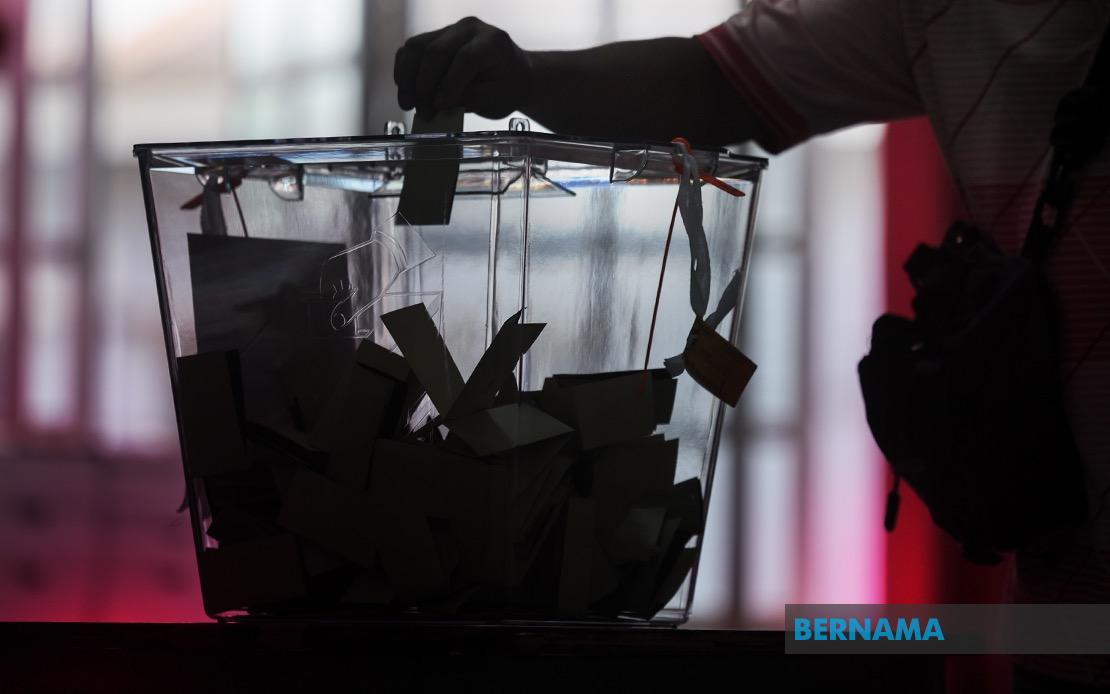
The upcoming 16th Johor state election could hinge significantly on voter participation, with political analysts suggesting that elevated turnout may deliver an advantage to candidates fielded by Pakatan Harapan, particularly across urban and semi-urban areas where outstation voters, younger citizens, and undecided electors comprise substantial portions of the electorate. According to Associate Professor Dr Mazlan Ali, director of the Faculty of Social Sciences and Humanities at Universiti Teknologi Malaysia's Kuala Lumpur Campus, federal political stability combined with economic recovery and government welfare measures could motivate PH-aligned voters residing elsewhere in Malaysia to make the journey home to cast their ballots.
The analyst's thesis rests on the observation that contemporary economic conditions and policy initiatives, particularly energy subsidies and other financial support programmes, have generated a constituency of voters satisfied with PH's stewardship. These individuals, he argues, would be incentivised to maintain continuity of governance at both national and state levels by participating in Saturday's ballot, even if it requires travel from outside Johor. The availability of such material benefits and the restored institutional predictability following earlier political turbulence have created conditions fundamentally different from those prevailing just two years ago.
A critical comparison emerges from the contrasting electoral outcomes of 2022 and later that same year. When Johor held its state election in 2022, voter participation remained subdued at just above fifty per cent, a circumstance that substantially advantaged Barisan Nasional, which possesses deeper organisational roots throughout the state and a more concentrated local voter base. Under those depressed turnout conditions, BN secured forty state assembly seats, its superior local infrastructure and established political machinery compensating for any potential disadvantage in popular sentiment. The low participation reflected ongoing pandemic-related disruptions that deterred many registered voters living beyond Johor's boundaries from returning to participate.
The narrative shifted dramatically when the 15th General Election unfolded later in 2022, by which point health restrictions had substantially eased and mobility patterns had normalised. Voter turnout surged to approximately seventy-five per cent, a twenty-five percentage point increase from the earlier state election. This mobilisation proved transformative for Pakatan Harapan's parliamentary performance in the state, enabling the coalition to capture fourteen Johor seats. The magnitude of this shift becomes apparent when examining raw voting figures: PH's total vote count more than doubled, climbing from roughly three hundred and fifty thousand votes in the state election to eight hundred and thirty thousand during the general election.
Dr Mazlan emphasises that this doubling of popular support, when translated into the state assembly context with its smaller constituency units, suggests PH should realistically anticipate winning substantially more seats if comparable turnout materialises at the forthcoming state ballot. The mathematical logic appears straightforward: if voter mobilisation reaches or approaches general election levels, the proportional gains should magnify correspondingly within a state-level framework where seat distribution operates on tighter margins. This observation provides quantifiable foundation for optimism among PH strategists heading into the campaign's final phase.
Crucially, the 2024 election environment differs materially from 2022's constraints. Pandemic-related complications that previously suppressed outstation voter participation have dissolved, and preliminary indicators suggest such voters demonstrate renewed willingness to return home for electoral purposes. The removal of logistical barriers that previously dissuaded participation combines with improved economic sentiment to create what observers characterise as substantially more favourable conditions for mobilising PH's core voter coalition. The analyst notes that these structural changes distinguish the current contest from the conditions that produced BN's overwhelming 2022 victory.
Urban and semi-urban constituencies represent the anticipated battlegrounds where PH's prospects brighten considerably with elevated turnout. Voters inhabiting these areas exhibit greater responsiveness to contemporary policy debates, governance effectiveness, and economic considerations, alongside demonstrated receptivity to PH's emphasis on institutional accountability and equitable treatment. The coalition's supporter profile skews toward educated professionals, geographically mobile populations, young voters, and those actively engaged in digital civic discourse—demographics that align closely with urban and peri-urban geographic distributions. These constituencies respond more strongly to political narratives emphasising justice and institutional integrity than to appeals grounded in identity-based or communal sectarian sentiments.
This demographic alignment creates a strategic imperative for PH: mobilising these outstation and urban voters becomes the decisive variable determining seat acquisition. Dr Mazlan identifies a fundamental contrast between PH's voter composition and rival formations, suggesting that while PH supporters tend toward educational achievement, professional standing, geographic mobility, and social media participation, alternative political formations draw strength from constituencies more responsive to communal identity appeals. When outstation cohorts—predominantly from PH's demographic base—return home to vote in substantial numbers, they generate what the analyst describes as a potentially decisive rebalancing of support, particularly within closely contested urban and semi-urban seats where such voters concentrate.
The timing and logistics of voter mobilisation thus become paramount strategic concerns. PH must ensure that its dispersed supporter base recognises the electoral opportunity and possesses adequate practical means to participate, particularly those whose registration remains tied to Johor constituencies despite current residence elsewhere. The coalition's campaign apparatus must accomplish the dual task of maintaining enthusiasm among existing supporters while simultaneously addressing the practical impediments—travel costs, time constraints, work obligations—that might otherwise prevent participation from outstation voters. Campaign messaging must counterbalance these friction points by emphasising the importance of participation and the material consequences of electoral outcomes.
The 2024 contest thus assumes characteristics somewhat intermediate between the 2022 state election environment and the 2022 general election circumstances. Structural barriers to outstation voter participation have substantially diminished, yet state elections inherently command less public attention and mobilising intensity than general elections. The question becomes whether campaign intensity, economic sentiment, and satisfaction with federal governance can approximate the turnout surge witnessed during the general election. Should participation approach those levels, seat projections strongly favour PH expansion; should turnout revert toward 2022 state election baselines, BN's organisational advantages reassert themselves despite any shift in popular sentiment.
Malaysia's broader political trajectory intersects with Johor's electoral outcome, as state-level results reverberate through national coalition dynamics and parliamentary mathematics. The 16th Johor election effectively tests whether the 2022 general election results reflected durable shifts in voter preference or merely exceptional mobilisation circumstances unlikely to recur. Voter turnout at Saturday's ballot will substantially determine whether Johor represents a recovered stronghold for PH or whether BN's state dominance persists despite reduced federal influence. The analyst's emphasis on turnout mechanics captures an essential truth: electoral outcomes frequently turn not on fundamental preference shifts but on which constituency proves most effective at converting supporters into actual voters.

