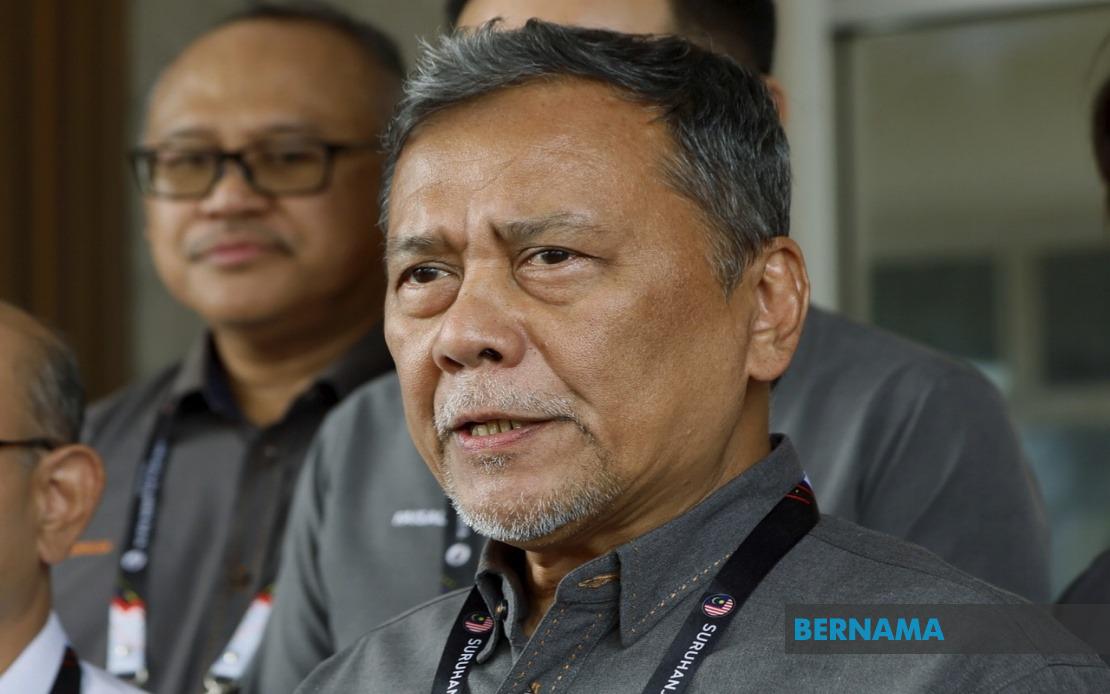
The Election Commission has registered 588 allegations of campaign-related misconduct in the lead-up to Johor's state election this Saturday, reflecting the heightened scrutiny surrounding the contest for 56 legislative seats. Commission chairman Datuk Seri Ramlan Harun disclosed the figure at a press conference in Kluang on July 7, underscoring the watchdog's active monitoring of electoral compliance across the peninsular state. The sheer volume of complaints—while not unprecedented in Malaysian state contests—signals the intensity of campaigning and the public's willingness to report suspected violations to authorities.
Among the 588 documented cases, authorities have converted 44 into formal police reports, indicating that investigators determined sufficient grounds existed to pursue criminal allegations. The complaints span a spectrum of possible offences, from irregular campaign financing and unregistered propaganda to violations of campaign silence periods and misuse of government resources. Such infractions, if proven, carry penalties ranging from fines to imprisonment under the Elections Offences Act 1954. The distinction between formal police reports and unresolved complaints is significant for Malaysian electoral enforcement, as it suggests that while many allegations warrant investigation, others may lack supporting evidence or fall outside the commission's jurisdiction.
The Malaysian Anti-Corruption Commission has also entered the picture, with three separate referrals forwarded for examination of suspected graft-related breaches. This development reflects the growing convergence between electoral regulation and anti-corruption oversight in Malaysia's political ecosystem. Cases involving alleged misuse of public funds, improper inducements, or conflicts of interest increasingly trigger MACC involvement, particularly in high-stakes contests like state elections. The involvement of multiple investigative bodies underscores broader concerns about maintaining the integrity of the electoral process and ensuring public confidence in the legitimacy of outcomes.
Datuk Seri Ramlan's announcement came during an inspection of the election machinery in Johor's Kluang district, where he and Malaysian Armed Forces Chief General Tan Sri Azhan Md Othman observed early voting operations at multiple centres. This supervisory engagement by senior election officials reflects institutional efforts to maintain transparency and demonstrate active oversight throughout the electoral cycle. The presence of military leadership alongside the commission chairman also symbolized coordination between civilian electoral authorities and security establishment, a pattern common in Malaysian election management.
The early voting process, which preceded the main polling day, accommodated 20,607 voters across designated military and police facilities. This cohort comprised 8,544 members of the Malaysian Armed Forces and their family members, alongside 12,063 police personnel and their relatives. Early voting for uniformed services personnel has become standard practice in Malaysian elections, enabling security force members to cast ballots before their operational commitments during the formal polling period. The smooth administration of this preliminary phase, monitored by senior officials, generally indicates proper procedural controls were functioning, though the complaints data suggests irregularities persisted elsewhere in the campaign.
The 16th Johor State Election fielded 172 candidates competing across 56 state assembly constituencies, representing a substantial field by Malaysian standards. This candidate density reflects both the political competitiveness of Johor and the involvement of multiple parties contesting virtually every seat. Higher competition typically correlates with more vigorous campaigning, increased spending, and correspondingly more opportunities for regulatory violations. The breadth of candidate recruitment across party structures also creates administrative challenges for campaign finance monitoring and compliance verification, potentially explaining why complaint volumes reached such levels.
From a Malaysian electoral perspective, the complaint tally merits contextualization. While 588 allegations might appear troubling in isolation, comparable figures have been recorded in previous major state elections, including those in Selangor and Perak. The commission's ability to process such volumes, refer appropriate cases to law enforcement, and maintain electoral operations simultaneously reflects institutional maturation, though questions persist about the efficacy of post-election enforcement and consistency in penalty application. The gap between complaints filed and cases pursued suggests either that many allegations lack substantiation or that prioritization mechanisms direct resources toward the most serious suspected violations.
For Malaysian voters, particularly those in Johor, the extensive complaints register carries mixed implications. On one hand, the documented monitoring and referral process demonstrates that electoral misbehaviour does not proceed entirely unchallenged or unrecorded. The involvement of police and anti-corruption authorities suggests consequences exist for certain categories of violation. Conversely, the sheer number of unresolved complaints raises questions about enforcement capacity and the visibility of consequences to potential perpetrators. In a competitive political environment, if violations are perceived as low-risk or rarely prosecuted, incentives for compliance diminish.
The Saturday polling date will ultimately determine whether the extensive pre-election monitoring translated into a contest perceived as broadly legitimate by participants and observers. The Election Commission's responsibility extends beyond complaint management to encompassing voting operations, result verification, and the transparent resolution of disputes. The early evidence of active institutional engagement, combined with documented complaint handling, suggests the commission approached its stewardship of the Johor contest with operational seriousness. However, the true test of electoral integrity lies not merely in complaint volumes or early voting administration, but in the coherence and fairness of the entire polling process and the credibility of the outcome it produces.

