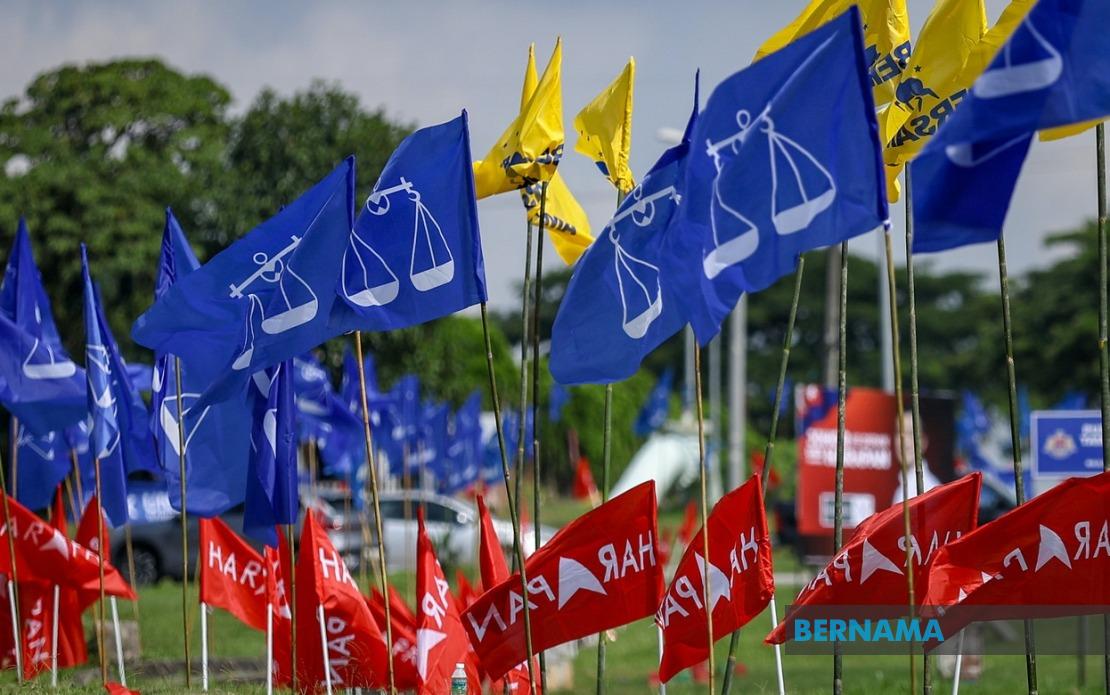
A televised dialogue on Johor's imminent state election will go ahead as planned on Tuesday evening, though the sitting Menteri Besar has indicated he will not be able to participate owing to conflicting prior obligations. The forum, co-hosted by RTM, Astro AWANI and Sinar Harian, remains a significant platform for candidates to articulate their vision and policy positions to voters with just days remaining before the 16th Johor State Election takes place.
The dialogue has been scheduled for 8 pm at the RTM Auditorium, housed within the Johor Broadcasting Department's facilities in Johor Bahru. According to correspondence from the Johor Information Department, organisers anticipate attracting approximately 200 participants representing various government ministries, statutory agencies and grassroots MADANI Communities. The participation of such a substantial audience indicates that state authorities view the forum as an important opportunity for civic engagement during the electoral campaign period.
While Datuk Onn Hafiz Ghazi, the incumbent Menteri Besar and Barisan Nasional representative, will be absent, Communications Minister Datuk Fahmi Fadzil is confirmed to attend the proceedings. Additionally, Dr Maszlee Malik, the Pakatan Harapan candidate competing for the Puteri Wangsa state seat, is expected to take part in the dialogue. The presence of a senior federal minister alongside the opposition candidate suggests that both the government and PH view this broadcast discussion as a venue worthy of high-level political attention.
An aide to the Menteri Besar, when approached for clarification, tersely confirmed that Onn Hafiz's name does not appear on the official programme schedule. The brevity of this statement—"No. The MB is not listed in the programme itinerary"—offered no elaboration on whether this decision reflects a late cancellation or was determined well in advance. His absence represents a notable gap in the dialogue, since the Menteri Besar would ordinarily be expected to defend his administration's record and outline his coalition's policy proposals during a major pre-election forum.
The dialogue format, designed to span approximately one hour, aims to furnish both major candidates with equal opportunity to articulate their respective visions, policy platforms, priorities and proposed solutions to matters affecting Johor's electorate. This balanced approach reflects the media organisations' commitment to impartiality during the election campaign. For voters still making up their minds, such forums provide crucial insight into candidates' thinking on key issues affecting the state's development, economy and social services.
Johor's 16th State Election represents a significant political contest in Malaysia's electoral calendar. The race encompasses 172 candidates vying for representation across 56 state assembly constituencies. The competitive nature of the contest has generated considerable interest, particularly given the stakes involved for both Barisan Nasional and Pakatan Harapan in maintaining or shifting control of the state government. Johor has historically been regarded as a Barisan stronghold, making any gains by opposition parties particularly significant.
The election timeline underscores the proximity of voting. Early voting is scheduled for July 7, the same day as the dialogue, while general polling takes place on July 11. This compressed schedule means candidates and their supporters have limited time to reach voters directly. Media-facilitated forums thus become increasingly valuable as platforms where undecided voters can observe candidates discussing substantive issues. The dialogue's timing on early voting day suggests organisers intended to reach those casting ballots ahead of the main polling day.
Onn Hafiz's non-participation raises questions about strategic campaign priorities and resource allocation during the final stretch of the election campaign. Whether his absence reflects genuine scheduling conflicts or a deliberate decision to focus campaigning efforts elsewhere remains unclear from publicly available information. His decision stands in contrast to the apparent commitment shown by both Fahmi Fadzil and Dr Maszlee Malik, who will be present to engage in the televised discussion.
For Malaysian viewers following the Johor election closely, particularly those in the state weighing their voting decisions, the dialogue will offer limited opportunity to assess the incumbent Menteri Besar's perspective on current governance challenges and future priorities. Instead, voters will primarily hear from federal representation and opposition candidates. This configuration may inadvertently shape public perception of which political forces view direct engagement with voters as a campaign priority during this crucial moment.
The dialogue's organisation by RTM, Astro AWANI and Sinar Harian reflects media responsibility to facilitate public discourse around elections. These platforms, reaching audiences through television and print media, serve the essential democratic function of enabling voters to make informed choices based on candidates' stated positions and visions. Despite the Menteri Besar's absence, the forum is expected to generate substantial viewership and discussion across traditional and social media channels in the days immediately preceding polling.
The implications of this dialogue extend beyond Johor itself, as the state election outcomes will influence Malaysia's broader political trajectory. Johor's size, economic importance and historical status as a Barisan bastion make it a closely watched barometer of national political sentiment. The election results may signal shifting voter preferences that could have ramifications for federal politics in the coming years. Media engagement like this dialogue thus serves not merely local but also national political interests.

