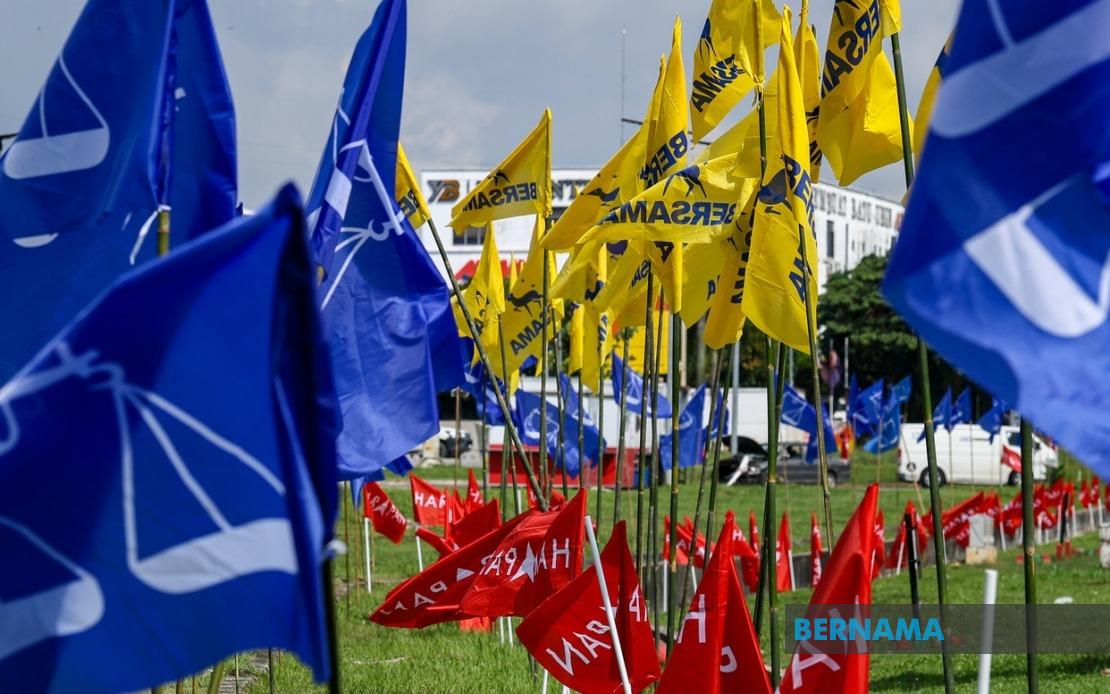
Political scientists and analysts have issued a pointed reminder to contesting parties in the Johor state election: campaigns should be built on policy substance and administrative track records rather than inflammatory personal attacks or partisan hostility that could fracture necessary working relationships at the national level. The 16th Johor state election, scheduled for Saturday, presents an opportunity for mature democratic competition where voters evaluate platforms on their merits, according to observers monitoring the electoral environment in Malaysia's second-largest state.
Prof Datuk Dr Awang Azman Awang Pawi of Universiti Malaya has emerged as a leading voice in this debate, emphasising that legitimate electoral competition need not entail bridge-burning between rival parties. His intervention underscores a tension facing Malaysian politics: the simultaneous requirements of vigorous state-level contestation and stable national governance structures that often demand coalition-building across party lines. In Johor's context, where multiple coalitions and individual parties are competing, this balancing act carries particular weight given the state's economic importance and its role as a testing ground for federal policy ideas.
The Universiti Malaya scholar advocates for campaigns organised around tangible governance questions: which coalition can most effectively manage Johor's administration, attract foreign and domestic investment, bridge the urban-rural divide, and tackle pressing quality-of-life issues from housing affordability to employment creation. These substantive terrain marks a departure from campaigns centred on identity politics or narrow state chauvinism that treats opposing parties as existential threats. Awang Azman's argument rests on a straightforward observation—that voters deserve clarity on what each competing slate proposes to accomplish, measured against evidence of previous performance or detailed policy blueprints.
Critically, Awang Azman flags the post-election reality that haunts Malaysian politics: competing parties will likely share ministerial portfolios, parliamentary committees, and joint responsibility for federal administration regardless of Saturday's outcome. Campaign rhetoric that demonises coalition partners or portrays them as ideological enemies creates residual mistrust that corrodes cabinet functionality and legislative efficiency. The cost of such poisoned relationships extends beyond Putrajaya itself, affecting coordination on economic policy, federal-state resource allocation, and emergency response mechanisms that require seamless intergovernmental trust.
Political analyst Dr Norman Sapar strikes a complementary note, characterising true political maturity not as rhetorical aggression but as demonstrated capacity to manage differences constructively. His assessment of the Johor campaign so far—that it has maintained reasonable restraint despite inevitable tensions—suggests that local political culture in the state retains institutional guardrails against the most corrosive forms of partisanship. Sapar's observation that Johor leaders have generally favoured subtle critique over confrontation points to an ethos of courtesy that, if sustained, could model less divisive electoral conduct for other Malaysian states.
The specifics of Johor governance that ought to dominate debate are substantive and immediate. The Rapid Transit System Link connecting to Singapore, the Johor-Singapore Special Economic Zone as a regional economic engine, affordable housing deficits in rapidly urbanising areas, and technical education pipelines that serve middle-income employment needs—these are concrete policy domains where voters can differentiate between competing visions. Cost-of-living pressures affecting middle-class and working-class households similarly demand specific proposals rather than general promises. Border economy dynamics, particularly given Johor's geographical proximity to Singapore, introduce complexities that require sophisticated policy engagement rather than sloganeering.
The 172 candidates contesting 56 state seats represent genuine choice, yet that choice becomes meaningful only when electoral debate illuminates the actual differences in approach, competence, and priority among competing parties and coalitions. Analysts warn that campaigns degenerating into personal attacks or communal dog-whistling obscure substantive distinctions and leave voters less informed about who can actually deliver improved governance outcomes. When campaigns turn nasty, voters often retreat from engagement, leading to lower perceived legitimacy for electoral outcomes and weaker public buy-in for post-election mandates.
Both Awang Azman and Sapar acknowledge that electoral competition itself need not be muted or deferential. Democracy thrives on vigorous contestation where different visions for state development can be articulated powerfully and differences highlighted clearly. The distinction they draw is between strong competition conducted within bounds of mutual respect and institutional propriety versus scorched-earth campaigns that treat opponents as enemies to be destroyed rather than as alternative service providers to be evaluated. This distinction may seem subtle in abstract terms but becomes operationally crucial when campaign energy could be devoted either to explaining policy differences or to delegitimising opponents.
The analysts' concern about federal-level stability reflects a genuine structural challenge in Malaysian governance. Coalition governments at the federal level often include parties that compete fiercely in state elections, requiring them to then cooperate at the national tier. Johor's election will almost certainly result in some winners needing to work with some losers in federal parliament and cabinet. The depth of campaign animosity directly affects the ease or difficulty of these necessary partnerships. Excessive state-level hostility creates political debts and emotional residues that complicate national governance, potentially leaving critical federal business unattended because parties are too alienated to collaborate effectively.
Voters in Johor appear increasingly capable of making precisely the analytical distinction that the experts recommend—differentiating between state-level political preference and recognition of federal-level cooperation requirements. This voter sophistication suggests that parties emphasising solutions and demonstrating administrative competence will likely outperform those relying primarily on opponent bashing. The electoral incentive structure thus naturally aligns with the analysts' normative argument: campaigns built on positive vision and proven capacity typically convert more votes than those built on negativity and polarisation.
As the Saturday polling date approaches, the 172 candidates seeking seats across Johor's 56 constituencies face a choice about the tenor of their campaigns. The analysts' intervention is not a plea for toothless consensus but rather an argument that democratic maturity involves wielding campaign rhetoric in ways that maintain future governance functionality. For Malaysian democracy, particularly in a state as economically vital and geopolitically positioned as Johor, the difference between scorched-earth campaigning and principled competition may prove consequential not just for Saturday's outcomes but for how effectively the winning coalition can govern in the months and years that follow.

