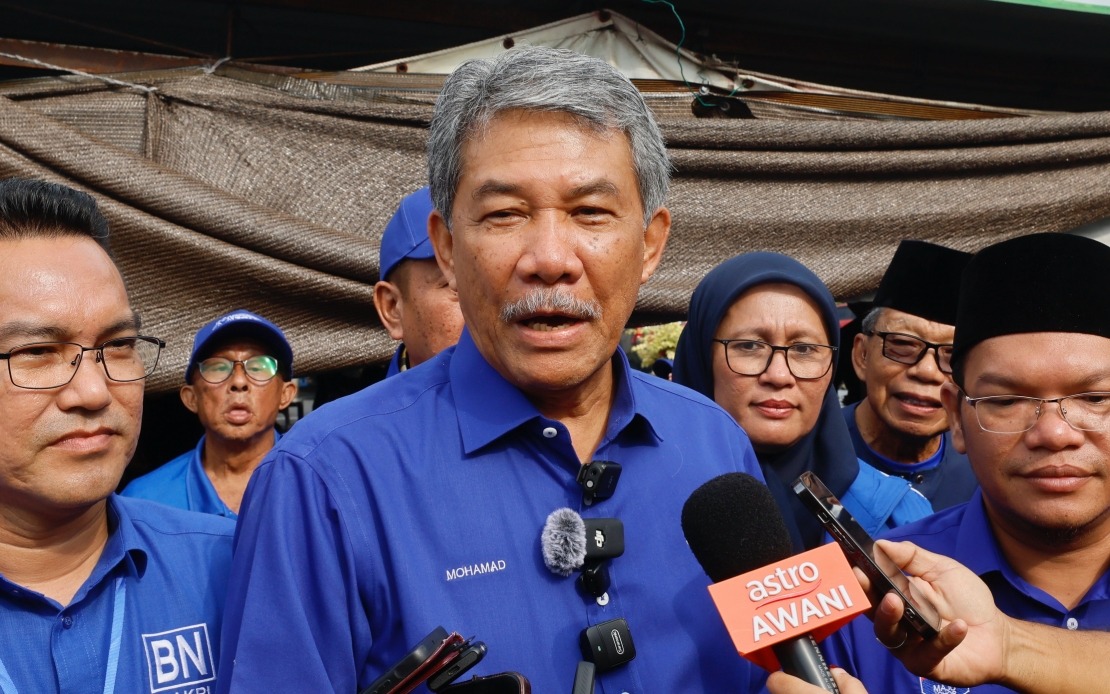
Datuk Seri Mohamad Hasan, UMNO deputy president and Foreign Minister, has called on all contesting parties in the upcoming Johor state election to maintain a mature and professional approach to campaigning. Speaking during a voter engagement session in Johor Bahru on July 6, Mohamad stressed the importance of preserving national stability by keeping campaign discourse focused on policy rather than personal grievances. The election, scheduled for July 11 with early voting commencing the following day, represents a critical moment for state-level politics in Malaysia's most developed southern state.
The veteran politician drew a clear distinction between healthy political competition and campaigns that cross ethical boundaries. While he acknowledged that parties have every right to present their policy platforms and electoral promises to voters, Mohamad warned against allowing such campaigns to rupture the delicate partnerships that sustain Malaysia's Unity Government arrangement. This balancing act reflects the broader challenge facing Malaysian politics—managing state-level electoral contests within the framework of federal coalition stability.
Mohamad elaborated on his position by framing political rivalry within acceptable parameters. He characterized light-hearted banter and policy criticism as normal aspects of democratic competition, but drew a firm line at campaigns designed to demean opponents on personal grounds. His comments suggest concern that the intensity of state election politics could spill over into destructive federal-level dynamics. The distinction he outlined reflects a pragmatic acknowledgment that Malaysia's political system, with its multiple layers of government, requires operators who can compete fiercely at one level while maintaining cooperation at another.
A significant portion of Mohamad's remarks addressed widespread speculation linking the Johor election to efforts that might ultimately benefit former Prime Minister Datuk Seri Najib Tun Razak. Such narratives have circulated within political circles, suggesting that control of Johor's state government could somehow translate into federal-level benefits for the imprisoned former leader. Mohamad moved decisively to counter this narrative, emphasizing that Malaysia remains fundamentally a nation governed by the rule of law and that UMNO, as a party, consistently upholds this principle.
The logic of Mohamad's rebuttal hinged on constitutional and governmental mechanics. He pointed out that a state election determines the composition of the Johor State Legislative Assembly and therefore who becomes Menteri Besar, but this outcome carries no direct bearing on questions of clemency or pardons affecting individuals convicted at the federal level. The distinction underscores how Malaysia's federal structure compartmentalizes power—state governments exercise control over state-level matters, while federal authorities retain jurisdiction over federal crimes and their remedies.
Critically, Mohamad invoked the constitutional supremacy of the Yang di-Pertuan Agong in matters of pardons and clemency. The Agong's prerogative in such matters remains absolute and cannot be usurped by state administrations, regardless of their political composition or inclinations. By anchoring his argument to this constitutional reality, Mohamad attempted to dispel the notion that electoral outcomes in Johor could create pathways to addressing Najib's legal situation. This constitutional grounding represented an effort to drain the purported electoral stakes that some observers had attributed to the Johor contest.
The 56 seats up for grabs in the Johor State Legislative Assembly are being contested by 172 candidates representing multiple political parties and formations. This distribution of candidates across constituencies reflects the competitive nature of the election and the genuine stakes involved in determining which coalition will govern Malaysia's richest state by gross domestic product. The turnout and results will provide significant insight into voter sentiment across different regions and demographic groups.
Mohamad's emphasis on managing the country effectively at the federal level revealed underlying anxieties about governance during periods of electoral contests. Malaysia's experience has shown that state elections can become flashpoints where federal coalition partners test each other's strength and commitment. By appealing to all participants to maintain campaign discipline, Mohamad attempted to establish norms that would preserve the institutional functioning of the Unity Government through the electoral period.
The timing of these remarks, delivered mere days before polling commenced, suggested recognition that campaign momentum was building and that some candidates or observers might be tempted toward more aggressive tactics. Mohamad's intervention represented an effort to establish red lines before such escalation became normalized. His stature as both a senior UMNO figure and Foreign Minister lent weight to his appeals for restraint and professionalism.
The broader context for these comments involves the complexities of Malaysia's Unity Government arrangement, which brings together historically rival political coalitions at the federal level. This unprecedented cooperation requires constant management and mutual forbearance from participating parties and leaders. State elections present particular challenges because they can become platforms where component parties and their leaders signal strength relative to coalition partners. Mohamad's intervention attempted to reframe such competitions as compatible with federal-level cooperation.
For voters in Johor, Mohamad's statement carried implications about what kind of campaign environment they could expect. His call for maturity and substantive policy focus rather than personal attacks suggested a vision of electoral competition that emphasized governmental competence and policy alternatives. This framing contrasted with campaign approaches that might prioritize emotional appeals or character-based criticisms of opponents.
Looking toward the July 11 polling date, Mohamad's remarks established parameters that other senior politicians would likely reference as campaigns concluded. His explicit warnings against personal attacks and his constitutional explanations regarding the limits of state government authority in matters like clemency provided intellectual tools for others seeking to maintain campaign boundaries. Whether all contesting parties and candidates would heed these appeals remained an open question, but Mohamad's position as a senior government figure and coalition member gave his call for restraint particular significance in shaping electoral discourse.

