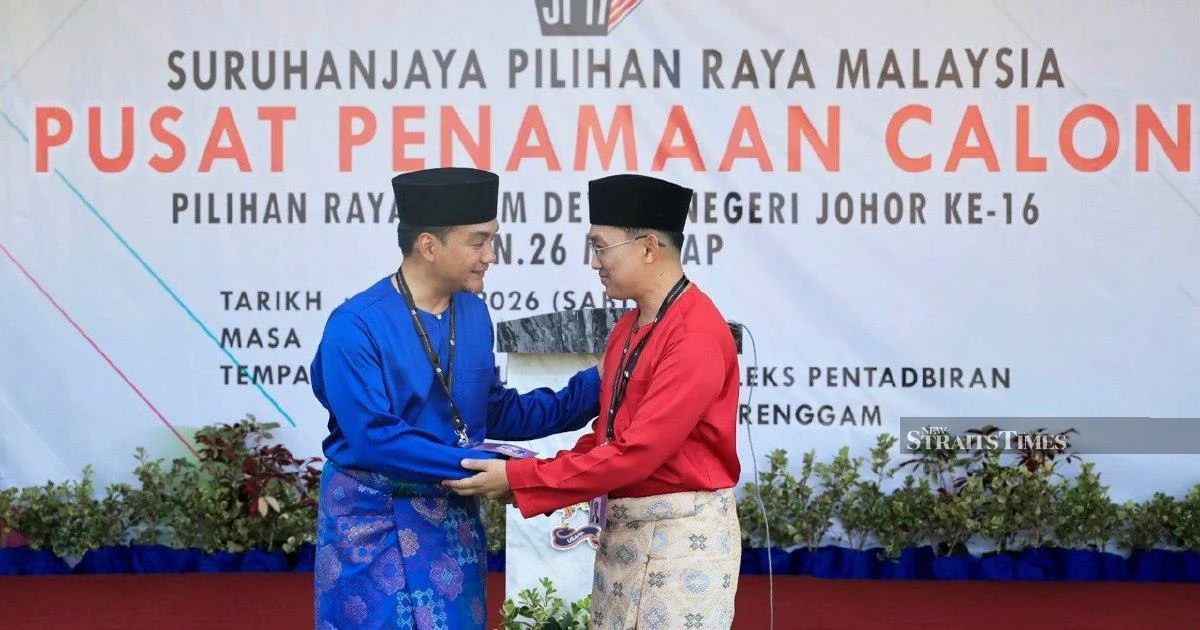
The prospect of a closely fought contest in Machap has prompted Johor's caretaker Menteri Besar Datuk Onn Hafiz Ghazi to adopt a cautious stance as he pushes forward with his campaign for a second term ahead of the July 11 election. Speaking at Simpang Renggam, the veteran politician acknowledged that the race remains far from settled, emphasising that developments on the campaign trail could yet deliver unexpected outcomes.
Onn Hafiz's guarded optimism reflects the competitive nature of state-level politics in Johor, where demographic shifts and shifting voter sentiment have reshaped electoral dynamics in recent years. The Machap seat, which lies within Onn Hafiz's broader political constituency, carries particular significance for his administration's continuity and mandate. His refusal to take victory for granted suggests awareness of tightening margins and intensified grassroots mobilisation by opposition forces.
The caretaker Menteri Besar's remarks underscore a broader reality facing Barisan Nasional and its allies across Malaysia's state elections: no constituency can be treated as a safe stronghold anymore. The erosion of traditional voting patterns, particularly among younger voters and urban professionals, has introduced greater volatility into electoral calculations. In Johor, where Barisan has long maintained dominance, such fluidity represents a departure from historical precedent.
Onn Hafiz's political trajectory has been marked by efforts to modernise Johor's governance while maintaining ties to traditional power structures. His first term witnessed various infrastructural and economic initiatives aimed at positioning the state as a competitive hub within the Southeast Asian region. However, like other Menteri Besar facing re-election bids, he must now convince voters that his track record warrants continued confidence, a task complicated by lingering economic pressures and the competitive landscape created by opposition parties strengthening their organisational presence.
The Machap constituency itself carries demographic characteristics that make it neither reliably safe nor hopelessly difficult for incumbent candidates. Its mix of urban and semi-rural areas means that no single voter bloc dominates decision-making, requiring candidates to appeal across diverse socioeconomic groups and age profiles. This heterogeneity has historically produced closer contests than some other Johor seats, validating Onn Hafiz's cautionary approach.
Campaign dynamics in Johor's July 11 election have grown increasingly sophisticated, with political parties deploying data analytics, social media strategies, and targeted grassroots engagement to mobilise supporters. The opposition, having made incremental gains in previous state contests, possesses organisational infrastructure that rivals traditional ruling-party machinery in certain constituencies. Machap, given its profile, may well become a focal point for both camps' resource allocation and messaging efforts.
Onn Hafiz's acknowledgement that outcomes remain uncertain also reflects pragmatism about voter behaviour in an era of accelerating political change across Malaysia. Voters increasingly make decisions based on specific policy performance, local-level service delivery, and candidate-specific factors rather than wholesale loyalty to political coalitions. For an incumbent Menteri Besar seeking continuity, this environment demands demonstrable achievements and credible engagement with constituent concerns.
The broader context of Johor politics involves historical questions about the state's identity and governance direction. Johor has traditionally served as a counterbalance to federal political dynamics, with its own political culture and power dynamics. State elections there carry implications extending beyond Johor itself, influencing federal political calculations and the balance within Barisan Nasional between competing factions and member parties.
Onn Hafiz's caution likely also reflects feedback from ground-level party operatives who conduct regular constituency assessments. Modern political campaigns generate substantial intelligence about voter sentiment through multiple channels, and any concerns raised by party machinery would naturally translate into more guarded public statements from senior candidates. His willingness to voice uncertainty, despite holding the incumbent advantage, suggests that internal assessments may indicate tighter margins than opposition commentators acknowledge.
The July 11 election will provide definitive answers about voter sentiment across Johor's constituencies, but Onn Hafiz's measured stance during the campaign preview period demonstrates that even experienced politicians recognise the genuine unpredictability now embedded in Malaysian electoral contests. For observers across Southeast Asia watching how Malaysia's democratic processes evolve, such caution from sitting officials signals healthy respect for voter agency and the authentic openness of democratic competition.

