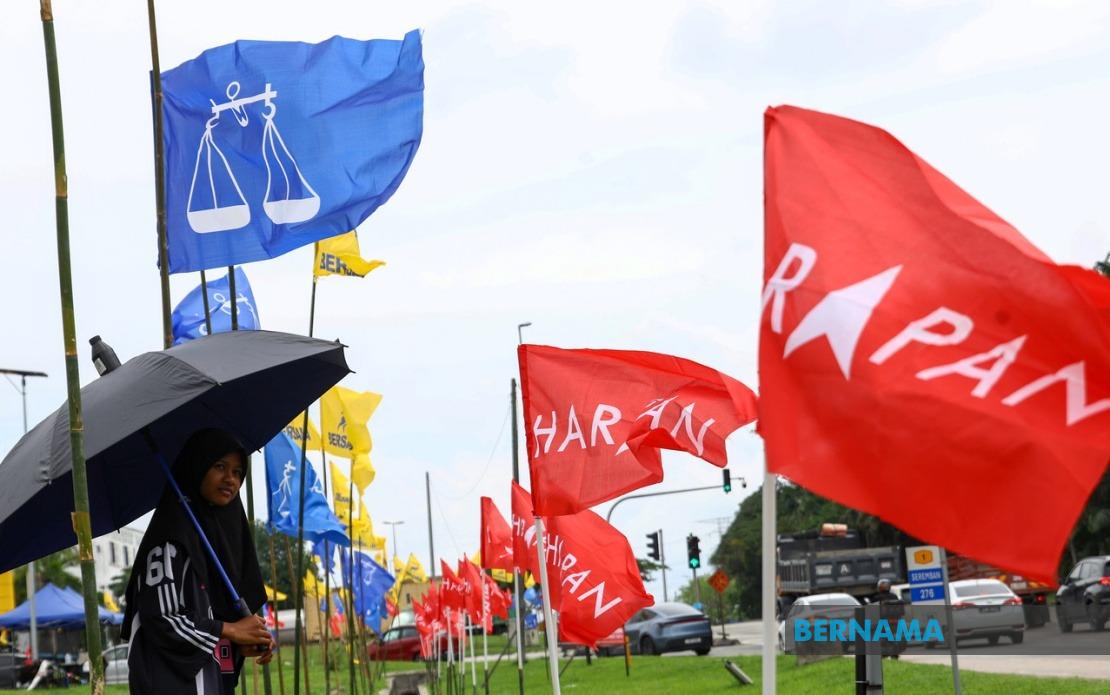
The campaign for Johor's 16th state election has crystallised into a battle between fundamentally different political philosophies, with Pakatan Harapan and Barisan Nasional pursuing contrasting strategies to secure voters' support in the contest for 56 state seats. Now well into its second week, the campaign reveals how Malaysia's two dominant coalitions believe they can best appeal to an increasingly complex and diverse electorate in the southern state, where polling is scheduled for July 11.
Pakatan Harapan's central campaign message centres on translating economic growth into tangible improvements in people's everyday lives. The coalition has positioned its approach around a comprehensive manifesto titled "Johor For All", which addresses interconnected concerns that dominate household conversations across the state: stagnating wages, the shortage of genuinely affordable housing, the quality and stability of employment opportunities, and the adequacy of social welfare provisions. This strategy represents a deliberate reframing of how development should be measured and evaluated. Rather than accepting conventional metrics such as foreign direct investment volumes or aggregate growth statistics, PH is arguing that Johor's success should ultimately be judged by whether ordinary residents can afford to buy homes, support their families on their earnings, and access reliable public services.
Barisan Nasional, by contrast, is capitalising on organisational assets and the symbolic return of prominent political figures to energise its campaign. The coalition has made strategic use of the comeback of Datuk Seri Hishammuddin Tun Hussein, the former UMNO vice-president, and Khairy Jamaluddin, the former UMNO Youth chief, both of whom rejoined UMNO through the "Rumah Bangsa" initiative. These returnees bring substantial political capital and name recognition that BN hopes will revitalise enthusiasm among its traditional base and reach demographic segments that have drifted from the coalition in recent years.
Political analysts emphasise that the two approaches reflect divergent assumptions about voter behaviour and priorities. According to Dr Mohammad Tawfik Yaakub from Universiti Malaya, contemporary voters have become considerably more discerning than in previous election cycles. They do not simply respond to the presence of well-known politicians delivering campaign speeches, or ceramah, in their constituencies. Instead, voters now critically evaluate whether parties can articulate coherent policy positions, field credible candidates capable of delivering results, and demonstrate genuine understanding of the challenges confronting ordinary households. This evolution in voter sophistication suggests that personality-driven campaigns alone may prove insufficient to determine the election's outcome.
Hishammuddin's active participation in the Johor campaign carries particular significance for UMNO's electoral prospects. According to Assoc Prof Dr Mohd Yusry Ibrahim from Ilham Centre and Universiti Malaysia Terengganu, Hishammuddin retains substantial influence within Johor's political landscape and possesses the credibility to potentially reattract UMNO supporters who have become disenchanted with or distanced themselves from the party over recent years. His presence signals to wavering traditional supporters that the party remains committed to their concerns and that leadership renewal is occurring within UMNO ranks.
Khairy's role within BN's campaign strategy addresses a distinctly different electoral challenge: connecting with younger voters who have historically proven more volatile in their partisan attachments compared to older generations. Khairy has consistently polled well among younger demographics and maintains a recognisable public profile through social media engagement and contemporary political discourse. BN strategists evidently recognise that younger voters display fundamentally different decision-making patterns than their predecessors, prioritising alignment with recognisable public figures over inherited party loyalty or family political traditions.
The demographic shift in voting behaviour that Mohd Yusry describes represents a significant recalibration of Malaysian electoral dynamics. Young voters no longer exhibit the strong generational party loyalty that characterised their parents' voting patterns. Instead, they tend to support candidates and parties they perceive as authentic, relatable, and aligned with their specific concerns, whether those relate to employment prospects, climate policy, or governance accountability. This fragmentation of the youth vote creates both opportunities and vulnerabilities for established coalitions, requiring them to continuously demonstrate relevance rather than relying on inherited voter loyalty.
PH's emphasis on policy content and concrete solutions directly addresses the sophistication that modern voters increasingly demonstrate. By foregrounding specific mechanisms to increase wage levels, expanding access to affordable housing through integrated strategies, and improving employment quality, the coalition is attempting to frame the election as a choice between competing visions for economic organisation and resource distribution. This approach implicitly challenges the notion that Johor's prosperity should be measured primarily by attracting external investment, instead proposing that true development requires ensuring ordinary residents share meaningfully in economic gains.
BN's organisational strength and political networks represent assets that cannot be easily replicated by opposition coalitions, particularly in a state where the coalition has historically enjoyed deep institutional roots and administrative advantages. However, as political analysts note, these traditional strengths may prove less decisive than in previous electoral cycles if voters increasingly prioritise policy substance and demonstrated competence over party machinery and political personalities. The coalition's ability to integrate its organisational advantages with a compelling policy narrative will likely determine whether its strategy proves effective.
The contest between these competing strategies will ultimately be decided by which approach resonates more powerfully with Johor's diverse electorate. The state election encompasses 172 candidates competing across 56 seats, creating numerous local battlegrounds where national campaign strategies will interact with constituency-specific dynamics, candidate quality, and local grievances. Early voting took place on July 7, with the main polling day scheduled for July 11, meaning the final weeks of campaigning will prove crucial for both coalitions in consolidating their respective voter bases and persuading persuadable voters.
What emerges from the contrasting strategies is a broader question about the trajectory of Malaysian electoral politics. If voters increasingly prioritise policy substance and candidate credibility over party machinery and prominent figures, it suggests a maturation of democratic practice and electorate sophistication. Conversely, if traditional coalitions and recognisable personalities continue to dominate voting decisions despite campaigning that emphasises policy detail, it indicates that older patterns of politics remain resilient. The Johor election outcomes will provide important data regarding which interpretation better reflects contemporary Malaysian political reality and what this portends for future electoral contests.

