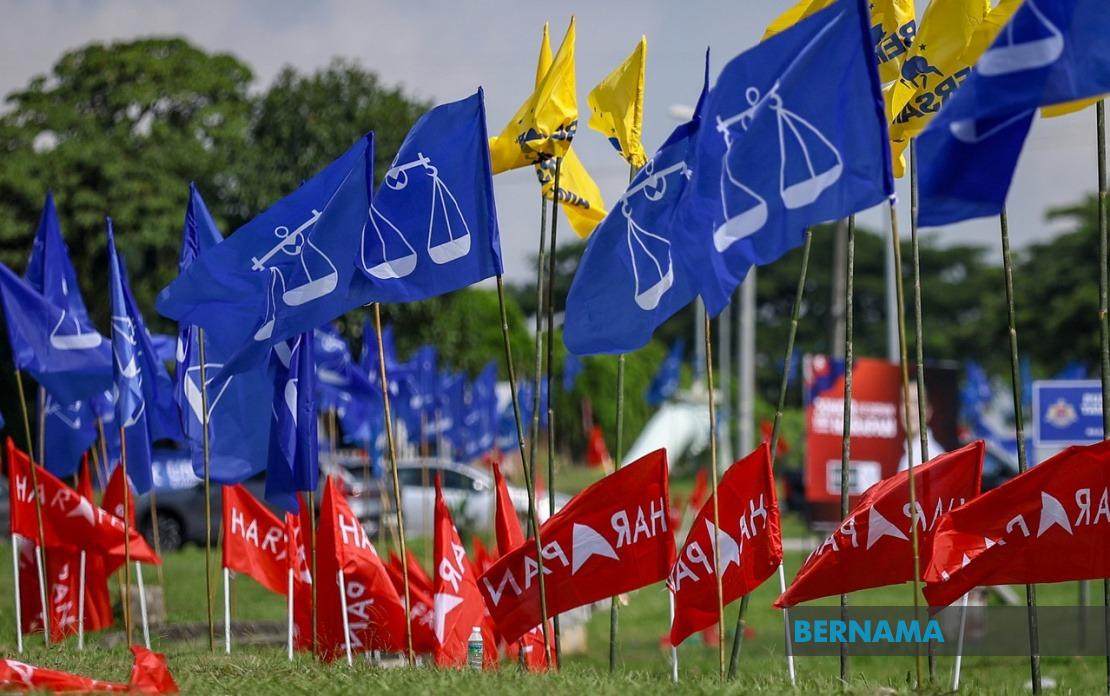
Pakatan Harapan's manifesto for the 16th Johor state election, unveiled on July 3, offers a comprehensive policy platform that directly contests Barisan Nasional's established narrative of administrative competence and stability. Political analysts now debate whether the opposition coalition's detailed commitments on employment, housing, healthcare and governance integrity can persuade voters to abandon the incumbent administration that has controlled the state for decades.
At the core of PH's platform lies a focus on what party strategists term bread-and-butter issues—the practical concerns that shape voters' daily lives and economic security. Associates Professor Dr Mazlan Ali from Universiti Teknologi Malaysia's Faculty of Social Sciences and Humanities characterises the "Johor For All" manifesto as sufficiently robust to challenge BN's administrative record. He identifies four pillars as fundamental to the opposition's strategy: creating decent employment opportunities, ensuring affordable housing access, improving overall quality of life, and establishing government integrity as a governing principle. According to analysts, these pillars address genuine public anxieties about affordability, employment prospects and faith in institutions—concerns that transcend partisan boundaries.
The manifesto's emphasis on these foundational issues reflects a deliberate strategic choice by PH to ground its campaign in tangible policy commitments rather than abstract political rhetoric. When a government successfully addresses these four interconnected challenges, Mazlan observes, it demonstrates substantive governance rather than symbolic gestures. The question facing Johor voters is whether PH possesses the capacity and credibility to deliver on such ambitious objectives. For voters weighing their options, the manifesto's specificity on healthcare, youth funding, housing targets and employment creation signals either confidence in actionable planning or, conversely, overambitious rhetoric disconnected from fiscal reality.
PH's numerical pledges carry particular significance in this calculus. The coalition promises RM500 million allocated to youth development initiatives, construction of 80,000 affordable housing units, creation of 250,000 high-paying jobs, and comprehensive healthcare protection schemes. These figures represent commitments of considerable scale that demand serious implementation infrastructure. Mazlan suggests such targets should not be dismissed as empty promises, pointing instead to the Unity Government's track record at federal level as evidence that similar pledges have proven deliverable. Economic indicators including ringgit strength, increased foreign direct investment inflows, and Malaysia's trade performance provide quantifiable support for the argument that governmental capacity exists to execute complex policy programmes.
However, analysts caution that manifesto credibility depends upon more than historical precedent. Universiti Tun Hussein Onn Malaysia lecturer Dr Nazreena Mohammed Yasin emphasises that voter confidence ultimately hinges on perceived capacity for delivery. The manifesto's strength, she argues, lies not merely in what it promises but in how convincingly PH demonstrates implementation pathways, secured financial resources, and realistic implementation timelines. For undecided voters—often the decisive constituency in closely contested elections—such specificity proves decisive. These voters assess not only individual candidates but evaluate whether a political coalition demonstrates genuine governance capability and proven capacity in public service delivery across multiple portfolios and administrative levels.
BN's incumbency status provides a formidable structural advantage in this context. The ruling coalition benefits from established administrative machinery, demonstrated implementation experience spanning multiple electoral cycles, and an entrenched narrative of state stability and continuity. Johor voters have experience observing BN governance in action, whereas PH's state-level track record remains more limited. This asymmetry of proven experience versus prospective promises fundamentally shapes voter calculations in elections involving long-incumbent administrations facing credible opposition challenges.
Yet PH's platform contains elements specifically calibrated to Johor's unique economic geography and demographic composition. The state's deep economic interdependence with Singapore creates a constituency particularly attentive to proposals addressing cross-border friction. PH's commitment to reducing border waiting times by approximately 50 percent and improving public transport connectivity with Singapore directly addresses grievances affecting cross-border workers and businesses. These initiatives transcend symbolic politics, offering concrete improvements to daily experience for tens of thousands of workers whose livelihoods depend on efficient cross-border movement. Similarly, ambitious job creation targets emphasising digital economy, artificial intelligence and high-value manufacturing sectors appeal specifically to younger voters seeking career prospects beyond traditional economic sectors.
The manifesto's emphasis on economic sectors aligned with emerging global trends suggests PH strategists have studied demographic preferences and economic trajectory analysis. Creating 250,000 high-paying positions in digital and technology sectors addresses youth unemployment concerns while positioning Johor as competitive within regional economic transformation. For younger voters particularly, such sector-specific targeting demonstrates policy sophistication beyond generic prosperity pledges. Whether such targeting reflects genuine capacity planning or aspirational wishful thinking remains the central question dividing voter assessments.
Nazreena emphasises that manifesto strength ultimately proves measured through voter perception of party credibility regarding implementation capacity. BN's long administrative tenure in Johor provides voters with observable evidence of governance style, resource allocation priorities and administrative responsiveness. PH must convince voters that its proposals represent achievable objectives backed by clear execution strategies rather than campaign-season aspirations destined for post-election abandonment. This credibility challenge confronts any opposition party challenging an incumbent with established governance presence and demonstrable administrative machinery.
The electoral contest scheduled for July 11, with early voting commencing July 7, will reveal whether PH's detailed manifesto strategy successfully persuades sufficient voters that change offers genuine improvement over BN continuity. Johor voters must weigh demonstrated administrative experience against prospective policy commitments, established stability against promised reform, and institutional incumbency against claimed innovation. The manifesto's comprehensiveness suggests PH has invested analytical resources in policy specificity, yet manifestos ultimately prove only as valuable as voter confidence in implementing pledges. Whether Johor voters perceive PH's "Johor For All" platform as transformative vision or sophisticated campaign messaging will determine whether opposition gains sufficient support to challenge BN's long dominance in Malaysia's second-largest state economy.

