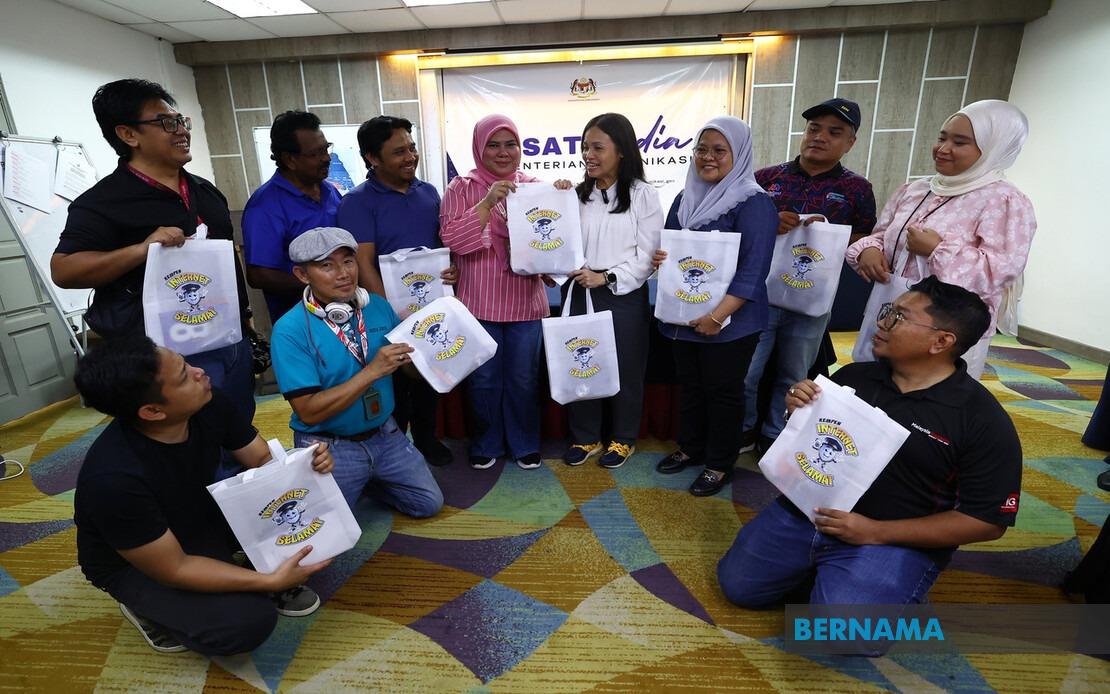
The Malaysian Communications Ministry has mobilised substantial infrastructure across Johor to support media operations during the 16th state election campaign, establishing a dual-hub system designed to streamline journalist workflow and ensure seamless information distribution. Deputy Communications Minister Teo Nie Ching announced that the initiative, developed in partnership with the Information Department, represents a coordinated effort to remove logistical barriers that journalists traditionally face during electoral coverage in the state. The two primary media centres—one anchored at Hotel Seri Malaysia in Johor Bahru and another positioned at NADI Kampung Sawah Awok in Muar—operate across an extended daily window from 9 am to 9 pm, beginning June 26 and continuing through polling day on July 11, providing media personnel with sustained access to essential facilities throughout the campaign period.
InternetConnectivity emerges as the centrepiece of this infrastructure rollout, with the Ministry committing to minimum speeds of 100 Mbps across all facilities. This threshold addresses a persistent challenge in Malaysian electoral coverage, particularly in secondary cities and rural areas where bandwidth constraints have historically complicated the real-time transmission of photographs, video footage, and accompanying reportage. For international and national correspondents operating under tight publication deadlines, reliable gigabit-speed connectivity eliminates the frustration of buffering delays and failed uploads that can derail news cycles. Beyond raw bandwidth, the ministry has equipped both primary centres with desktop computers, laptops, and peripheral devices including high-capacity photocopiers and printers, creating self-contained newsrooms where journalists can process documents, edit multimedia content, and manage the full spectrum of election-day operations without depending on external service providers.
The broader infrastructure extends well beyond these two flagship locations through the deployment of 100 National Information Dissemination Centres distributed throughout Johor's constituencies. This decentralised network serves a strategic purpose beyond mere convenience—it enables journalists covering grassroots campaigning and local electoral dynamics to access reliable facilities without lengthy journeys to central hubs. For freelancers and smaller media organisations with limited travel budgets, the availability of neighbourhood-level access points fundamentally changes the economics of election coverage, democratising the ability to report comprehensively from all corners of the state. The geographic distribution also acknowledges Johor's diverse topography, stretching from densely urbanised Johor Bahru to more dispersed rural constituencies where conventional infrastructure gaps might otherwise constrain coverage quality.
Telecommunications regulation forms the second pillar of the government's election support strategy. The Malaysian Communications and Multimedia Commission has assumed responsibility for monitoring telecommunications operators to maintain optimal internet performance during the campaign period, recognising that network congestion during high-traffic election days could undermine the connectivity guarantees embedded in the media centre infrastructure. This regulatory oversight extends to real-time signal assessment through the MCMC Nexus application, a crowdsourced monitoring tool that allows users to report connectivity strength at specific locations. The application's architecture protects user privacy by transmitting only technical metadata—geolocation and signal metrics—rather than personally identifiable information, creating a feedback loop where telecommunications companies receive objective data about network performance deficiencies that warrant infrastructure enhancement. For Malaysian readers accustomed to periodic connectivity problems, this mechanism represents a tangible effort to place signal quality under systematic scrutiny rather than relying on anecdotal complaints.
Election integrity concerns inform the final layer of the Ministry's strategy. Teo explicitly cautioned political parties and their supporters against campaigns that traverse the sensitive terrain of race, religion, and royalty, issues historically capable of inflaming communal tensions during electoral periods. This guidance reflects Malaysia's constitutional architecture, where Articles 153 and 181 place special provisions beyond routine political contestation. The reminder carries particular weight in Johor, a state where communal demographics create genuine potential for divisive campaign messaging if left unchecked. Complementing this guidance, the MCMC has committed to collaborative monitoring with police authorities to identify and remove social media content exhibiting extreme provocation. This intervention operates at the content moderation level, targeting material that transcends legitimate political speech to venture into incitement territory. The approach acknowledges the reality that while formal campaign periods have temporal boundaries, social media operates continuously, requiring sustained vigilance throughout the election window.
FactualAccuracy and media literacy constitute emerging priorities within the election framework. The Malaysian Media Council's establishment of a dedicated fact-checking platform represents institutional recognition that information quality, not merely quantity, determines electoral health. By encouraging citizens to adopt fact-checking habits before sharing content, the Ministry appeals to collective responsibility for information ecosystem integrity. In an era where false narratives propagate at algorithmic velocity, this educational initiative targets the transmission chain itself—by empowering individual users to authenticate claims before amplification, the system prevents misinformation from gaining compounding reach. For Malaysian social media users who frequently encounter conflicting claims about election logistics, candidate qualifications, and policy positions, this reminder to verify before sharing directly impacts whether voters receive accurate information upon which to base electoral decisions.
The election calendar structures the entire operational framework. Early voting occurs July 7, providing a preliminary test of the infrastructure's readiness ahead of the main polling day four days later on July 11. This staggered schedule allows election officials and communications teams to identify technical bottlenecks or capacity constraints during the early voting phase, enabling corrective measures before the high-volume main election day. For journalists, the early voting period provides an extended window to file reports about participation patterns, queue dynamics, and any procedural anomalies, potentially identifying systemic issues before millions of voters encounter them during the final polling day. The fifteen-day window from infrastructure activation on June 26 through polling day on July 11 creates adequate lead time for media organisations to position personnel, test connectivity, and familiarise themselves with the available facilities before election coverage commences in earnest.
From a regional perspective, Johor's electoral infrastructure offers instructive implications for other Malaysian states and Southeast Asian democracies grappling with how government can facilitate rather than obstruct media operations during elections. The integration of telecommunications regulation with physical facility provision and content moderation reflects a comprehensive approach acknowledging that electoral reporting depends on interconnected systems spanning infrastructure, connectivity, security, and information quality. For observers in other ASEAN nations contemplating election modernisation, Malaysia's experience demonstrates that robust media infrastructure need not imply government editorial control—rather, providing reliable facilities and monitoring network performance represents a neutral framework enabling journalistic independence. The commitment to high-speed connectivity particularly resonates with regional democracies where infrastructure gaps have compromised electoral reporting capacity.
The underlying philosophy evident in this announcement suggests growing acknowledgment within Malaysia's policy apparatus that transparent, well-reported elections strengthen democratic legitimacy. By removing practical obstacles to comprehensive media coverage, the Communications Ministry implicitly rejects the notion that restricted information flow benefits electoral administration. Instead, the infrastructure investment assumes that journalists equipped with reliable tools and connectivity will produce more thorough coverage, enabling voters to access the information necessary for informed decision-making. This represents subtle but meaningful shift in how government approaches the media's electoral role—not as potential problem requiring constraint, but as essential democratic institution requiring practical support. For Malaysian citizens and media professionals, the tangible availability of these facilities during the election period signals institutional commitment to creating conditions where journalism can function effectively during the critical moment when electoral competition intensifies and information quality becomes most consequential.

