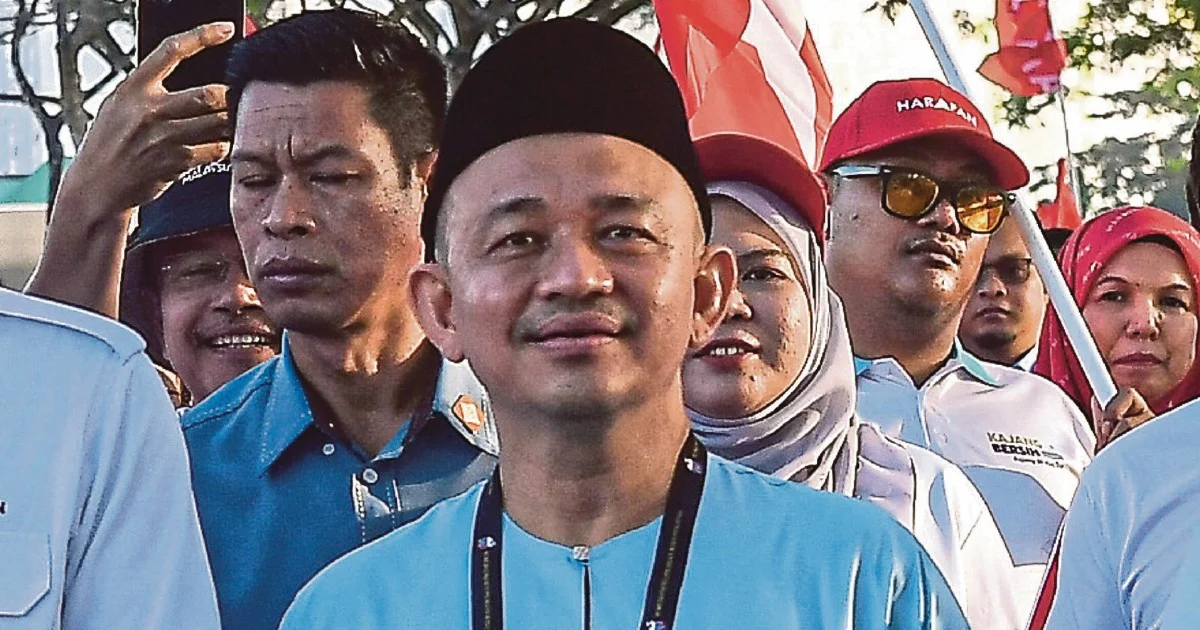
Former education minister Dr Maszlee Malik has signalled that a Pakatan Harapan victory in the Johor election would catalyse significant shifts in how the state approaches economic development and governance. Speaking in Johor Baru, Maszlee argued that winning key seats including Puteri Wangsa would position the coalition to implement a fresh development agenda distinct from the current administration's trajectory. His comments underscore the opposition's framing of the election as a referendum on development priorities rather than a routine electoral contest.
The emphasis on developmental outcomes reflects a broader strategic narrative within Pakatan Harapan's campaign messaging for Johor. By focusing on what a PH government would accomplish rather than merely critiquing incumbent performance, the coalition seeks to present itself as a constructive alternative with concrete plans. This messaging approach proves particularly significant in Johor, where the ruling Barisan Nasional has historically maintained strong organizational machinery and deep-rooted institutional advantages. For PH to overcome these structural obstacles, the coalition must convince voters that the electoral change would deliver tangible improvements in their daily lives.
Johor represents one of Malaysia's most politically competitive battlegrounds in recent years. The state's shifting political dynamics have made it a bellwether for national sentiment, with control of the state government influencing broader factional alignments within Peninsular Malaysia's political architecture. A PH victory would not merely represent a local power transfer but would reshape the regional balance that extends into neighbouring Selangor and Negeri Sembilan, potentially reconfiguring federal politics more broadly.
Puteri Wangsa, highlighted specifically in Maszlee's remarks, has emerged as a symbolic focal point in this electoral contest. The constituency represents the kind of semi-urban, middle-class demographic that increasingly determines Malaysian election outcomes. Success in such seats would demonstrate PH's capacity to appeal beyond its traditional urban and youth support bases to more diverse voter coalitions. Conversely, losses in constituencies like Puteri Wangsa would suggest that PH's expansion efforts remain limited to established strongholds.
Maszlee's involvement in the campaign carries particular resonance given his background as education minister during PH's previous federal government. His presence signals continuity between the 2018-2022 PH administration and contemporary campaign messaging. However, it also invites comparison between PH's previous performance in governance and current electoral promises, a dynamic that cuts both ways depending on voter assessment of those earlier years. Supporters recall policy initiatives and institutional reforms, while critics point to unfulfilled expectations and internal coalition tensions that ultimately precipitated PH's collapse.
The reference to a "new chapter" rhetorically positions PH governance as fundamentally distinct from not only the current Johor administration but also from broader patterns of governance that preceded 2018. This framing appeals to voters seeking discontinuity and reform, yet simultaneously exposes PH to demands for specificity about what such a new chapter would concretely entail. Vague promises of change consistently underperform against detailed policy platforms when voters possess sophisticated political awareness, as increasingly characterises Malaysian electorates.
Johor's economic profile makes development messaging particularly potent in this state. As a major industrial hub with significant port and manufacturing infrastructure, alongside substantial agricultural and tourism sectors, Johor's development trajectory significantly impacts Malaysia's overall economic performance. A change in state government could reshape investments in infrastructure, industrial parks, technology clusters, and human capital development. Different political management of federal-state relations might also affect how Johor captures resources and investment relative to other states, creating material consequences extending beyond local boundaries.
The electoral timing coincides with broader economic uncertainties affecting Malaysia, including inflation pressures, currency volatility, and global supply chain disruptions. In such contexts, voter receptivity to development-oriented messaging typically increases, as citizens prioritize economic competence and forward planning. Maszlee's emphasis on development thus taps into demonstrable voter concerns while simultaneously attempting to position PH as the coalition better equipped to navigate contemporary economic challenges.
Within PH's coalition structure, success in Johor would carry implications for intra-alliance dynamics. The state's electoral distribution affects which component parties gain influence within the federal coalition, with direct consequences for cabinet composition, resource allocation, and policy emphasis if PH achieves national government again. This internal dimension means that Johor results would reverberate through PH's organizational politics regardless of whether the state changes hands.
Opposition from Barisan Nasional should not be underestimated despite PH's increased competitiveness in recent years. Barisan retains significant advantages in campaign financing, administrative machinery, and institutional control that enable formidable defensive campaigns. Moreover, internal Barisan divisions or factional competition might either strengthen or weaken the coalition's collective performance depending on how effectively leadership manages unified messaging across constituent parties with sometimes divergent interests.
Looking forward, the election outcome will substantially influence both major coalitions' strategic calculations for any anticipated federal election. Johor results would provide crucial indicators about which parties and leaders command voter confidence, regional geographic advantages, and demographic appeal across diverse constituencies. This informational value often exceeds the direct local significance of state-level control, as national political actors interpret electoral outcomes as predictive signals about broader electoral possibilities.
Maszlee's campaign positioning ultimately reflects deeper questions about whether Malaysian voters perceive meaningful differences between available political choices and whether electoral competition meaningfully shapes policy direction. His emphasis on development rather than personality or factional conflict suggests a confidence that substantive policy distinctions between coalitions resonate with Johor voters. Whether this calculation proves accurate will become apparent as voting unfolds and subsequently influences Malaysia's political trajectory across multiple governance levels.

