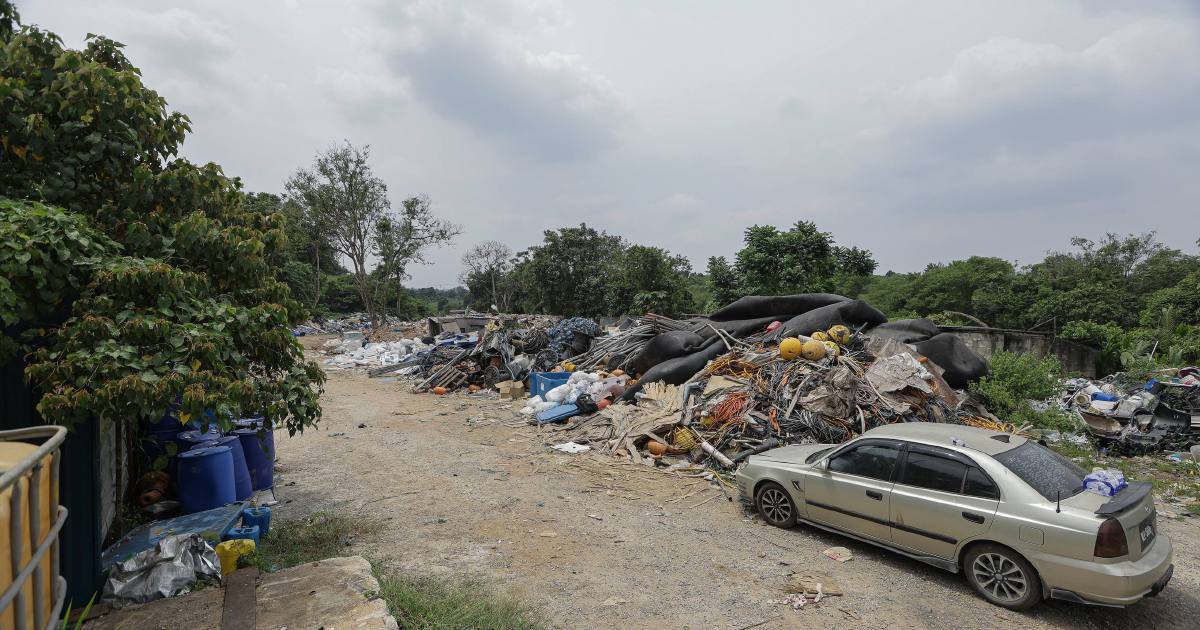
Johor authorities have announced plans to establish a coordinated task force involving multiple government agencies to thoroughly examine allegations that construction waste originating from Singapore has been disposed of unlawfully across several locations within Pontian district. The move represents a significant escalation in enforcement activity aimed at curbing transboundary waste trafficking, a persistent challenge in the northern regions of peninsular Malaysia that borders Singapore.
The formation of this multi-agency investigative unit underscores growing concerns about illegal waste disposal practices along the Malaysia-Singapore border, where geographical proximity and differing regulatory environments have historically created opportunities for illicit dumping. Pontian, situated at the southern tip of Johor and directly adjacent to Singapore, has emerged as a particular flashpoint for such activities, with residents and environmental groups periodically reporting suspicious waste accumulation at undeveloped plots and industrial zones.
Construction waste, which typically comprises concrete, timber, metals, and other materials from demolished structures or building projects, presents significant environmental and public health risks when dumped improperly. In tropical climates like Malaysia's, unregulated waste sites can become breeding grounds for disease vectors and contaminate groundwater reserves. The establishment of formal investigative mechanisms suggests that authorities believe there may be systematic rather than isolated incidents of waste trafficking across the border.
The task force structure will enable coordinated action between federal and state environmental enforcement bodies, local councils in Pontian, port authorities, and potentially police units specialising in environmental crimes. Such cross-agency cooperation is essential for tracing waste origins, identifying disposal routes, and establishing culpability among logistics operators and disposal site managers who may be complicit in receiving or facilitating the illegal dumping.
The allegations come amid broader regional scrutiny of waste management practices in Southeast Asia, where rapid industrialisation has generated enormous quantities of construction and demolition debris. Malaysia has increasingly positioned itself as an advocate for stricter transboundary waste controls, reflecting concerns that wealthier neighbours may exploit laxer enforcement in neighbouring territories. Singapore, despite its advanced waste management infrastructure, generates substantial construction waste volumes given its intensive urban development patterns and frequent reclamation and redevelopment projects.
From a Malaysian perspective, Pontian represents a critical environmental frontier, serving as a buffer zone protecting Johor's agricultural hinterland and coastal ecosystems. The area supports fishing communities and agricultural activities, both vulnerable to contamination from improperly managed waste sites. Residents in the district have growing awareness of environmental issues and are increasingly willing to report suspicious activities, providing intelligence that can support formal investigations.
The investigation will likely examine storage facilities, transport routes, and landfill operations across Pontian to identify where Singapore-origin waste may have entered Malaysian territory. Investigators will need to establish paper trails through customs documentation, waste manifests, and corporate records linking waste generators in Singapore to disposal operators within Pontian. Such detective work requires technical expertise in waste classification and origin determination, as well as forensic accounting capabilities.
Successful outcomes from this investigation could establish precedents for bilateral cooperation on environmental enforcement. Malaysia and Singapore maintain regular bilateral consultations on environmental matters, and documented evidence of systematic waste dumping could inform formal diplomatic discussions about harmonising enforcement standards and prevention mechanisms. Both countries benefit from maintaining the integrity of their shared natural environment, particularly in areas like the Johor Strait where marine resources support fishing and tourism industries.
The announcement also reflects Johor's broader commitment to environmental governance strengthening under state leadership focused on sustainable development. Previous incidents involving water pollution and chemical contamination have sensitised state officials to transboundary environmental threats. The task force represents proactive risk management rather than merely reactive crisis response, suggesting that authorities have identified patterns warranting systematic investigation.
Stakeholders including environmental non-governmental organisations, local business chambers, and farming associations will likely monitor the task force's progress closely. The credibility of the investigation depends on transparent communication about findings and timely action against parties found responsible for unlawful dumping. Given the cross-border sensitivity involved, investigating authorities must balance thorough accountability with diplomatic considerations.
The timeline for the investigation remains unclear, though complex cross-agency inquiries of this nature typically require several months to produce substantive findings. Preliminary results may emerge within a few weeks, identifying hotspot locations and patterns, while comprehensive attribution and enforcement action may extend considerably longer. The task force's effectiveness will ultimately be measured not merely by its investigative conclusions but by whether those findings translate into enforcement action, penalties, and preventive measures that deter future dumping incidents.
Johor's action signals that Malaysian authorities are taking the issue seriously and will not tolerate environmental exploitation at the border. The initiative also sends a message to waste management operators that illicit dumping operations face real consequences, potentially raising costs and risks for those considering transboundary waste trafficking as a waste disposal strategy.

