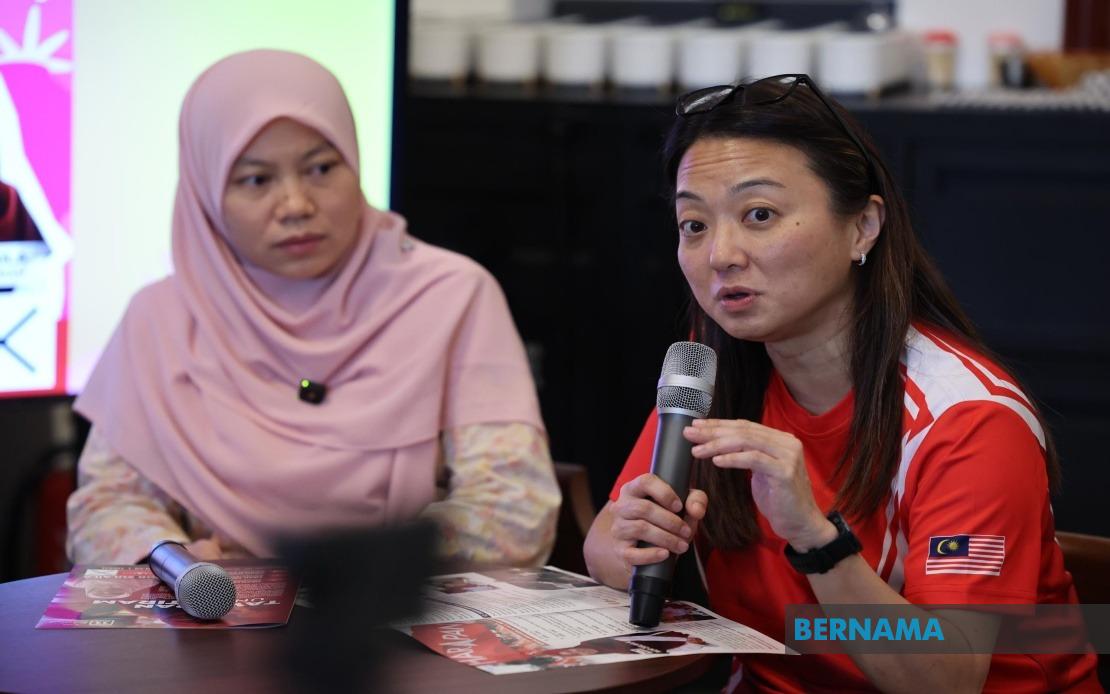
In defending the apparent similarities across party manifestos ahead of Johor's upcoming state election, DAP deputy secretary-general Hannah Yeoh has taken a pragmatic stance, arguing that convergence on key issues should be viewed as a positive outcome rather than evidence of unoriginal campaigning. Speaking in Johor Bahru on July 4, Yeoh, who serves as Minister in the Prime Minister's Department (Federal Territories), pushed back against suggestions that Pakatan Harapan's platform merely duplicates that of rival Barisan Nasional, reframing the debate around what truly matters to voters.
The criticism that manifestos appear interchangeable has circulated among observers of the 16th Johor state election, with some pointing to overlapping promises as indicative of lazy political positioning. However, Yeoh's counterargument deserves serious consideration: when multiple competing parties pledge to address identical policy areas, this may signal not intellectual bankruptcy but rather genuine alignment around voter priorities. The issues that dominate campaign discourse—welfare expansion, housing accessibility, and cost-of-living support—emerge because they resonate with ordinary Malaysians struggling with tangible daily challenges.
Yeoh elaborated that virtually every contesting party has made welfare improvements central to its platform because this constitutes a primary concern for ordinary households across Johor. Similarly, the housing shortage and affordability crisis have become so pressing that candidates from different political traditions cannot ignore them without losing credibility among voters. From this perspective, manifestos that share common policy terrain reflect not copying but rather responsive political engagement with genuine grievances that transcend partisan divisions. The Minister argued that such overlap should actually reassure the electorate rather than provoke suspicion.
Beyond defending manifesto commonalities, Yeoh used the occasion to highlight DAP's commitment to gender representation in candidate selection for the 56-seat state assembly. The party fielded eight female candidates among its 17 total nominees, a ratio Yeoh emphasized as evidence of institutional commitment to women's empowerment and political inclusion. This gendered approach to candidature carries significance beyond symbolic gestures, as Yeoh noted that women candidates possess untapped potential as policymakers and executives capable of holding major ministerial portfolios, including the position of Menteri Besar itself.
To ground these arguments concretely, Yeoh pointed to the candidacy of Nor Zulaila Abd Ghani in the Tiram constituency, whose professional trajectory spanning 12 years across local, state, and federal administrative bodies demonstrates that women can develop substantive governance experience. More compellingly, Yeoh highlighted Nor Zulaila's multicultural family background—Malay mother and Chinese father—as emblematic of a candidate who could help transcend racial divisions that continue to fracture Malaysian politics. This framing suggests that diversity in candidature offers benefits beyond numerical representation, potentially contributing to more inclusive policy perspectives and bridging historical communal tensions.
The Tiram race itself illustrates the broader competitive dynamics shaping the 2024 Johor election. Nor Zulaila contests against candidates representing Barisan Nasional, Parti Bersama Malaysia, and Perikatan Nasional—a four-cornered contest that reflects Malaysia's increasingly fragmented political landscape where traditional two-coalition contests have given way to multi-party competition. Such arrangements complicate voter calculus, as supporters must now evaluate not merely left-right ideological positioning but navigate a wider spectrum of choices, each with distinct organizational capacities and policy visions.
Packatan Harapan's decision to contest all 56 state assembly seats signals ambition to govern Johor outright rather than pursuing coalition arrangements that might necessitate compromise on manifesto promises. This strategy differs markedly from some Malaysian elections where opposition coalitions have negotiated seat distributions to avoid splitting anti-government votes. The decision to field comprehensive candidate lists across all constituencies suggests confidence in the coalition's ground organization and polling data, though it also raises the electoral stakes considerably, as winning outright majorities remains difficult in contemporary Malaysian politics.
The election timeline itself creates additional pressure on messaging and momentum. With polling scheduled for July 11 and early voting commencing July 7, parties have limited opportunity to shift narrative or respond to late-breaking developments. Campaign cycles in Malaysian state elections typically compress messaging into shorter periods than federal contests, requiring exceptional organizational discipline to maintain message discipline while addressing grassroots inquiries and candidate-specific local issues. Hannah Yeoh's intervention in the manifesto debate, therefore, represents strategic effort to reshape early perceptions before voting begins.
For Malaysian voters, particularly those in Johor, the debate about manifesto similarities masks deeper questions about implementation capacity and political will. Even if multiple parties promise identical housing or welfare initiatives, their ability to deliver depends upon fiscal resources, administrative competence, and priority sequencing within government budgets. A Menteri Besar's actual power to fulfill campaign pledges depends substantially upon federal government cooperation, revenue-sharing arrangements, and the state assembly's composition. Yeoh's emphasis on women's political participation and Nor Zulaila's administrative background implicitly asserts that DAP possesses the governance experience and institutional maturity to translate manifesto commitments into policy outcomes.
The broader context of Malaysian electoral politics suggests that voters increasingly evaluate parties not merely on policy promises but on demonstrated track records in governance. Johor's previous administrations, including the tumultuous political transitions of recent years, have given residents experience with how campaign pledges translate—or fail to translate—into concrete improvements. In this environment, Yeoh's reframing of manifesto similarity as positive reflects her awareness that voters are increasingly sophisticated in distinguishing genuine policy commitments from rhetorical flourish.
Yeoh's remarks also acknowledge that in contemporary Malaysian politics, cultural and social issues intersect with economic policy in ways that demand inclusive political representation. By highlighting candidates like Nor Zulaila who embody multicultural Malaysia, the DAP deputy secretary-general gestures toward a vision of governance that moves beyond zero-sum communal calculations. Whether such representation actually translates into substantively different policy outcomes or remains primarily symbolic will likely emerge only after voting concludes and a new state government takes office.
Ultimately, Hannah Yeoh's defense of manifesto similarities pivots voter attention from superficial textual comparisons toward underlying governance capacity and political will. By arguing that similar promises reflect genuine voter concerns rather than intellectual laziness, she reframes the election as fundamentally about which party can most effectively address shared challenges. This argumentative move acknowledges that Johor voters care less about unique rhetorical flourishes than tangible improvements to their material circumstances—a recognition that may prove more persuasive than defensive posturing about policy originality.

