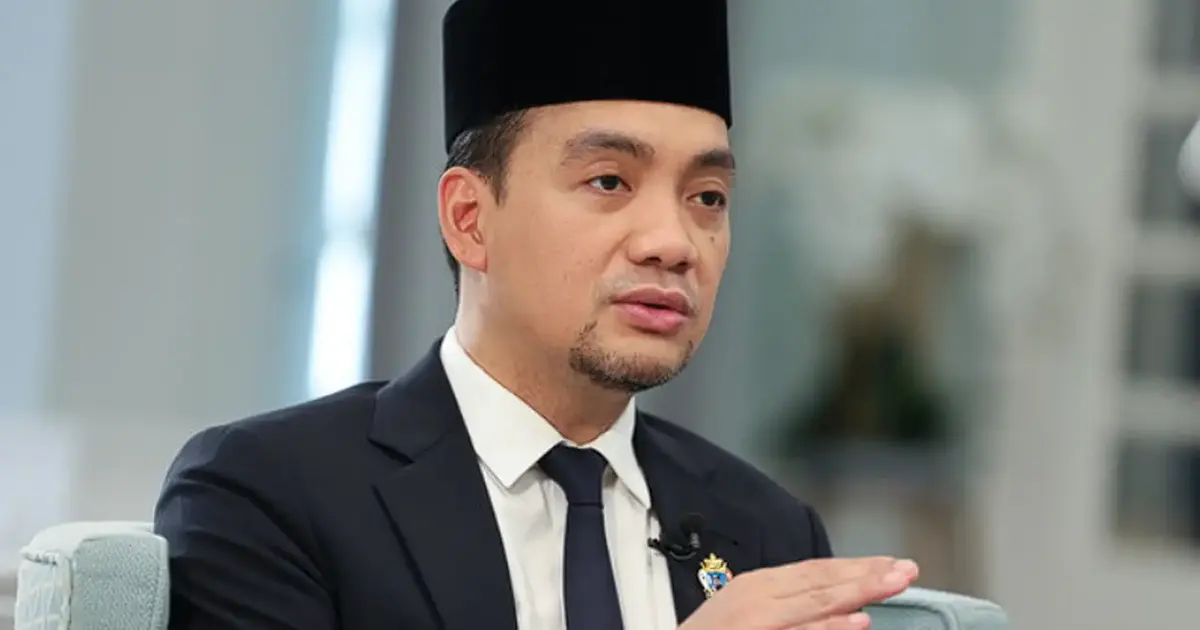
Caretaker Johor menteri besar Onn Hafiz has moved to clarify the constitutional role of the Johor palace in approving the state assembly's dissolution, emphasising that such royal assent represents standard procedural governance rather than any attempt by the monarchy to exercise political influence over elected representatives.
The timing of Onn Hafiz's comments reflects broader scrutiny in Malaysian political circles about the boundaries between monarchical authority and governmental independence. Questions about royal involvement in state affairs have periodically surfaced across Malaysia's constitutional landscape, particularly when major political decisions such as assembly dissolution coincide with palace actions. By explicitly distinguishing between constitutional process and political interference, the menteri besar appears intent on foreclosing suggestions that the Johor ruler has crossed traditional boundaries of royal prerogative.
Under Malaysia's federal structure, state assemblies operate within constitutional frameworks that vest certain powers in the respective rulers. The dissolution of a state assembly typically requires both the menteri besar's recommendation and formal royal approval, a two-step mechanism designed to distribute decision-making authority and prevent unilateral executive action. In Johor's case, this process has been consistently followed according to established legal procedures, suggesting adherence to constitutional norms rather than deviation from them.
The distinction Onn Hafiz draws carries particular weight given Malaysia's ongoing conversations about institutional checks and balances. The country's constitutional monarchy system deliberately intertwines royal and democratic authority, requiring coordination between palace and government while theoretically preventing either from dominating the other. When these institutions function as designed, decisions that formally involve the ruler remain politically neutral, executed as administrative requirements rather than substantive policy choices.
Johor's political environment has experienced considerable turbulence in recent years, with successive changes in government alignment and periodic disputes over executive authority. Within this context, questions about whether institutions are operating transparently or whether hidden political calculations influence official decisions become particularly acute. Onn Hafiz's public insistence on the constitutional character of royal assent may therefore serve to reassure multiple stakeholder groups—both those concerned about palace overreach and those anxious about executive instability—that established procedures remain intact.
The menteri besar's framing also reflects international and domestic expectations regarding institutional transparency in Malaysian governance. Constitutional monarchies worldwide face ongoing scrutiny about the proper exercise of royal prerogatives, and Malaysia is no exception. By openly articulating that royal assent constitutes constitutional process rather than political choice, Onn Hafiz engages in the kind of public explanation that democratic systems require when formal institutional power remains concentrated in non-elected hands. Such transparency, even in the form of defensive clarification, can strengthen public confidence that constitutional limits operate as designed.
From a federalism perspective, Onn Hafiz's comments underscore how power distribution works vertically within Malaysia's system. While the Federal Constitution vests significant authority in the national government, state rulers retain important prerogatives within their respective territories. The requirement that major state decisions receive royal assent reflects this federalist bargain, acknowledging that rulers possess genuine constitutional powers while preventing them from translating those powers into partisan political advantage. When menteri besars publicly affirm this balance, they implicitly commit themselves to respecting both poles of state authority.
The question of what distinguishes legitimate constitutional process from impermissible political interference depends heavily on whether established procedures are followed and whether the ruler's involvement remains confined to approval or rejection rather than extending to substantive direction of government. If Onn Hafiz's characterisation accurately reflects how the assembly's dissolution proceeded—with the menteri besar initiating the process and the palace providing routine approval—then his defence carries constitutional weight. Conversely, if evidence suggested that palace actors initiated the dissolution or imposed conditions on their approval, claims about purely constitutional process would face legitimate challenge.
For Southeast Asian observers, Johor's experience offers a case study in how constitutional monarchies navigate the perpetual tension between preserving traditional royal authority and accommodating modern democratic expectations. Thailand's more fraught constitutional history demonstrates what can occur when this balance breaks down, while other regional monarchies have managed to maintain both substantive powers and genuine democratic governance. Malaysia's particular achievement has been sustaining functioning democratic elections and executive authority despite the complexity of coordinating with nine separate state rulers and a federal monarchy.
The broader implications for Malaysian governance depend on how consistently institutions adhere to constitutional processes across different political contexts. If royal assent remains genuinely formal—deployed identically regardless of whether the government enjoys palace favour—then it functions as intended. However, if assent patterns suggest selective application or implicit direction from the palace, public confidence in the distinction between constitutional process and political interference would reasonably erode. Onn Hafiz's explicit defence thus stakes a claim that both the palace and the menteri besar continue respecting constitutional boundaries, a commitment that requires ongoing demonstration through action as well as words.

