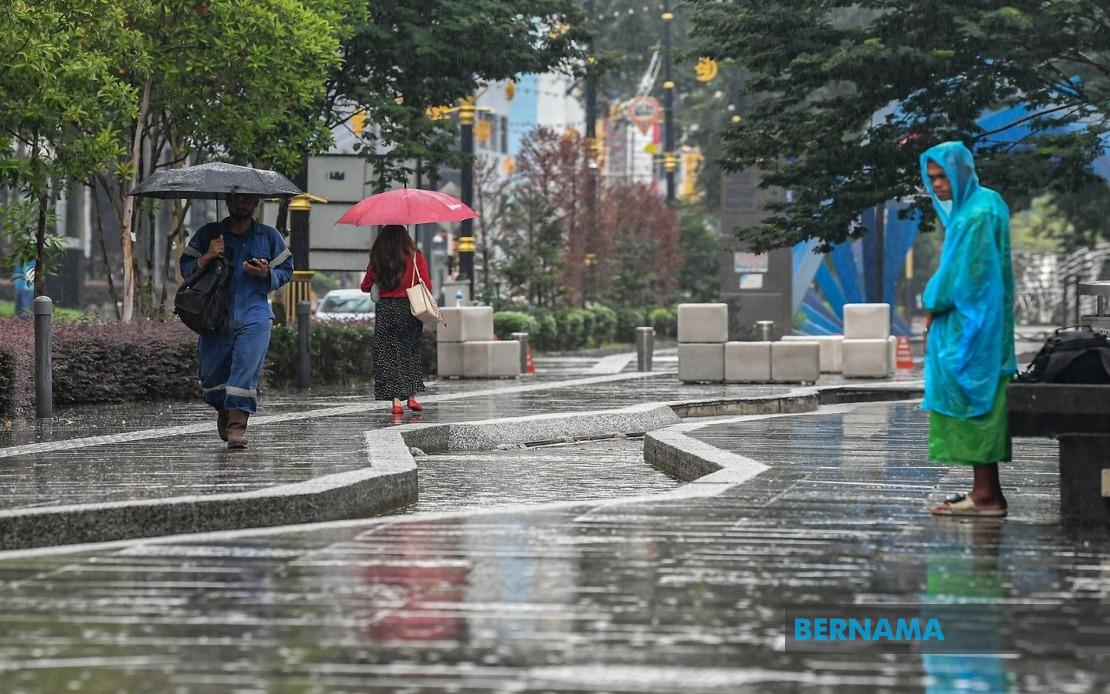
Weather conditions will present a logistical headache for political parties and election officials across Johor as the state gears up for its nomination day, with the Malaysian Meteorological Department forecasting rainfall across more than two-thirds of the state's districts. The wet conditions are expected to create what officials describe as a "challenge" for the thousands of candidates, supporters, and election workers converging on nomination centres throughout the morning, adding an unpredictable element to what is already a complex administrative exercise.
According to Azlai Ta'at, the Johor director of MetMalaysia, seven districts will experience rain during the critical morning hours when nomination activities take place. Johor Bahru, Muar, Batu Pahat, Kota Tinggi, Pontian, Tangkak and Kulai are all in the firing line, leaving only Segamat, Kluang and Mersing with clear morning conditions. The spatial distribution of this rainfall means that the administrative burden of nomination day will be concentrated in areas already struggling with wet weather, potentially affecting voter participation rates in subsequent electoral activities.
Temperature variations across the state will add another dimension to the challenging conditions. MetMalaysia expects minimum temperatures to hover between 24 and 25 degrees Celsius throughout Johor, while daytime highs will range between 31 and 34 degrees Celsius. Segamat is projected to experience the most intense heat, with maximum temperatures potentially reaching 34 degrees Celsius, creating a stark contrast with the wetter districts. This temperature differential is typical of Malaysia's tropical climate patterns, where localised weather systems can create dramatically different conditions within short distances.
The afternoon forecast presents an even more volatile picture as the nomination process concludes and campaigning officially begins. Thunderstorms are anticipated across seven districts—Johor Bahru, Segamat, Kluang, Kota Tinggi, Pontian, Mersing and Kulai—while Batu Pahat and Tangkak will experience sustained rainfall. Muar represents the sole exception, with conditions expected to be hot and relatively dry. This progression from morning rain to afternoon electrical storms reflects the typical convective patterns that dominate Johor during this season, potentially complicating campaign events and outdoor rallies scheduled for the evening.
The nomination process itself will unfold across 56 centres simultaneously between 9 am and 10 am, a compressed timeframe that leaves little margin for weather-related delays. Returning officers will then verify candidate eligibility before making official announcements, creating tight scheduling that weather disruptions could impact. Election officials have implicitly acknowledged these vulnerabilities by warning the public and candidate supporters to remain vigilant about meteorological developments and their potential consequences for nomination proceedings.
The political landscape contest reflects a fragmented but recognisable structure of Malaysian electoral competition. Pakatan Harapan is mounting a comprehensive challenge by fielding candidates across all 56 seats, with component parties contributing strategically—PKR providing 20 candidates, Amanah contributing 19, and DAP fielding 17. This distribution reflects both internal coalition dynamics and the parties' respective organisational strengths in different regions of the state. Barisan Nasional is equally committed to a full contest, though with different internal allocations: UMNO's dominance is reflected in its 36 nominations, while MCA nominates 16 candidates and MIC provides four, a configuration that has historically characterised the coalition's structure in peninsular states.
Perikatan Nasional's participation introduces a more complex competitive element, with its component parties adopting varied strategies that suggest both internal negotiations and assessments of local electoral viability. PAS is contesting only 11 seats, substantially fewer than other major components, while Bersatu fields 16 candidates. The Malaysian Indian People's Party contributes five nominations and Pejuang one, numbers that underscore the smaller partner dynamics within the coalition. This selective approach differs markedly from Pakatan Harapan's all-seats strategy, suggesting different confidence levels or different strategic calculations about electoral prospects.
Smaller parties are also participating, reflecting the increasingly pluralistic nature of Malaysian electoral politics. The Malaysian United Democratic Alliance is contesting four seats, Parti Sosialis Malaysia one seat, and Parti Bersama Malaysia—making its electoral debut—is fielding candidates across 15 seats. The emergence of Parti Bersama Malaysia as a contestant is particularly noteworthy, suggesting either dissatisfaction with existing coalitions or new attempts to capture specific electoral segments. The proliferation of parties contesting illustrates both the fragmenting tendencies within Malaysian politics and ongoing efforts by various groups to establish themselves as electoral forces.
The election commission has established a structured timeline that provides campaigners with adequate preparation and voting periods. Early voting is scheduled for July 7, providing the military personnel and police voters—totalling 24,751 individuals—with dedicated polling opportunities before the main election day on July 11. This staggered approach reflects operational efficiencies and the recognition that uniformed personnel require special voting arrangements. The substantial early voting period between nomination day and early voting will consume the immediate post-nomination window typically used for intensive campaigning.
The overall voter roll presents an electorate of considerable size and complexity. The election commission reports 2,727,926 registered voters across the state, comprising 2,703,175 ordinary voters alongside the aforementioned military and police contingents. This figure represents a substantial electoral exercise at the state level, with implications extending beyond Johor given the state's political significance within national political calculations. Voter turnout figures from this election will provide important indicators of engagement levels in state-level contests and the relative appeal of competing coalitions in what has become one of Malaysia's most electorally volatile regions.
The weather forecast's release demonstrates the technical competence of Malaysian meteorological services and the electoral commission's commitment to managing potential disruptions. By providing advance warning of meteorological challenges, officials enable parties and voters to adjust expectations and preparations accordingly. However, the concentration of rainfall across major population centres and administrative hubs means that the practical impacts may be more significant than headline forecasts suggest. Voters and campaign workers in the affected seven districts will navigate damp conditions while attempting to fulfil their civic and political responsibilities, a scenario that may influence overall participation levels.

