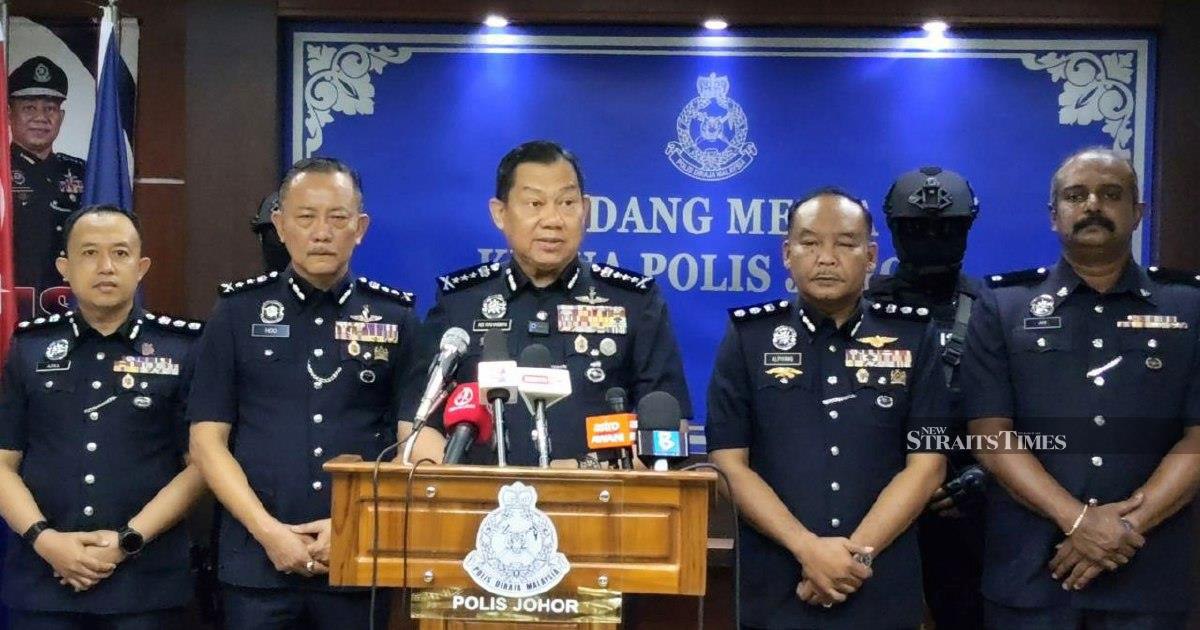
A coordinated police operation in Johor Baru on Saturday resulted in the seizure of 60.78kg of methamphetamine valued at RM3.04 million, marking a significant blow against drug trafficking in the southern state. Eight men were arrested during the raids, including a school dropout who had been enlisted to courier the controlled substance—a common pattern in organised drug networks that exploit young, economically vulnerable individuals to reduce the criminal liability of ringleaders.
The scale of the seizure underscores Johor's persistent challenges with the methamphetamine trade. As a state bordering Singapore and Thailand, with substantial port and land-crossing infrastructure, Johor remains a critical transit point for narcotics destined for both domestic consumption and regional distribution. The confiscation of this quantity suggests the operation targeted not merely street-level dealers but elements of a more structured supply chain, with roles differentiated between manufacturers or importers, wholesalers, and distribution networks.
The involvement of a teenage transporter reveals a troubling recruitment pattern within Malaysian drug syndicates. Young people, particularly school dropouts lacking economic prospects, represent an attractive asset to traffickers: they face lighter sentences if prosecuted as juveniles, they require minimal investment, and their relative invisibility in communities reduces detection risk. This dynamic reflects broader social vulnerabilities that law enforcement alone cannot address, signalling the need for preventive interventions targeting at-risk youth in economically disadvantaged areas.
Methamphetamine remains one of Malaysia's most intractable drug problems. The substance commands high profit margins, is relatively lightweight for its street value, and creates acute health burdens within communities—particularly among young adults in urban centres. Johor's seizure represents one component of a multi-pronged challenge spanning production, trafficking, and addiction treatment. The drug's prevalence in Southeast Asia has intensified regional cooperation efforts, though supply continues to expand despite significant enforcement actions.
The timing and coordination of Saturday's raids suggest intelligence-led policing rather than routine patrols. Such operations typically involve weeks of surveillance, financial tracking, and undercover work before enforcement begins. The arrest of eight individuals simultaneously indicates authorities had mapped a connected network rather than disrupting isolated dealers. The inclusion of multiple roles—transporters, distributors, and likely wholesale operatives—suggests investigators understood the network's structure comprehensively.
For Malaysian readers, such operations carry mixed implications. They demonstrate police capacity to identify and dismantle organised distribution networks, which is reassuring for public safety. However, the recurring seizures of similar quantities across the country suggest that such busts represent incremental progress against a substantially larger flow of narcotics. Individual large-scale confiscations, while impressive operationally, often do not significantly disrupt street availability or pricing without sustained, systematic pressure against upstream production and transnational trafficking routes.
The broader Southeast Asian context matters considerably. Amphetamine-class drugs, including methamphetamine and MDMA, are manufactured across the region in clandestine labs concentrated in Myanmar, Laos, and Cambodia. Malaysia's location makes it both a destination market and a transit corridor. The Narcotics Drugs Act and associated enforcement mechanisms have grown more robust, yet traffickers continuously adapt routes, methods, and supply chain structures to circumvent detection. Saturday's seizure was significant, but international cooperation and upstream intervention in production countries remain critical to addressing the problem at scale.
The economic incentives driving participation in methamphetamine trafficking remain formidable. A teenager recruited as a transporter might earn RM500–2,000 per run—income that far exceeds legitimate wages available to school dropouts. Until Malaysia's labour market and education system offer viable alternatives for economically marginalised youth, criminal networks will continue finding recruitment pools. The school dropout arrested on Saturday represents not an exception but an archetype within the Malaysian drug trade.
Police have yet to disclose full details of the eight individuals' roles, backgrounds, or whether they face trafficking charges carrying mandatory minimum sentences. The circumstances of the seizure—whether narcotics were intercepted en route, discovered at a residence, or recovered during arrest—have not been publicly specified. Such operational details matter for understanding the network's structure and vulnerabilities, information crucial for informing broader enforcement strategies.
The RM3.04 million valuation reflects street-level pricing rather than wholesale cost; the actual value to traffickers was substantially lower, highlighting the profitability of drug distribution. This margin explains why even aggressive enforcement has not deterred large-scale operations. As long as demand persists and profit margins remain extreme, supply will adapt to compensate for confiscations. Johor police's Saturday operation was professionally executed and tactically significant, yet its strategic impact depends on whether it represents sustained, systematic pressure against trafficking networks or an episodic enforcement success.

