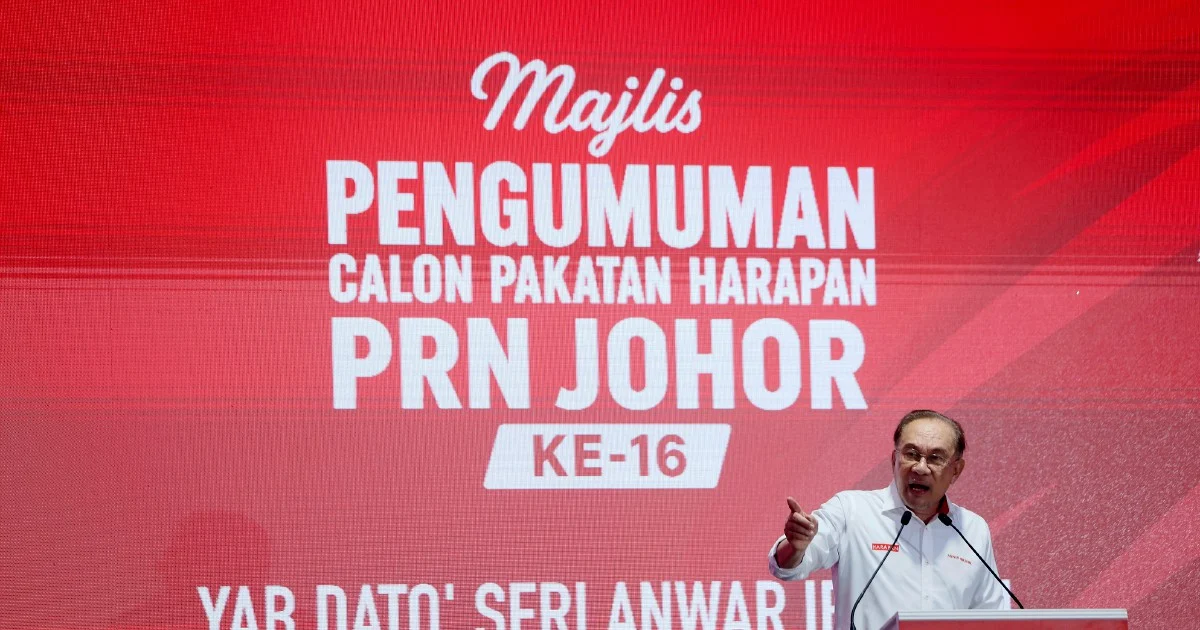
Prime Minister Datuk Seri Anwar Ibrahim has highlighted a significant fiscal transfer occurring between Kuala Lumpur and Johor, noting that the southern state has been a net recipient of federal resources in recent years. Speaking in Tangkak, the premier revealed that despite generating RM14 billion in revenue to the federal government across a three-year period, Johor has received approximately RM16 billion in allocations and development funding from Putrajaya. This RM2 billion differential underscores how the federal redistribution mechanism is functioning to channel resources to the state.
The disclosure comes at a time when state-federal relations remain a sensitive matter in Malaysian politics, particularly given Johor's historical significance as a major economic contributor to the national economy. The state, which hosts critical port facilities, manufacturing zones, and agricultural production, typically generates substantial tax revenues. However, the Prime Minister's remarks suggest that the federal government's fiscal policy has deliberately calibrated disbursements to exceed revenue extraction from Johor, potentially addressing regional development disparities or honouring commitments made to the state government.
This financial configuration reflects broader principles embedded in Malaysia's federal-state fiscal framework, whereby wealthier or more productive states often transfer resources to support development in less affluent regions. The intergovernmental transfer mechanisms operate through various channels, including development funds, infrastructure projects, grant allocations, and special provisions under the Federal-State Relationship Act. Understanding these flows provides insight into how Putrajaya prioritises spatial development and manages resource distribution across the thirteen states and three federal territories.
The timing of Anwar's statement suggests an effort to demonstrate federal accountability and justify the government's resource allocation decisions to Johor's stakeholders. By quantifying the transfers publicly, the Prime Minister appears to be addressing potential grievances within the state regarding federal responsiveness to local priorities. Such transparency, while politically calculated, also serves to underscore the interdependence between state and federal authorities in Malaysia's governance structure.
Johor's economic position makes these figures particularly noteworthy for regional observers. The state accounts for a substantial portion of Malaysia's manufacturing exports, petroleum revenues, and agricultural output. Its strategic location along the Singapore-Malaysia border further amplifies its importance as a commercial and logistics hub. The RM16 billion allocation reflects federal recognition of Johor's significance while simultaneously acknowledging that certain development priorities in the state require centralised investment to maximise national economic benefits.
For Southeast Asian investors and analysts monitoring Malaysian fiscal governance, these figures offer concrete evidence of federal-state fiscal relations in operation. The net positive transfer to Johor suggests that the federal government maintains capacity to direct substantial resources toward major states even while managing competing claims from other regions. This capability becomes relevant for assessing Malaysia's overall economic flexibility and the government's ability to pursue targeted development initiatives without depleting state coffers.
The three-year reference period likely encompasses the tenure of the current federal government under Anwar Ibrahim's leadership. This timeframe allows the Prime Minister to showcase stewardship of federal resources and to position his administration as committed to Johor's advancement. Given that Johor holds significant electoral weight in Malaysian politics, federal attention to the state's development needs carries both practical governance and political implications.
State governments in Malaysia continuously navigate the balance between maintaining revenue sources and securing federal support for large-scale infrastructure and social programmes. The Johor example illustrates how this dynamic can result in net resource flows to states, particularly when federal priorities align with state development objectives. However, the sustainability of such transfers depends on the federal government's overall fiscal health and revenue generation capacity across the entire nation.
The RM14 billion figure representing Johor's revenue contribution should be interpreted within the context of national tax collection systems, which encompass income tax, corporate tax, goods and services tax elements, and other levies. Not all revenue collected in Johor remains disaggregated in federal accounts, as some portion flows directly to state authorities or is redistributed through revenue-sharing formulas. Understanding the composition of this RM14 billion would provide fuller clarity on which specific revenue streams were counted and how they compare to historical contributions.
Looking forward, the disclosure may influence perceptions among other state governments regarding their own fiscal positions and federal allocations. States that perceive themselves as net contributors might reference Johor's experience when negotiating for increased federal support. Conversely, states receiving substantial transfers relative to their contributions may face questions about efficiency in deploying allocated resources and demonstrating tangible outcomes that justify continued federal investment.
For Malaysian policymakers and state leaders, Anwar's remarks emphasise the importance of maintaining transparent dialogue regarding fiscal transfers. As Malaysia pursues renewed economic growth and addresses regional development inequalities, the federal-state financial relationship will remain crucial. The Johor example demonstrates that the federal government possesses both the analytical capacity and political will to track and communicate these transfers, potentially setting precedent for similar disclosures regarding other states' fiscal positions and federal support mechanisms.

