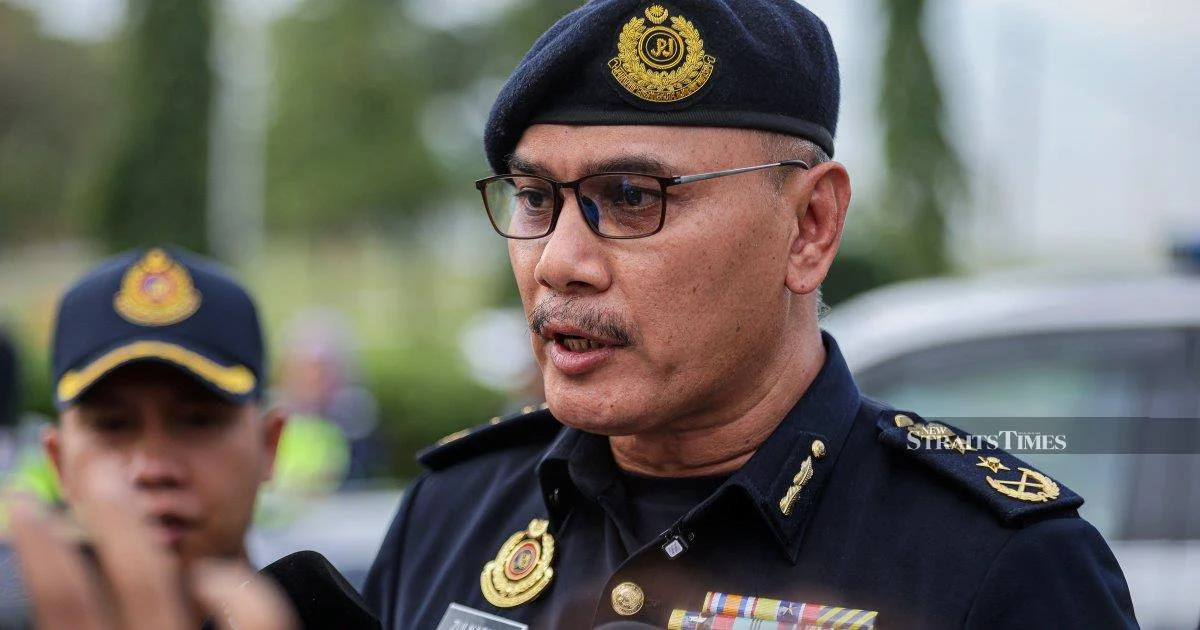
The Johor Road Transport Department has taken enforcement action against motorcyclists found riding without helmets during the state's recent election campaign, issuing investigation notices to those caught in breach of safety regulations. The move reflects the department's determination to maintain traffic safety standards even as the state held its political activities.
Motorcycle helmet regulations remain a persistent challenge across Malaysia, with many riders continuing to disregard the mandatory safety requirement despite decades of enforcement efforts. The decision to step up compliance checks during the campaign period underscores how regulatory agencies view major public events as opportunities to reinforce road safety messaging among a large, mobile population.
Johor, as the second-largest state by population and a major commercial hub in peninsular Malaysia, typically records significant motorcycle traffic on its roads. The state has experienced ongoing issues with riders neglecting protective equipment, despite the well-documented risks of serious head injuries and fatalities in accidents. The recent campaign period, which would have drawn additional foot traffic and campaign-related motorcycle movements through urban and suburban areas, likely prompted the RTD to intensify street-level enforcement operations.
Investigation notices serve as the initial step in Malaysia's traffic enforcement process, allowing authorities to gather evidence and documentation before determining whether formal charges will be filed. This administrative approach gives riders an opportunity to respond to the allegations while establishing a clear enforcement record. For first-time offenders, such notices often lead to warnings or reduced penalties if no prior violations exist.
The enforcement action carries implications beyond individual riders. Election campaigns in Malaysia routinely involve large numbers of campaign workers, supporters, and volunteers traversing constituencies on motorcycles, making such periods natural focal points for safety enforcement. The RTD's action signals that campaign activities do not exempt participants from compliance with traffic laws, a message that extends across all modes of participation in electoral processes.
Helmet non-compliance in Johor reflects broader national patterns. Despite helmet-wearing being mandatory under Malaysian law for riders and passengers, compliance rates in many states remain below desired levels. Awareness campaigns have had limited success in changing behaviour, particularly among younger riders and in areas where enforcement is perceived as inconsistent. The visibility of enforcement during high-profile events like election campaigns can serve as a deterrent to casual rule-breaking.
The timing of enforcement during campaign periods also addresses a specific public safety concern. Election campaigns often create temporary disruptions to normal traffic patterns, increase motorcycle usage for rapid candidate and volunteer movements, and concentrate activity in residential areas where pedestrian safety becomes a heightened consideration. Helmetless riders pose not only personal safety risks but also challenge law enforcement's ability to manage traffic safety comprehensively during already-complex event periods.
From a regulatory perspective, the RTD's actions represent standard procedure for most Malaysian traffic enforcement agencies during significant public events. State governments typically direct their transport departments to maintain or increase enforcement during periods that attract unusual traffic volumes or concentrations. The notices issued would have been documented with rider identification, motorcycle details, dates, times, and locations, creating an administrative record for follow-up action.
The enforcement drive also reflects evolving standards within the transport department regarding systematic compliance management. Rather than ad-hoc enforcement, modern regulatory approaches involve targeted campaigns during specific periods or in specific locations, supplemented by public education initiatives. Johor's approach during the campaign period aligns with this more structured methodology.
For motorcycle riders in Johor, the takeaway extends beyond the immediate campaign period. The department's demonstrated willingness to conduct systematic enforcement suggests that compliance checks may continue or intensify in future high-visibility periods. This has practical implications for commuters and campaign participants alike, particularly those accustomed to riding short distances without helmets—a common rationalization that enforcement actions directly challenge.
The investigation notices also underscore the intersection between political activities and regulatory compliance in Malaysia. While campaigns naturally involve increased road activity, they do not create exemptions from traffic laws. This principle, consistently applied, reinforces the broader notion that all citizens, regardless of their involvement in election campaigns, must adhere to the same safety and compliance standards that govern road use.
Looking forward, the enforcement action may serve as a baseline for comparing compliance rates before and after the campaign period, allowing the RTD to assess whether enforcement visibility affects rider behaviour. Such data could inform future enforcement strategies and help determine whether campaign-period crackdowns produce lasting improvements in helmet-wearing compliance or merely temporary compliance spikes. Understanding these patterns would help transport authorities optimize limited enforcement resources.

