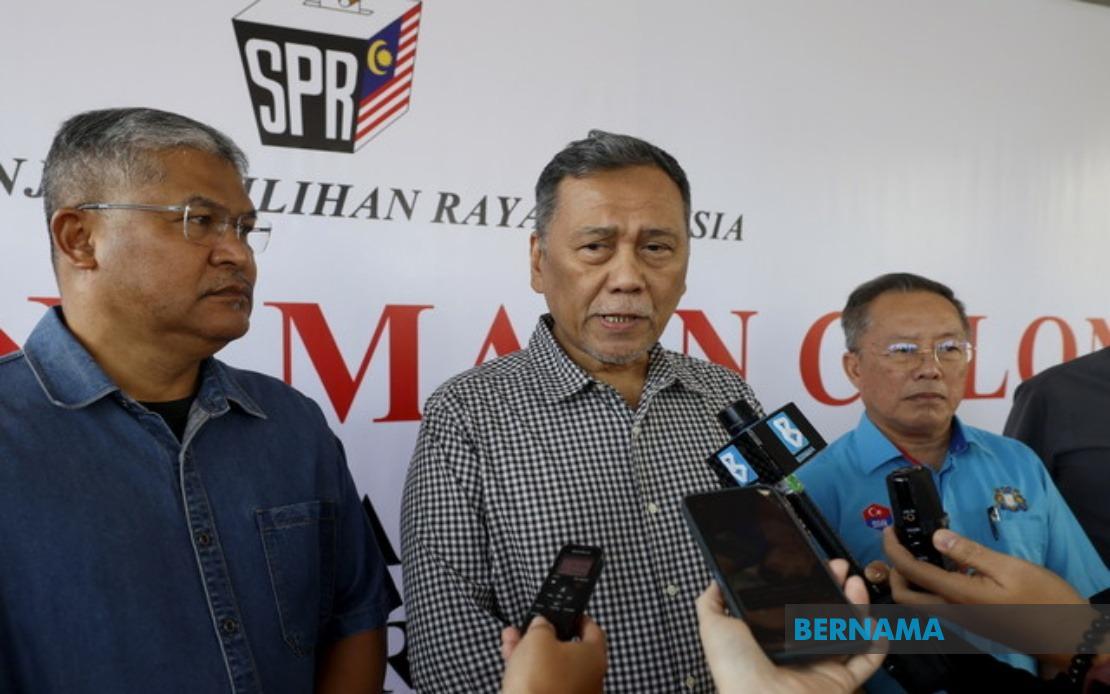
The race for control of Johor's state assembly is gathering momentum, with the Election Commission reporting brisk interest from prospective candidates ahead of tomorrow's formal nomination process. As of Wednesday morning, the EC had distributed 593 nomination forms at returning officer offices across the state, though only 133 candidates had formally committed by submitting the required deposit payments. Election Commission chairman Datuk Seri Ramlan Harun suggested the final tally would climb significantly once nomination day commenced, noting that candidates still had the remainder of the day to complete their registrations and secure their place on the ballot.
With the Johor State Legislative Assembly dissolved on June 1, the EC has orchestrated a compressed campaign calendar. Nomination day commences tomorrow, followed by early voting on July 7 and the main polling day on July 11. This condensed timeline means prospective candidates are operating under tighter deadlines than in some previous electoral cycles. Ramlan's remarks indicate the commission expected a rush of last-minute filings as candidates moved to meet the formal requirements. His appeal to candidates to complete payments early reflects the logistical coordination required to manage 56 constituencies simultaneously across a large state, with the nomination process spanning just one day.
The EC has invested considerable resources in preparation for tomorrow's proceedings. Across all 56 nomination centres in Johor, staff completed two consecutive days of trial operations to identify and resolve potential bottlenecks. This preparation was particularly critical given the number of simultaneous candidacies expected and the need to process each nomination efficiently without creating backlogs that could prevent qualified candidates from submitting their papers within the designated timeframe. Ramlan's inspection of preparations at the Maharani constituency nomination centre in Muar underscored the commission's commitment to operational readiness.
Security and crowd management represent significant considerations for tomorrow's process. Zainal Eran, the returning officer for Maharani, outlined detailed protocols designed to prevent confrontations between rival political camps. Only candidates, their official proposers, and a single supporter will be permitted inside the actual nomination centres, while additional party supporters will occupy cordoned-off areas in adjacent fields separated by barriers. These measures reflect lessons learned from previous electoral contests and aim to maintain order while allowing democratic participation. Political parties, candidates, and their backers have been reminded to observe regulations and refrain from any actions that might provoke disturbances, emphasising that smooth administration of the nomination process depends on mutual respect and compliance.
The coalition fielding arrangements reveal a state political landscape in flux, with multiple blocs competing intensely across all 56 seats. Pakatan Harapan will contest the full slate, deploying 20 PKR candidates, 19 from Amanah, and 17 from DAP. This comprehensive approach by the federal opposition reflects confidence in their Johor organisation despite recent electoral setbacks in the state. Barisan Nasional similarly fields candidates across all 56 constituencies, maintaining its traditional formula of 36 UMNO representatives, 16 from MCA, and four from MIC. This unchanged allocation suggests the ruling coalition anticipates defending its longstanding dominance in Johor, though recent political turbulence at federal and state levels has created unpredictability.
Perikatan Nasional's candidate distribution presents a more fragmented picture, with PAS contesting 11 seats, Bersatu 16, the Malaysian Indian People's Party five, and Pejuang one. This division of labour within the Perikatan coalition reflects internal negotiations and calculations about which parties can best contest specific constituencies. The arrangement allows PAS and Bersatu to maintain their separate organisational identities while presenting a unified anti-Pakatan front. The Malaysian United Democratic Alliance contributes candidates in four seats, positioning itself as a minor player in the contest, whilst Parti Sosialis Malaysia stakes a claim with a single candidacy.
Particularly significant is Parti Bersama Malaysia's decision to contest 15 state seats in this election, marking the party's electoral debut in Johor. This newcomer to the electoral arena may affect seat distributions and voter calculations, particularly if it attracts support from constituencies where traditional parties face stronger-than-usual competition. The presence of multiple political entities competing across the board complicates predictions about overall outcomes, as vote fragmentation could prove decisive in closely contested marginal constituencies.
The candidacy figures suggest varying levels of confidence across the political spectrum. The gap between forms sold (593) and deposits paid (133) indicates that many prospective candidates are maintaining flexibility or face obstacles in securing the necessary financial resources or internal party approval to proceed. This discrepancy may reflect genuine uncertainty about electoral prospects in particular constituencies, reluctance by candidates to commit resources without clearer signals about party support and campaign funding, or administrative delays in processing deposits. The final count following tomorrow's nomination will provide clearer indication of actual participation levels across all political entities.
For Malaysian observers and regional analysts, the Johor state election carries significance beyond the state's borders. As the nation's largest and most developed state after Selangor, Johor's political direction influences national coalitional dynamics and sends signals about voter sentiment regarding federal governance. Barisan Nasional's grip on Johor has long provided crucial support to its federal position, whilst Pakatan Harapan views the state as essential territory for rebuilding after its 2023 general election reversal. The mobilisation patterns evident in candidate nominations may foreshadow which coalitions commit maximum resources to the campaign, indicating their assessment of the state's strategic value.
The compressed electoral schedule, spanning just sixteen days from nomination to polling, creates a fast-paced campaign environment. Candidates will have limited time to build ground organisations, conduct voter outreach, and establish their presence in constituencies. This timeline advantages parties with existing infrastructure and disadvantages newer entrants attempting to build campaign machinery from scratch. It also means media coverage will be intense and concentrated, with election issues dominating news cycles throughout the state and receiving substantial coverage across Malaysian national media given Johor's political importance.
Election Commission officials have signalled that despite the tight schedule and expected volume of candidates, the process will proceed systematically and transparently. Ramlan's public commitment to orderly administration and security arrangements reflects the commission's concern about maintaining public confidence in electoral integrity. Johor residents will be watching closely to assess whether the machinery operates smoothly when managing potentially hundreds of candidates across dozens of constituencies in a single day, with all procedures conducted under public scrutiny.
As nomination day approaches, political parties across the spectrum are finalising their candidate selections and preparing campaign machinery. The nomination data will reveal not only how many candidates ultimately contest but also provide insight into party confidence levels in different constituencies and potential shifts in coalition strategies. By the time polls close on July 11, Johor voters will determine whether Barisan Nasional maintains its long dominance, whether Pakatan Harapan can reverse recent losses, or whether splinter groups and smaller parties can improve their representation in what promises to be one of Malaysia's most closely watched state elections in recent years.

