The campaign for Johor's 16th state election entered its endgame today as all major political coalitions executed final strategies to secure voter backing before the two-week campaign period expired at 11:59 pm tonight. With 172 candidates competing for 56 state assembly seats, parties have mobilized leaders across constituencies in a desperate rush to consolidate support and sway undecided voters in what is shaping as one of Malaysia's most closely contested state contests.
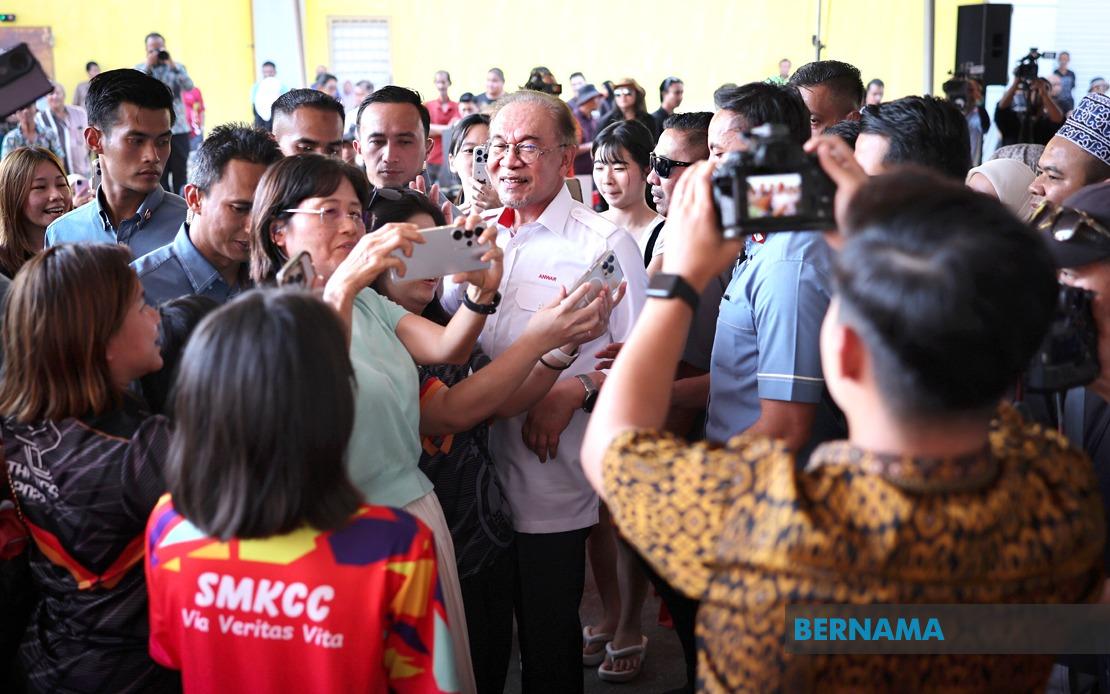
Prime Minister Datuk Seri Anwar Ibrahim spearheaded Pakatan Harapan's closing offensive, embarking on a high-profile tour across five key constituencies that serve as political bellwethers for the coalition's broader prospects. Starting in Bukit Gambir, the opposition leader moved systematically through Bukit Batu and Layang-Layang before culminating in a grand finale event in Pasir Gudang styled as the 'Johor Ke Depan, Undi Harapan Grand Finale Programme.' This strategic geography reflects PH's calculation about which battlegrounds remain genuinely competitive and where additional high-level intervention could swing marginal seats. Anwar's presence on the campaign trail underscores the national significance Kuala Lumpur has assigned to this state election, as outcomes in Johor traditionally foreshadow broader electoral shifts affecting federal politics.
In grassroots campaigning, PH's candidate for the Larkin seat, Suhaizan Kaiat, adopted a more intimate approach by conducting an impromptu walkabout at a shopping mall in Johor Bahru. The decision to campaign in retail spaces reflects modern electoral strategy focused on organic voter engagement rather than formal rallies. Accompanied by Amanah Vice President Datuk Seri Dr Dzulkefly Ahmad, Suhaizan emphasized that voter feedback gathered during the campaign period represents a mandate he would carry forward if elected. This messaging strategy positions the candidate as receptive and accountable, attempting to counter narratives that opposition parties operate at remove from ordinary citizens.
Barisan Nasional opted for a distinctly different closing gambit, with coalition chairman Datuk Seri Dr Ahmad Zahid Hamidi selecting a spiritual register by attending the 'BN Grand Supplication & Doa Selamat' event in Kulai district. As Deputy Prime Minister, Zahid's participation in a prayer and supplication ceremony signals BN's appeal to voters on religious and moral grounds alongside material governance claims. This reflects BN's enduring strength among more conservative and religiously observant constituencies, particularly in Johor's rural and semi-rural areas where traditional values remain influential in voting patterns.
Incumbent Johor Menteri Besar Datuk Onn Hafiz Ghazi, contesting the Machap seat for BN, struck a markedly contrite tone in his campaign finale, publicly apologising through a Facebook video for perceived shortcomings during his administration. This humble messaging represents a calculated risk, potentially acknowledging voter discontent while attempting to position Onn Hafiz as a leader receptive to criticism and committed to improvement. The apology strategy may reflect internal BN polling indicating vulnerability in constituencies where governance performance has disappointed electorates, particularly on cost-of-living and service delivery issues that have dominated Malaysian political discourse.
Muhyiddin Yassin, leading Bersatu as a BN coalition member, took a broader analytical approach in his final campaign message, urging Johor voters to evaluate all contesting parties based on information gathered over the two-week campaign. This framings suggests Bersatu's strategy relies on rational persuasion and comparative party performance assessment rather than emotional appeals or personality-driven politics. As Bersatu navigates its role within BN after the 2022 realignment, the party appears intent on establishing itself as a thoughtful governing alternative rather than a marginal coalition member.
Bersama, the reformist coalition featuring Rafizi Ramli and Nik Nazmi Nik Ahmad, staged their campaign finale with an ambitious agenda. Rafizi pledged in his closing speech to synthesize and counter all major campaign issues, suggesting Bersama's strategy involves framing itself as the intellectually rigorous alternative that addresses complex governance questions overlooked by traditional coalitions. This positions Bersama as appealing to urban, educated, and politically engaged voters dissatisfied with both PH and BN while seeking a credible third force.
MUDA, the youth-oriented party, concluded its campaign with the 'Puteri Wangsa Grand Finale Lecture', with party president Amira Aisya Abd Aziz emphasizing voter agency and decision-making power. MUDA's messaging focuses on empowerment and youth leadership as antidotes to perceived stagnation in Malaysian politics, potentially appealing to first-time voters and demographics frustrated with geriatric political establishments. The party's emphasis on voter sovereignty reflects its positioning as representing participatory democracy rather than top-down leadership structures.
Weather forecasts from the Malaysian Meteorological Department indicated clear morning conditions across most of Johor tomorrow, with potential afternoon rain and thunderstorms in certain areas. These meteorological details carry practical campaign implications, as inclement weather typically reduces voter turnout while potentially benefiting better-organized parties with robust polling day machinery. BN's established electoral infrastructure in rural areas may prove advantageous if afternoon rains materialize, while urban constituencies where opposition parties perform strongly typically maintain polling participation despite weather disruptions.
The intensity of last-minute campaigning reflects genuine uncertainty about electoral outcomes. Unlike some state elections where incumbents enjoy commanding leads, Johor appears genuinely competitive, with PH, BN, and smaller parties all sensing possibilities. This competitiveness stems from evolving voter priorities following cost-of-living pressures, governance performance scrutiny, and shifting demographic patterns in urban areas. Johor's 56 seats distribute across constituencies with distinct socioeconomic profiles and ethnic compositions, preventing any single coalition from predicting uniform support patterns.
The election assumes significant meaning beyond Johor's immediate governance arrangements. As Malaysia's second-largest state economically and demographically, Johor election results typically influence federal political calculus. A decisive PH victory would suggest momentum toward challenging BN's federal dominance, while a comfortable BN retention would reinforce assertions of continued governing legitimacy. Competitive outcomes where seats fragment among multiple coalitions could signal voter appetite for political realignment and new governance models, with implications extending far beyond state boundaries.
With campaigning formally concluding tonight, electoral machinery now shifts toward polling operations scheduled for tomorrow. The 172 candidates across all competing parties have completed their final appeals to Johor's electorate. Tomorrow's ballot will determine whether Johor voters endorse the incumbent BN administration under Onn Hafiz, pivot toward PH's opposition-led alternative, or fragment support among emerging challengers representing reform and youth-oriented politics. The result will reverberate through Malaysian political corridors for years ahead.

