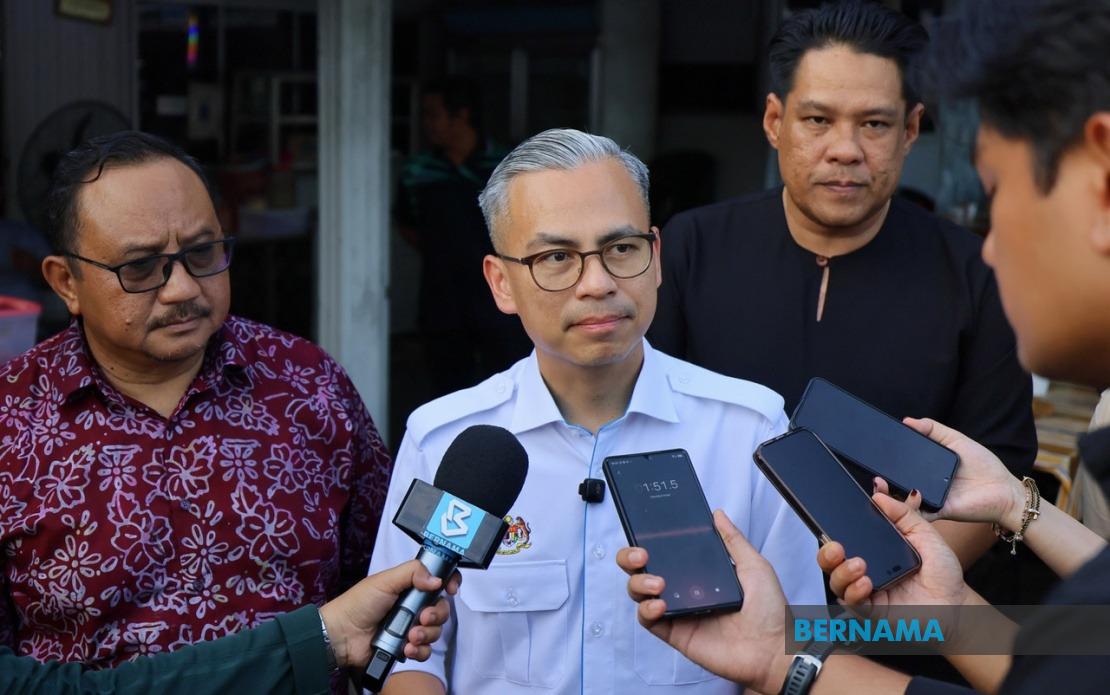
Communications Minister Datuk Fahmi Fadzil has issued a forthright appeal to all political parties and their supporters to maintain ethical standards during the Johor State Election campaign, stressing that discourse must be anchored in verifiable facts rather than demeaning attacks or false accusations. Speaking at a community engagement programme in Batu Pahat ahead of nomination day, Fahmi underlined that Malaysia's democratic tradition depends fundamentally on parties conducting themselves with dignity and respect for the law, setting a tone that transcends individual ambition or partisan advantage.
The minister's intervention reflects growing concern within government circles about the potential for campaigns to descend into character assassination and misinformation during the run-up to polling day on July 11. With nomination day commencing the formal campaign period, Fahmi sought to establish clear boundaries about what constitutes acceptable political conduct, reminding participants that the Election Commission and Royal Malaysia Police possess both the authority and willingness to pursue legal remedies against those who cross the line into unlawful behaviour. This dual-institution approach signals coordination between electoral and law enforcement bodies to maintain order throughout the contest.
Fahmi's remarks carry particular weight given his portfolio responsibility for communications and media affairs across Malaysia's increasingly fragmented information ecosystem. He emphasised that healthy political competition need not compromise electoral integrity or degenerate into personal vilification, a message aimed as much at party machinery and grassroots activists as at official candidates themselves. The distinction Fahmi drew between vigorous debate and slanderous campaigning acknowledges that political passion is inevitable while insisting that passion must operate within bounds established by fact and law.
To address the spread of falsehoods, especially those touching on Malaysia's sensitive trio of concerns—Royalty, Religion, and Race—the Malaysian Communications and Multimedia Commission has coordinated with social media platforms to strengthen monitoring capabilities. This collaborative infrastructure represents an attempt to identify and curtail the rapid viral spread of inflammatory or misleading content that could inflame communal tensions during an already charged election period. The focus on the 3R issues reflects historical experience demonstrating that unguarded rhetoric in these domains carries acute potential to damage social cohesion beyond the election itself.
Practical provisions for media professionals form another element of the government's election support framework. Fahmi announced that a dedicated media centre has been established in Johor Bahru, with additional work facilities available through the National Information Dissemination Centre network across each State Legislative Assembly constituency. These resources are intended to enable journalists to file stories efficiently and access official information without obstruction, supporting coverage that can serve as a counterweight to campaign claims. The emphasis on media infrastructure acknowledges that professional journalism plays a crucial role in fact-checking and contextualising political narratives during election campaigns.
The Johor state election, held following the dissolution of the State Assembly on June 1, represents the first major electoral test for the current federal government alignment. With nomination day set for June 27 and voting scheduled for July 11, the compressed campaign timeline intensifies both the pressure on candidates to make rapid impressions and the risk of shortcuts toward sensationalism or falsehood. Fahmi's call for discipline thus arrives at a moment when the incentive structures favour rapid message dissemination over careful verification.
Fahmi's engagement in Batu Pahat also touched on a practical constituent service matter when Member of Parliament Onn Abu Bakar raised complaints about internet disruptions and poor connectivity affecting residents in the area. The minister's commitment to directing MCMC to investigate these concerns illustrates how electoral campaigns can serve as occasions for escalating local grievances to federal attention. Onn characterised such programmes as valuable precisely because they create direct channels for residents whose complaints might otherwise languish in administrative channels without reaching decision-makers.
The scope of Fahmi's message extends beyond the immediate contest in Johor to establish broader norms for political conduct in Malaysia's maturing democracy. By insisting publicly on fact-based campaigning and enlisting both regulatory agencies and technology platforms in supporting that standard, the minister has attempted to create multiple reinforcing layers of accountability. This multi-pronged approach reflects recognition that no single institution can police campaign integrity alone, requiring instead coordination across electoral bodies, law enforcement, communications regulators, media practitioners, and political parties themselves.
For Malaysian voters and observers, the minister's intervention signals that the government considers electoral decorum sufficiently important to warrant pre-emptive messaging and visible preparation. Whether such appeals prove effective in restraining the more aggressive impulses within campaigns depends ultimately on whether all participants internalise the expectation that facts matter more than invective. The Johor contest will thus serve as an early indicator of whether Malaysian political culture can sustain ethical boundaries under the competitive pressures of democratic contestation, with implications extending well beyond Johor itself.

