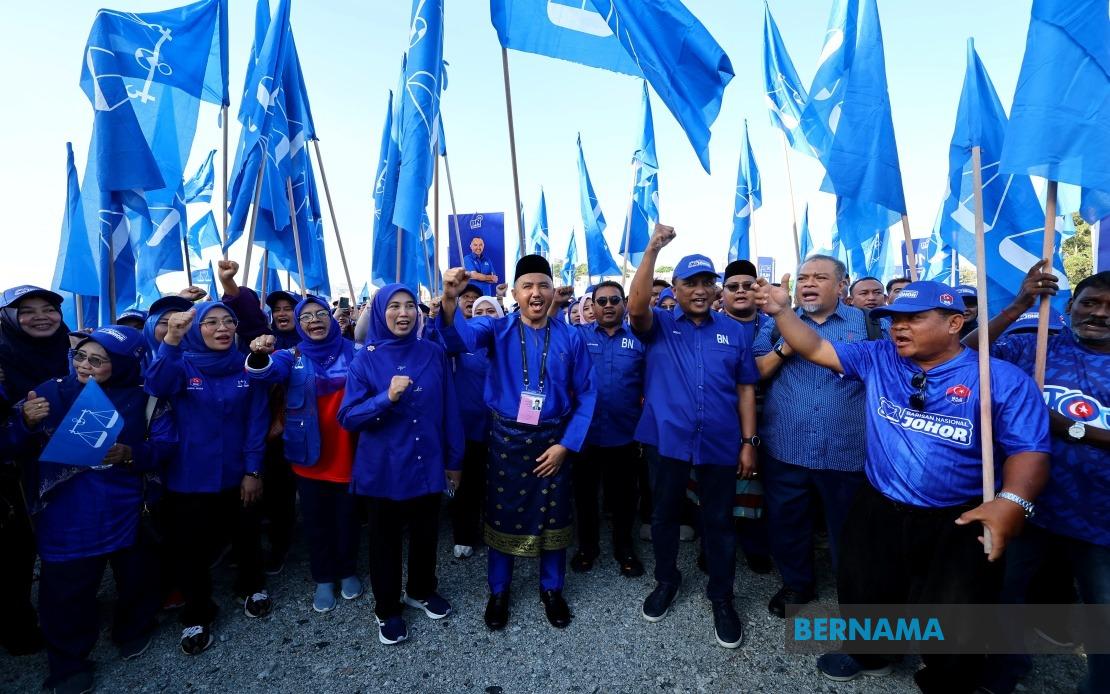
The nomination period for Johor's 16th state election formally ended at 10am on June 27 when the last of 56 nomination centres across the state shut their doors to fresh candidate submissions. The process had operated on a strict one-hour window starting from 9am, with returning officers at each location announcing closure simultaneously. This coordinated conclusion marks a critical juncture in the electoral calendar, as the focus now shifts toward the official publication of validated candidates and the final tally of hopefuls per state seat.
The orderly and incident-free closure of nomination centres reflected careful planning by the Election Commission and strong security presence throughout the process. Police personnel and members of the People's Volunteer Corps were stationed at venues statewide to maintain public order, though their presence proved largely precautionary as crowds remained calm and disciplined. Party supporters who accompanied their candidates to nomination centres conducted themselves without provocation, suggesting a cooperative atmosphere among political actors despite the competitive nature of the upcoming contest.
With nominations formally concluded, the 14-day campaign period is now underway and will continue until 11.59pm on July 10. This extended window gives political parties and independent candidates adequate time to reach voters across Johor's diverse constituencies through rallies, door-to-door engagement, media appearances, and digital outreach. The compressed timeline between the end of nominations and polling day—just one day—means campaign strategies must be executed swiftly and efficiently to maximise voter contact and persuasion.
The Election Commission has established July 7 as the designated early voting date, allowing military personnel, police officers, and other eligible voters unable to participate on election day to cast their ballots in advance. This arrangement accommodates personnel with scheduled duties or deployments and reflects best practices in election administration. The main polling day itself is scheduled for July 11, setting a clear endpoint for the electoral process in Malaysia's southern state.
Johor's electorate is substantial, with 2,727,926 registered voters eligible to participate in the election. This figure comprises 2,703,175 ordinary voters drawn from the general population, supplemented by 12,041 military personnel and their spouses, and 12,710 police personnel and their spouses. The inclusion of uniformed service members and their families broadens the voter base and ensures representation from communities whose circumstances—frequent postings, operational duties—might otherwise complicate their participation in democratic processes.
The management of such a large electorate across a geographically dispersed state requires sophisticated administrative coordination. The establishment of 56 nomination centres demonstrates the Election Commission's effort to decentralise the candidate submission process and prevent bottlenecks that could disadvantage prospective candidates. By spreading centres across Johor, the commission enabled candidates and their supporters to access filing facilities without requiring extensive travel, thereby reducing logistical barriers to participation.
The smooth execution of nomination proceedings carries broader significance for electoral confidence in Johor. A transparent, orderly, and incident-free process reassures voters that subsequent phases—campaigning and polling—will similarly adhere to professional standards. Any disruptions or irregularities at the nomination stage risk eroding public trust in the entire election machinery, so the absence of provocations or security incidents provides encouraging signals about the integrity of the entire exercise.
Now attention turns to the Election Commission's formal announcement of the candidate list, which will reveal the competitive landscape for each of Johor's state seats. The number of candidates contesting each seat will shape campaign dynamics, ranging from straight two-way contests to multi-cornered battles involving multiple independent candidates or smaller parties. Constituencies with numerous candidates may see vote fragmentation, while tighter contests could feature more intense bilateral competition between established parties.
The campaign period between now and July 10 will test the organisational capacity of Johor's political parties and independent candidates. Traditional campaign methods—public rallies, ceramah sessions, grassroots canvassing—must now compete with digital platforms and social media strategies for voter attention. The relatively short window means that campaign messages must be clear and resonant, focusing on issues most salient to Johor voters: economic development, infrastructure, education, and state governance priorities.
For Malaysia's broader political landscape, the Johor state election carries implications beyond the southern state's boundaries. As a large state with significant economic influence, Johor's electoral outcome may signal voter sentiment regarding incumbent administrations and opposition alternatives, potentially influencing political calculations in other states. The campaign period will reveal which issues dominate voter concerns and which political narratives gain traction, providing a barometer of public opinion ahead of other state elections and the next federal polls.
The transparent and professional handling of Johor's nomination process demonstrates the Election Commission's capacity to manage large-scale electoral exercises under clear regulatory frameworks. With all procedural requirements met and the campaign period now underway, Johor moves into the final phase before polling day, when voters will ultimately determine the composition of their state assembly.

