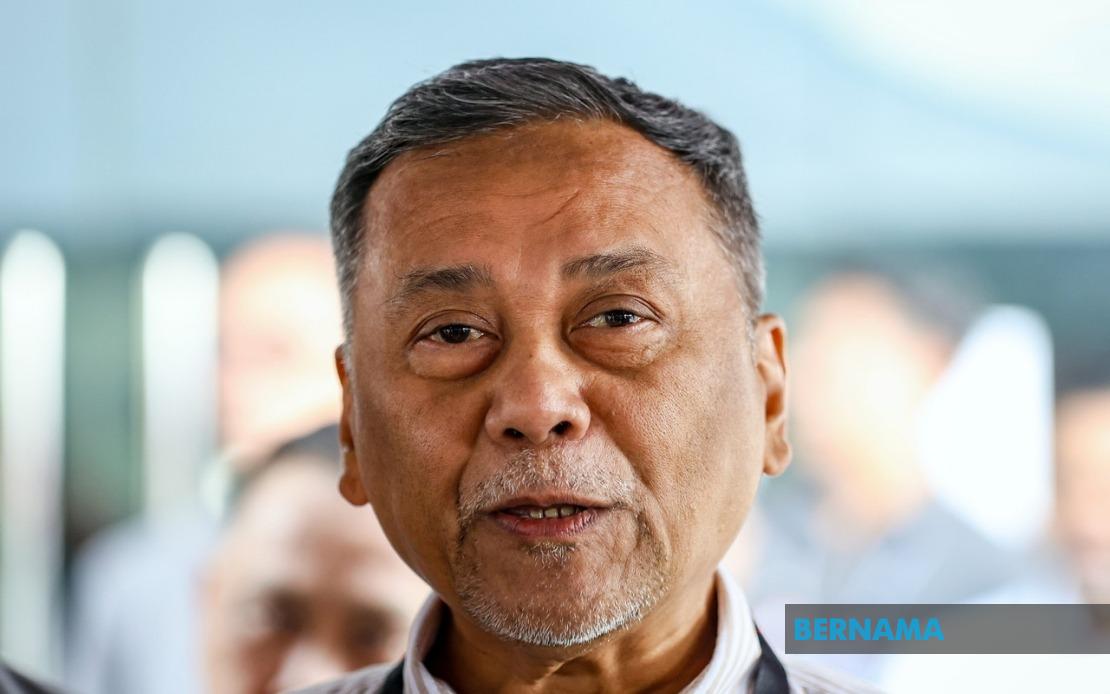
The Election Commission is banking on robust citizen engagement for the Johor state election, projecting that roughly seven in ten eligible voters will cast their ballots. Election Commission chairman Datuk Seri Ramlan Harun anchored his optimistic forecast on observable indicators during the campaign trail, where he noted consistently high levels of civic enthusiasm among the public. The projection signals growing confidence that Malaysian voters view state-level contests as meaningful opportunities to exercise their democratic franchise, a positive indicator for electoral health in the nation.
Ramlan's assessment draws from concrete evidence gathered throughout the pre-election campaign period, during which the commission monitored voter sentiment and engagement patterns. The visible interest from the electorate, combined with widespread awareness about the significance of participating in the ballot, underpins the commission's expectation of strong turnout figures. This observation extends beyond mere numerical speculation—the chairman emphasised that public consciousness about the electoral process itself appeared heightened, suggesting voters increasingly recognise their role in shaping state governance.
Approximately 2.7 million registered voters across Johor hold the power to determine the state assembly's composition through tomorrow's polling. This substantial electorate represents a cross-section of the state's population, and mobilising them to voting centres presents a considerable logistical undertaking. The sheer scale of participation that 70 per cent turnout would represent—roughly 1.9 million votes—underscores both the significance of the contest and the commission's determination to facilitate comprehensive democratic participation.
The voting schedule reflects careful consideration of Johor's geographic complexity. Polling stations will open uniformly at 8 am, yet closing times vary dramatically depending on location. Remote island constituencies present particular challenges; Pulau Besar, located approximately half an hour from Mersing, will close at 11 am, while Pulau Aur and Pulau Pemanggil will shut down at noon. The staggered closure pattern continues with seventeen centres wrapping up at 2 pm, forty-two at 4 pm, and the bulk of polling locations—1,114 centres—operating until the standard 6 pm closing time. This tiered approach acknowledges the practical difficulties of island voters and election staff, prioritising accessibility for geographically disadvantaged communities.
The logistical architecture supporting the election extends well beyond polling booth schedules. The commission has conscripted 43,036 election workers to oversee the voting process across all constituencies and polling stations. These officials bear responsibility for everything from voter verification to ballot distribution and ultimately the secure transport of completed papers. Their deployment represents a substantial mobilisation of human resources, reflecting the commission's commitment to administering a credible and orderly election.
Postal voting arrangements introduce additional complexity to the electoral machinery. The commission issued 24,677 postal ballot papers to voters unable to cast ballots in person, accommodating those absent from their constituencies due to work, health, or other circumstances. These documents carry strict deadlines; all postal ballots must arrive at commission offices before the 6 pm closing time, after which no further papers will be accepted. This temporal constraint necessitates careful coordination between election officials and postal services to ensure timely delivery without compromising ballot security.
The transportation of ballot boxes from Johor's island communities represents perhaps the most logistically demanding aspect of the entire operation. These remote polling stations generate boxes that must travel by sea and land to reach the centralised counting facilities. The commission has assured stakeholders that this critical function has undergone meticulous planning, with contingency protocols established to address unforeseen complications. The Malaysian police and Malaysian Armed Forces have coordinated with election officials to provide transportation and security support, recognising that ballot integrity depends absolutely on secure handling throughout the supply chain.
The coordination between civilian election authorities and uniformed services reflects broader institutional recognition that electoral integrity requires multi-agency commitment. Police personnel ensure security during transport and at vulnerable points in the process, while military assets provide logistical capacity—particularly valuable for island transportation where civilian infrastructure may prove insufficient. This cooperation model demonstrates how different government arms unite around the common objective of delivering a transparent and secure democratic exercise.
Ramlan's confidence in achieving the 70 per cent projection rests fundamentally on his assessment of public sentiment. Voters in Johor appear invested in determining their state's political future, moving beyond the cynicism that sometimes characterises electoral participation in other jurisdictions. Whether this optimism proves justified will become apparent when polling closes tomorrow evening, but the commission's preparation suggests institutional readiness to manage whatever turnout emerges. The comprehensive planning for contingencies—from island logistics to postal deadlines—indicates the election authority has positioned itself to accommodate both high participation scenarios and unexpected complications.
For Malaysian observers and Southeast Asian democracies more broadly, the Johor election serves as a test case in citizen engagement with state-level politics. Strong turnout would validate the notion that voters distinguish between federal and state contests, recognising that assembly elections determine crucial local governance affecting daily life. Conversely, lower-than-projected participation might suggest electoral fatigue or declining confidence in regional political institutions. Either outcome carries implications for how future elections at all levels are planned and promoted, making tomorrow's voter behaviour significant beyond Johor's borders.

