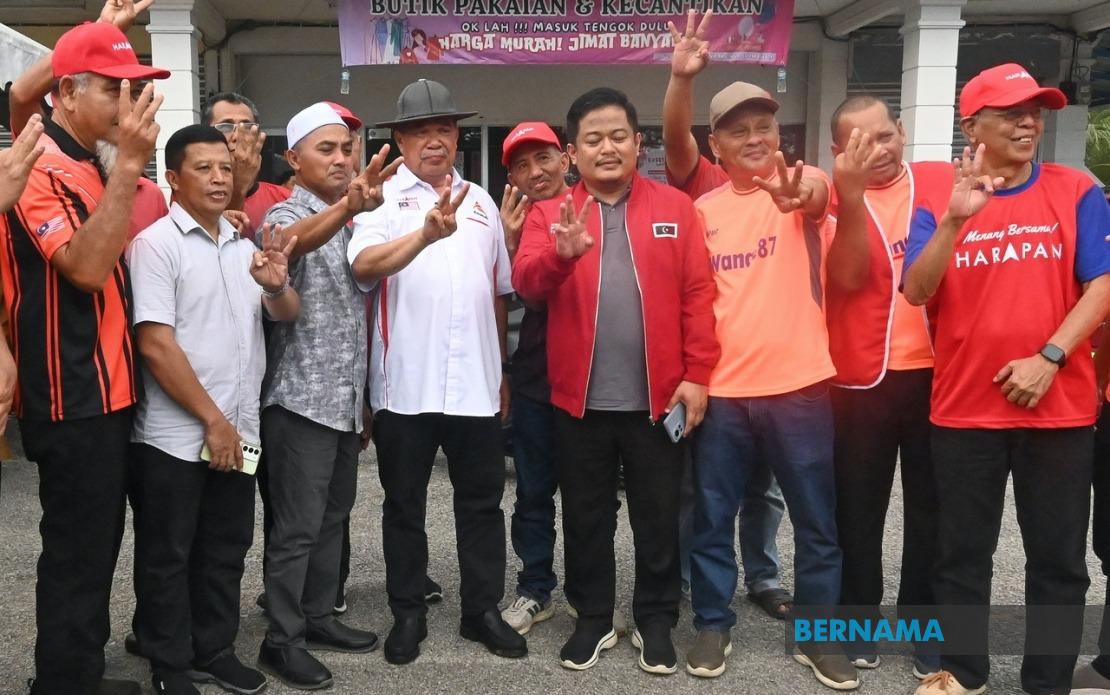
Amanah president Datuk Seri Mohamad Sabu has made a direct appeal to Johor voters to support Pakatan Harapan candidates in this weekend's state election, framing the ballot as a referendum on whether the coalition should be given the opportunity to translate its election promises into concrete action. Speaking at a campaign event in Rengit on Saturday, Mohamad Sabu acknowledged criticism from opposition parties that the PH manifesto amounts to little more than recycled campaign rhetoric, but countered that the true test lies not in the document itself but in its execution.
The manifesto launched by PH in the lead-up to the Johor polls represents more than just political positioning, according to Mohamad Sabu, who serves as Minister of Agriculture and Food Security. He emphasised that the document reflects months of grassroots engagement, with party representatives touring towns, villages and rural communities to gather feedback directly from constituents about their pressing concerns. This consultation process, he suggested, distinguishes the PH approach from the opposition's characterisation of the manifesto as mere political theatre. The manifesto content, he noted, is ultimately less important than whether voters are willing to entrust the coalition with the mandate needed to act on those commitments.
During the campaign stop in Rengit, Mohamad Sabu stressed that if PH fails to secure sufficient support at the ballot box, the party simply will not have the political authority to implement the various resolutions and policies outlined in the manifesto. This framing puts considerable pressure on PH supporters and swing voters, essentially arguing that abstaining from voting or casting ballots for opposition candidates amounts to rejecting the agenda PH has developed in consultation with the public. The message carries particular weight given that this is the first state-level election in Johor since the 2018 general election that brought PH to federal power, making it a significant test of the coalition's standing in one of Malaysia's largest and most diverse states.
The Amanah president offered a concrete timeline for implementation should PH emerge victorious from the polls. He indicated that if the coalition wins control of the state, the machinery to execute the manifesto promises would begin moving almost immediately following the results, with initial actions expected to commence on July 12. This suggests a carefully coordinated transition plan, with PH leadership prepared to move swiftly from campaign mode into governance should they secure the necessary parliamentary seats. The urgency communicated in this timeline appears designed to convince voters that PH takes its commitments seriously and has already formulated concrete plans for delivery.
Reporting from the Johor Tour with Bang Mat campaign programme, Mohamad Sabu observed a notably different reception for PH candidates and campaigners compared to the 2018 election cycle. He highlighted that five years ago, the then-nascent Pakatan Harapan alliance remained relatively unknown in rural areas and villages across Johor, struggling to build name recognition outside urban centres where it had greater organisational presence. Today, he noted, the dynamic has transformed substantially. When party representatives campaign in markets, public spaces, and residential areas, they encounter frequent greetings from voters and requests for photographs, indicators that PH has become more embedded in public consciousness across different demographic segments.
This improvement in rural reception reflects broader shifts in Malaysian electoral politics over the past five years. The 2018 general election marked a significant moment of voter appetite for change, but sustaining that momentum through state-level contests requires continuous engagement and demonstrated competence in governance. For Johor specifically, the state has long been considered a BN stronghold, making any gains by PH potentially significant both symbolically and in terms of regional political balance. The warm reception Mohamad Sabu described suggests PH's federal government record has resonated with portions of the rural electorate previously aligned with traditional opposition parties.
The polling arrangements for the Johor election underscored the military and security establishment's role in the democratic process. Early voting for security personnel was scheduled for July 6, while the main election day arrived on July 11. This staggered voting system, while accommodating those deployed away from home constituencies, also means results from the security forces community become known before the broader public casts its votes, potentially influencing campaign dynamics and voter psychology in the final hours before the main polling day. The logistics of administering the election across a geographically expansive and demographically varied state required considerable planning and coordination.
For Malaysian politics more broadly, the Johor election carried implications extending well beyond state boundaries. Johor's size, economic significance, and historical importance as a BN bastion meant that any substantial shift in political representation could reshape the national political landscape. A strong PH performance would vindicate the coalition's strategy of building support in traditionally non-aligned communities and might embolden coalition leaders to pursue more assertive federal policies. Conversely, a disappointing result could prompt questions within PH about its ability to convert recent improvements in public perception into electoral gains, potentially affecting morale ahead of future contests.
Mohamad Sabu's invocation of the manifesto as both a popular document and a binding commitment reflected a broader PH strategy of portraying itself as responsive to constituent concerns rather than imposing top-down political agendas. By characterising the manifesto as arising from consultation with Johor residents rather than as party technocrats' vision, PH attempted to frame voting for its candidates as affirming one's own expressed priorities. This rhetorical approach carries force particularly among voters who participated in town halls or focus groups during the manifesto development process, as they may feel a sense of ownership over the document.
The election represented a test not merely of PH's appeal to voters but of its capacity to maintain organisational coherence across a diverse coalition spanning multiple parties with distinct ideological traditions. The presence of Amanah, alongside PKR, DAP, and potentially other coalition partners, created both strength in breadth and potential vulnerability to internal friction. Mohamad Sabu's positioning as a prominent Amanah figure speaking to broader PH goals suggested the coalition had managed to maintain sufficient unity for campaign purposes, though questions about post-election governance arrangements if PH succeeded remained outstanding.
The manifesto's content, while not detailed in Mohamad Sabu's comments, presumably addressed practical governance issues affecting Johor residents: infrastructure development, education services, economic opportunities in rural areas, and social support systems. By emphasising that the manifesto emerged from extended consultation rather than appearing fully formed from party headquarters, PH implicitly acknowledged that previous election cycles had been criticised for disconnects between party promises and constituent priorities. The hope articulated by Mohamad Sabu appeared to be that presenting the manifesto as feedback-driven would increase voter confidence in PH's commitment to implementation.

