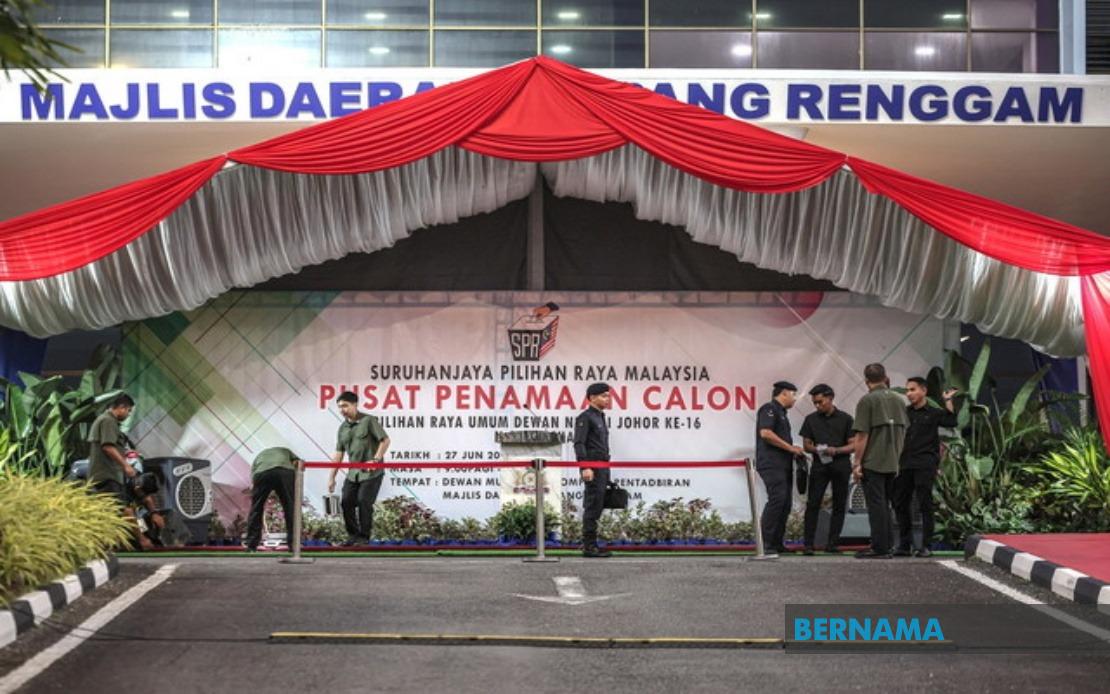
The 16th Johor State Election officially commenced on June 27 as all 56 nomination centres across the state opened their doors at 9am sharp, marking the formal beginning of what promises to be a significant electoral exercise in the country's southernmost peninsula. The simultaneous opening of nomination facilities across all districts underscored the Election Commission's commitment to ensuring an orderly and equitable process for all candidates vying for seats in the state assembly.
Candidates were afforded a narrow one-hour window—from 9am until 10am—to lodge their nomination documents with the designated returning officer at their respective nomination centres. This compressed timeline, designed to create a defined entry point for the election process, required candidates and their supporting teams to move with precision and efficiency. The submission procedure allowed for flexibility in representation, permitting the candidate themselves to present the nomination papers alongside their proposer and seconder, or alternatively allowing any two or even just one of the three to handle the submission on behalf of the candidate.
The atmosphere at nomination centres reflected the competitive spirit underpinning the election. Political party supporters began congregating as early as 6.30am, hours before the official opening, demonstrating their enthusiasm for the democratic process. These early arrivals created scenes of activity and anticipation at various nomination venues, with partisan displays of flags, banners, and campaign materials becoming increasingly visible as morning progressed. The visible energy among party faithful suggested high stakes and significant organizational preparation ahead of the actual polling date.
Once the nomination period concluded at 10am, the Election Commission's verification machinery would shift into operation. Following completion of this scrutiny process, the list of validated candidates would be publicly announced, formalizing which aspirants had successfully cleared the administrative requirements to proceed to the campaign phase. The Election Commission subsequently scheduled a 14-day campaign period to commence following candidate verification, with campaigning set to run through 11.59pm on July 10, providing political parties and candidates with a substantial window to engage voters.
Weather considerations added another layer of complexity to the nomination day proceedings. The Malaysian Meteorological Department had forecasted variable conditions across different Johor districts. Districts including Johor Bahru, Muar, Batu Pahat, Kota Tinggi, Pontian, Tangkak, and Kulai faced the possibility of morning rainfall, while Segamat, Kluang, and Mersing were expected to remain clear. Afternoon forecasts indicated the likelihood of thunderstorms affecting most districts, including Johor Bahru, Segamat, Kluang, and Kota Tinggi, creating potential logistical challenges for campaign movements and voter outreach activities throughout the day.
Security arrangements demonstrated the gravity with which state authorities approached the nomination process. Police personnel, working in coordination with the People's Volunteer Corps (RELA), established comprehensive security protocols and traffic management systems in and around nomination centre precincts. These measures aimed to prevent disruptions or incidents that might compromise the integrity of the nomination procedure or create public safety concerns. The visible police and RELA presence reassured stakeholders that law enforcement remained committed to maintaining order throughout the electoral cycle.
The electoral landscape encompasses a substantial voting population. According to Election Commission data, approximately 2.73 million citizens held eligibility to cast votes in this election. This figure comprised 2.70 million ordinary voters, supplemented by 12,041 military personnel and their spouses, and 12,710 police officers and their spouses. These figures underscore the logistical magnitude of the election and the diverse demographic segments that the state administration and political parties needed to engage throughout the campaign period.
The Election Commission established clear timelines for the subsequent phases of the electoral process. Early voting was scheduled for July 7, providing designated voter categories with the opportunity to cast ballots in advance of the main polling exercise. The primary polling day itself was set for July 11, representing the culmination of the nomination and campaign phases. This structured calendar provided all stakeholders—candidates, political parties, electoral officials, and voters—with clear milestones for preparation and participation.
For Malaysian political observers and stakeholders in Johor, the opening of nomination centres represented more than administrative procedure. The election carries significance for state-level governance and reflects broader electoral dynamics within the country's federal system. The nomination period's successful execution indicated that the state appeared positioned to conduct an orderly electoral exercise, though the intensity of campaign activities over the succeeding two weeks would ultimately determine whether this promise translated into a smooth voting experience. As candidates formalized their participation and supporters mobilized their networks, attention now turned toward the substantive political messaging and policy debates that would define the campaign phase.

