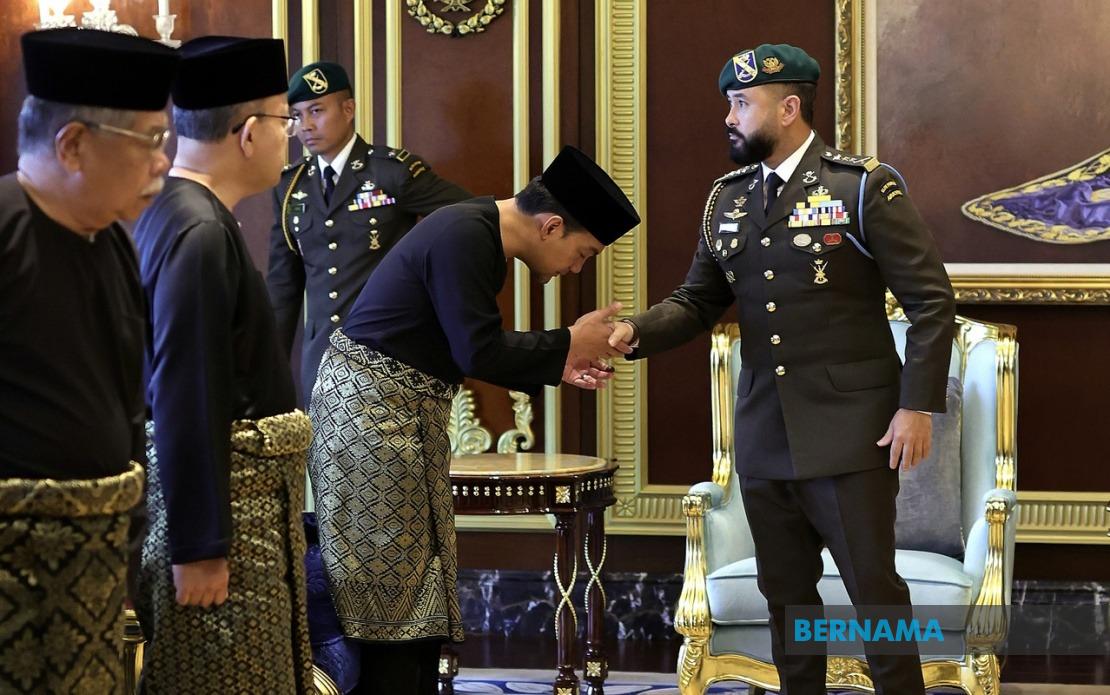
The swearing-in of Johor's revamped State Executive Council will take place at Istana Bukit Serene on July 17, marking the formal establishment of the state government's leadership structure following last week's decisive electoral outcome. The ceremony, graced by the Regent of Johor Tunku Mahkota Ismail, represents the culmination of the transition process that began when Menteri Besar Datuk Onn Hafiz Ghazi took his oath of office for a new term on July 12.
The formal swearing-in of individual Exco members constitutes a significant constitutional milestone for the state administration. While the Menteri Besar has already assumed office, the collective oath-taking by the full slate of executive councillors formalises their individual authority to execute their respective portfolios and make binding decisions on behalf of the state government. This ceremonial element carries substantial weight in Malaysia's constitutional monarchy framework, where oaths before the ruler constitute binding personal and political undertakings.
The attendance at Istana Bukit Serene will include high-ranking state officials and dignitaries, specifically the Johor Council of Royal Court president Datuk Dr Abdul Rahim Ramli and state secretary Datuk Mohammed Ridha Abd Kadir. Their presence underscores the institutional significance of the occasion, as these figures represent the continuity of the state's bureaucratic machinery and the formal connection between the executive branch and the royal institution. The palace has extended media invitations, with access arrangements beginning from 9.30 am at both main entrances, reflecting the public nature of this constitutional ceremony.
This swearing-in ceremony arrives on the heels of Barisan Nasional's overwhelming performance in the 16th Johor State Election held on July 13. The coalition secured 48 of 56 available seats, delivering an unambiguous mandate that translates into commanding control over the state legislature and substantial room for implementing its governing agenda without parliamentary obstruction. Such a decisive majority provides the Menteri Besar and his executive council with considerable latitude in policy formulation and legislative initiatives throughout their five-year tenure.
For Malaysian observers and stakeholders, the Johor result carries ramifications extending beyond the southern state's borders. As the country's second-largest state by population and a crucial economic hub, Johor's political direction influences national political calculations and coalition dynamics. Barisan Nasional's strong performance demonstrates the coalition's continued ability to secure decisive victories in major state contests, particularly when facing a fragmented opposition. This result provides momentum for the coalition as it contemplates the composition and direction of the federal administration ahead of the next general election.
The scale of Barisan Nasional's victory also suggests that despite ongoing challenges and criticisms, the traditional machinery and organisational infrastructure of the coalition remain formidable at the state level. The coalition's dominance in Johor reflects successful ground-level mobilisation, effective management of local grievances, and sustained appeal among key voter demographics, particularly in rural and semi-urban constituencies. The 48-seat majority provides the incoming administration with sufficient numbers to weather potential defections and maintain legislative stability.
Menteri Besar Datuk Onn Hafiz Ghazi's reappointment and the formation of his new Exco represents validation of his leadership during his previous term. The state electorate's endorsement of his administration suggests that voter satisfaction with incumbent performance outweighed opposition messaging and alternative platforms. This outcome positions him to pursue continuity in key policy areas while potentially introducing fresh initiatives in his new term.
The executive council that will be sworn in tomorrow carries responsibility for overseeing critical state functions spanning economic development, education, health, infrastructure, and social services. The composition of this body, once formally constituted, will reveal the Menteri Besar's priorities regarding ministerial portfolios and the balance between continuity and renewal in his administration. Strategic appointments to key positions signal the government's policy emphasis and reflect political alliances and power dynamics within the ruling coalition at the state level.
For Johor's diverse population and business community, the formation of a stable, clearly-mandated state government provides a foundation for medium-term planning and investment decisions. Businesses can engage with a government that possesses sufficient legislative support to implement its commitments without the uncertainty that accompanies closely-divided legislatures. Administrative continuity, combined with renewed electoral validation, typically encourages foreign and domestic investors to proceed with commercial plans and expansions.
The constitutional significance of the oath-taking ceremony itself merits emphasis within Malaysia's framework. The Regent's presence and formal administration of oaths reinforce the principle that executive authority ultimately derives from the Yang di-Pertuan Agong and state rulers within their respective jurisdictions. This ceremonial dimension, while symbolic, carries genuine constitutional weight and reflects Malaysia's constitutional monarchy system, in which the ruler serves as the fount of all legitimate authority.
Looking ahead, the newly-sworn executive council faces a demanding agenda encompassing economic diversification, job creation, infrastructure modernisation, and responsive governance of a rapidly urbanising state. The scale of their electoral mandate provides both opportunity and responsibility—the electorate has granted them substantial power, and voters will assess their performance against campaign promises and demonstrated governance capacity. The swearing-in ceremony tomorrow symbolises the beginning of this accountability relationship.

