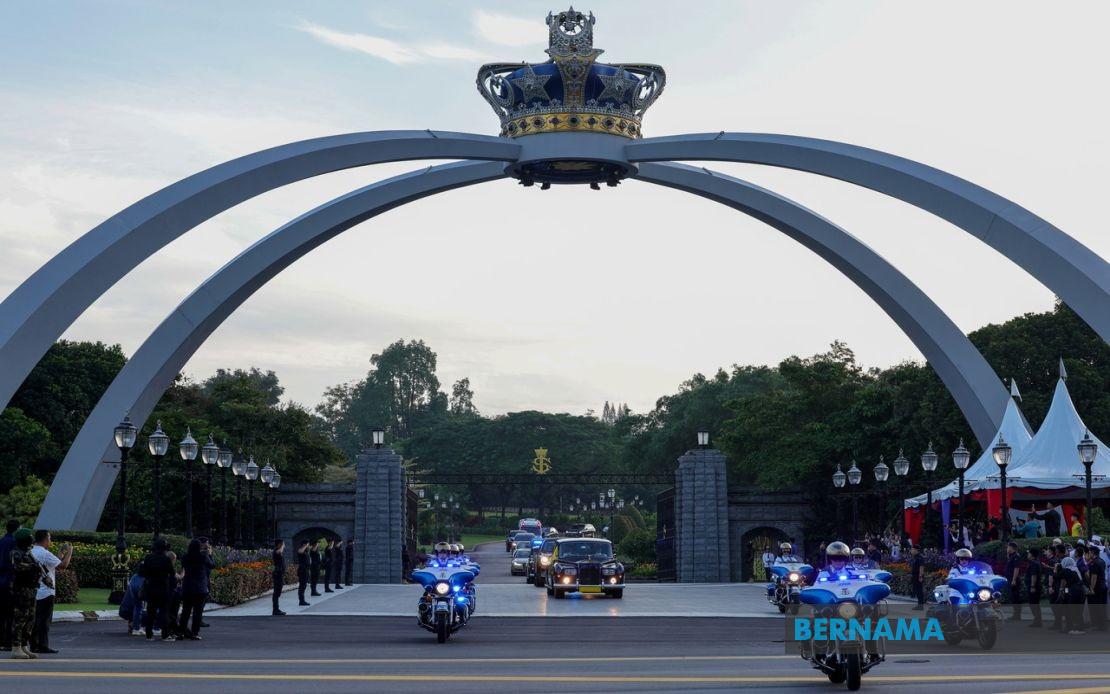
A swearing-in ceremony for Johor's incoming Menteri Besar is set to take place this afternoon at Istana Bukit Serene, the official residence of the Sultan of Johor, according to an announcement circulated through official channels. The palace confirmed the event will occur at 3 pm, with media personnel invited to cover the proceedings from the Crown Arch entrance of the historic palace. The precise identity of the individual receiving the appointment has not yet been publicly disclosed, adding an element of anticipation to the formal proceedings scheduled for this afternoon.
The Johor Palace distributed invitations via WhatsApp to members of the media fraternity, providing specific logistical details for coverage of the constitutional ceremony. Journalists and camera crews have already begun converging on key locations across the state capital, including the official residence of the Menteri Besar in Saujana and the outer perimeters of Istana Bukit Serene, positioning themselves to capture developments as they unfold. The gathering of press personnel since midday underscores the significance attached to the appointment, which marks a transition in the state's highest executive office.
This swearing-in ceremony represents the culmination of a dramatic political development in Johor that took shape over recent hours. Earlier today, Sultan Ibrahim Iskandar received Barisan Nasional chairman Datuk Seri Ahmad Zahid Hamidi for a formal audience at Istana Pasir Pelangi, the Sultan's other official residence. The meeting, which extended nearly an hour in duration, included the attendance of Johor's state-level BN chairman Datuk Onn Hafiz Ghazi, suggesting high-level discussions regarding the composition of the incoming state administration.
The appointment process has been expedited following Barisan Nasional's commanding performance in the Johor state election held yesterday. The coalition secured a landslide victory that saw it capture 48 out of 56 contested state assembly seats, granting it a commanding majority and a clear mandate to govern. This decisive result positioned BN to form the government and begin the process of appointing key leadership positions, with the Menteri Besar appointment representing the most critical post to be filled.
The Menteri Besar position holds substantial constitutional and administrative importance within Malaysia's federal structure. As the chief executive of a state government, the Menteri Besar wields significant authority over the implementation of state-level policies, budgetary allocations, and developmental initiatives. In Johor's case, the appointment carries particular weight given the state's economic significance as a major industrial and commercial hub within Malaysia, its strategic geographic location adjacent to Singapore, and its substantial population and resource base.
The ceremonial nature of the swearing-in reflects the formality attached to such constitutional appointments in Malaysia. The involvement of the Sultan in administering the oath of office underscores the constitutional monarchy's role in state governance, demonstrating the separation of powers and the formal processes through which executive authority is conferred. The invitation to media to cover the Crown Arch entrance indicates an intention to maintain transparency and allow public awareness of the transfer of executive responsibility.
For political observers and analysts tracking developments in Malaysia's state-level politics, Johor's electoral and governmental transitions carry implications beyond the state itself. As one of Malaysia's largest and most economically consequential states, political dynamics in Johor often influence broader national political calculations and coalition alignments. The emphatic nature of BN's victory suggests a reaffirmation of support for the coalition at the state level, a development that may have reverberations across other state governments and the national political landscape.
The timing of the swearing-in ceremony, occurring on the same day as the Sultan's audience with BN leadership, demonstrates the efficient pace at which constitutional processes are proceeding. In Malaysia's Westminster-influenced parliamentary system, newly elected state governments typically move expeditiously to establish their administration and begin implementing their electoral mandate. The afternoon ceremony will mark the formal assumption of office by the incoming Menteri Besar, transitioning from electoral success to governmental responsibility.
The secrecy surrounding the incoming Menteri Besar's identity up until the formal swearing-in represents a departure from typical pre-announcement practices, potentially reflecting internal discussions within BN regarding the optimal choice for the position. Such discretion might indicate complex negotiations between BN's constituent parties or considerations regarding succession planning and party dynamics. The announcement of the appointment through a formal ceremonial swearing-in rather than through prior media statement suggests an intention to emphasize the constitutional nature of the appointment and its formal investiture by the Sultan.
Malaysian political observers will be monitoring the swearing-in ceremony closely for its implications regarding the composition and direction of Johor's incoming administration. The choice of Menteri Besar carries significance for determining the state government's policy direction, approach to economic development, engagement with the federal government, and overall political strategy. Following the decisive election result, the incoming administration will inherit both the mandate and the responsibility for steering Johor through its next electoral cycle and addressing the state's diverse developmental and economic priorities.

