The race for Pulai Sebatang in Johor's July 11 state election is crystallising into a fundamental choice between two competing approaches to governance: Pakatan Harapan's promise of strategic modernisation and Barisan Nasional's commitment to deepening existing development initiatives. The contest between PH candidate Haniff @ Ghazali Hosman and BN incumbent Hasrunizah Hassan reflects broader tensions playing out across Malaysia's political landscape, where voters increasingly weigh the appeal of fresh ideas against the comfort of established track records.
Handiff, the 46-year-old PH standard-bearer, is constructing his campaign around the concept of Pulai Sebatang as an underexploited economic asset waiting for purposeful development. His pitch hinges on positioning the constituency as occupying an advantageous geographic location—encompassing Pontian town and situated conveniently near several active economic development corridors in the region. Rather than advocating wholesale transformation, he is framing his approach as a means to unlock investment opportunities while preserving the traditional agricultural and fishing sectors that sustain many local families. This dual emphasis on modernisation and tradition reflects a calculated effort to appeal to both younger voters seeking economic dynamism and established communities whose livelihoods depend on primary industries.
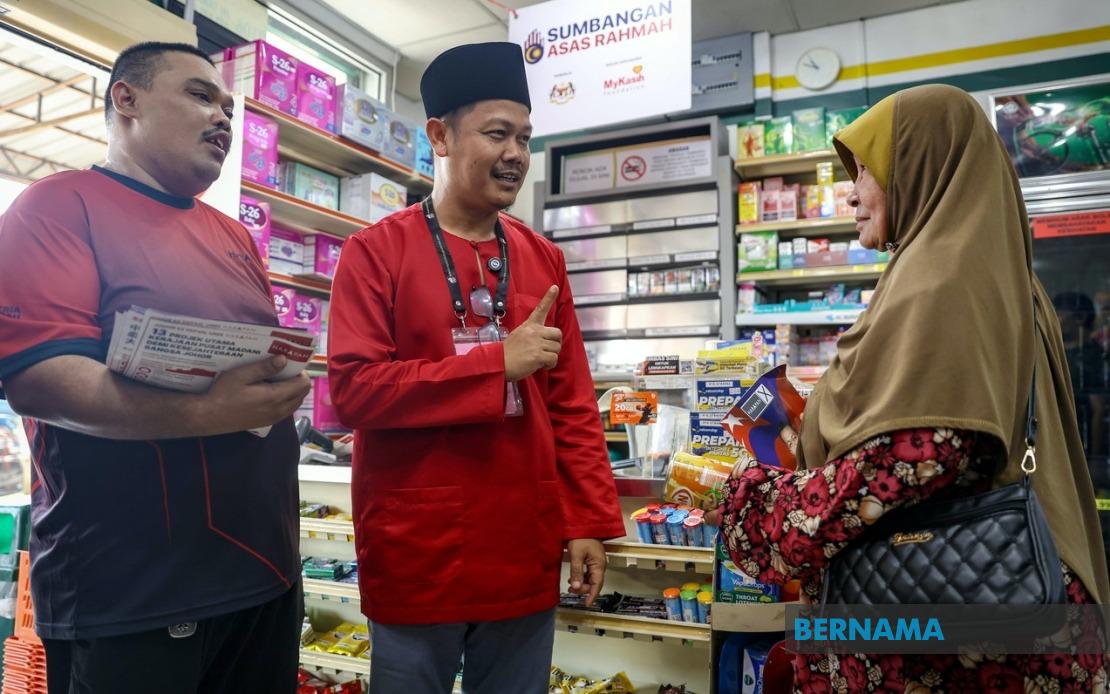
The candidate's personal electoral history suggests a persistent commitment to contesting in this region. His previous bids for the Pontian parliamentary seat in 2013 and the Benut state seat in 2022 indicate he has maintained organisational presence and voter familiarity across the broader Pontian district. This experience may provide organisational advantages as he attempts to mobilise support through what his campaign describes as intensive grassroots engagement. Haniff's strategy emphasises direct voter contact—walkabouts and house-to-house visits—as the primary mechanism for understanding local concerns and building electoral momentum. His confidence appears rooted partly in PH's successful performance in this constituency during the 2018 state election, which demonstrated the opposition coalition's capacity to secure support in this area under favourable conditions.
Specific policy commitments anchoring Haniff's platform reflect issues he has identified through his door-to-door engagement. Compensation arrangements for fishermen operating from Pontian Besar and solutions to persistent drainage and flooding problems affecting Parit Datuk's farming communities represent tangible grievances that his campaign is addressing. By highlighting these issues, Haniff is signalling responsiveness to traditional constituencies whose concerns may not have received adequate attention under the current administration. This approach positions him as an advocate for constituencies beyond Pontian town's central areas, reaching toward the more dispersed rural communities that comprise significant portions of the electorate.
For her part, Hasrunizah Hassan is anchoring her re-election campaign on demonstrable achievements during her first term as the seat's representative since 2022. Her most prominent infrastructure commitment concerns the proposed expansion of Pontian Hospital—a project she indicates has cleared regulatory approval hurdles and is advancing toward procurement. Hospital infrastructure improvements resonate broadly across constituencies because they address fundamental healthcare access concerns, particularly in areas where residents previously faced travel burdens or capacity constraints. By positioning this expansion as substantially advanced, she is presenting voters with tangible evidence of translated campaign promises.
Beyond hospital development, Hasrunizah is pledging to complete the remaining 25 village road projects derived from a pool of 75 applications she identified after assuming office in 2022. Road infrastructure development represents a classic local-level governance concern, particularly in rural and semi-rural constituencies where connectivity directly affects agricultural productivity, market access, and quality of life. The specificity of her commitment—identifying the exact number of remaining projects and their origin point—suggests an attempt to demonstrate systematic governance rather than rhetorical promises. Her emphasis on completion rather than initiation frames continuity as administrative competence.
Welfare programme continuity constitutes another dimension of Hasrunizah's platform. The 'Kasih Johor' assistance programme, housing aid schemes, and first-home ownership initiatives represent targeted social support mechanisms that directly affect constituency residents. Her pledge to maintain these programmes appeals to voters already benefiting from them while signalling that she will not dismantle established social safety nets. This approach differs strategically from Haniff's focus on investment-led growth; whereas PH's candidate emphasises transforming the economic base, BN's incumbent is deepening and extending existing support mechanisms.
Hasrunizah's campaign methodology combines traditional door-to-door canvassing with digital outreach through social media platforms, reflecting contemporary Malaysian electoral practice where campaigns operate across both physical and virtual spaces. Her appearance at the Johor TVET MARA Roadshow at MRSM Tun Dr Ismail, attended by Pontian Member of Parliament Datuk Seri Ahmad Maslan, demonstrates the coordinated mobilisation of BN's broader organisational structure. Ahmad's endorsement of both Hasrunizah and Benut candidate Datuk Mohd Sumali Reduan emphasises the quality of BN's candidate slate, highlighting their educational credentials and prior records of accomplishment. This layered endorsement seeks to project confidence and organisational cohesion as polling approaches.
The electoral contest in Pulai Sebatang carries significance beyond the immediate seat, reflecting patterns visible across the 16th Johor state election. In constituencies like this—economically mixed, combining urban and rural elements, with established agricultural communities and emerging economic potential—voters must evaluate whether incremental deepening of existing programmes or strategic reorientation toward growth-oriented development better serves their interests. The choice carries implications for how local governance resources are allocated and which vision of economic development takes precedence.
Early voting is scheduled for July 7, with polling day on July 11. The constituency's final composition will become clear through this democratic exercise, but the contest itself illuminates enduring tensions within Malaysian electoral politics. Haniff's emphasis on unlocking untapped economic potential through strategic investment-attraction strategies contrasts with Hasrunizah's focus on extending proven welfare mechanisms and completing identified infrastructure projects. Neither approach is inherently superior; their relative merit depends on constituency priorities and voter assessment of each candidate's credibility and capacity for execution. The outcome will partly reflect which vision—transformation or consolidation—resonates more powerfully with Pulai Sebatang's diverse electorate in 2024.

