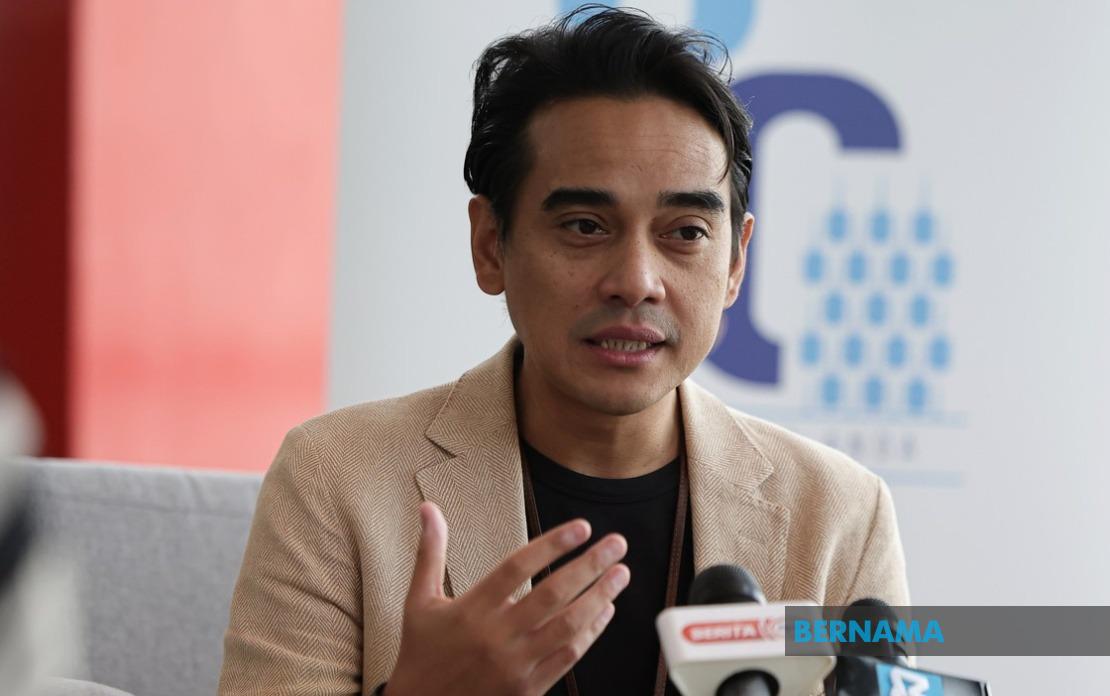
The rapid integration of artificial intelligence into newsrooms presents both opportunity and existential risk to journalists across Southeast Asia, according to Ashwad Ismail, Director-General of Broadcasting in Malaysia. Speaking during a recent appearance on Bernama TV's The Nation programme, Ashwad delivered a stark message: media professionals who fail to develop proficiency with AI tools will find themselves outpaced by colleagues who do. This assessment reflects growing anxiety within the journalism sector about technological disruption and the shifting skill sets required for career survival in an increasingly digital media environment.
Ashwad framed the challenge not as a battle between humans and machines, but as a competitive reality within the profession itself. Rather than warning of wholesale job losses to automation, he emphasised that individual journalists face displacement from more tech-savvy peers. The distinction is significant for Malaysian newsrooms grappling with resource constraints and uncertain futures. His message suggests that the question is not whether AI will reshape journalism—it already is—but rather who will adapt quickly enough to harness its capabilities for professional advancement.
Crucially, Ashwad rejected the narrative of AI as an existential threat to journalism. Instead, he positioned artificial intelligence as a complementary technology that augments rather than diminishes human journalistic capability. This perspective aligns with how forward-thinking newsrooms globally are experimenting with AI for research assistance, data analysis, initial draft generation, and story suggestion algorithms. The premise underlying Ashwad's argument is that quality journalism ultimately depends on distinctly human qualities: ethical judgment, contextual understanding, source relationship-building, and the ability to ask meaningful questions. AI can handle routine information processing and pattern detection, freeing journalists to focus on investigative depth, original reporting, and community connection.
The Malaysian broadcasting chief articulated this principle succinctly, noting that journalists will enhance their work by leveraging AI effectively. This framing addresses legitimate concerns within Malaysian media organisations about whether newsrooms have the resources, training, and strategic planning to implement AI responsibly. Many regional newsrooms operate with lean staffing and tight budgets, making the prospect of technological transformation daunting. Ashwad's endorsement of AI adoption implicitly calls on media management to invest in training and infrastructure to help their teams navigate this transition successfully.
Ashwad identified two interconnected anxieties that preoccupy him regarding the media industry's future. First is the broader challenge of technological adaptation—the resistance or inability of media practitioners to embrace new tools and workflows. Second is the tangible threat of job losses as organisations seek efficiency gains through automation. These concerns reflect real pressures facing Malaysian and Southeast Asian media, where advertising revenues have migrated to digital platforms, subscription models remain underdeveloped, and competition for audience attention intensifies. Without strategic planning and workforce development, technological transitions can indeed devastate employment.
The broadcasting director emphasised that AI integration in newsrooms cannot proceed in an ad-hoc manner. He called for clear, comprehensive guidelines to govern how media organisations deploy artificial intelligence tools responsibly. Such frameworks would serve multiple purposes: ensuring AI enhances rather than undermines editorial quality, protecting journalistic integrity and human oversight, and managing the transition in ways that support rather than devastate newsroom staff. The absence of such guidelines risks creating a chaotic landscape where some organisations race to automate aggressively while others lag behind, widening the competitive gap between well-resourced and underfunded outlets.
These guidelines would ideally address several practical and ethical dimensions. They should specify which newsroom functions are appropriate for AI augmentation—research, fact-checking, initial story analysis—and which require consistent human judgment, particularly in sensitive reporting areas. Guidelines should also establish transparency standards, determining when audiences should know that AI contributed to content creation. In the Malaysian context, where trust in media has been undermined by polarisation, misinformation, and perceived bias, responsible AI governance becomes essential to rebuilding credibility.
Beyond the question of artificial intelligence, Ashwad addressed the deeper challenge confronting Malaysian and regional journalism: the erosion of public trust. He identified a path toward restoration that emphasises return to journalistic fundamentals rather than technological solutions. Strengthening hyperlocal reporting—coverage that addresses the specific concerns of communities—and cultivating genuine engagement between newsrooms and their audiences form the core of his trust-rebuilding strategy. This approach resonates particularly in Malaysia, where diverse communities often feel disconnected from mainstream media narratives and where local issues frequently receive insufficient attention from national outlets.
The emphasis on human connection in an increasingly automated landscape carries profound implications. As newsrooms deploy AI tools, there is risk that coverage becomes algorithmically driven and distant from community concerns. Ashwad's call to invest simultaneously in localised reporting and audience engagement suggests that technological change and editorial strategy must move in tandem. The human touch he references encompasses not just the quality of writing or analysis, but the authentic relationship between journalists and the communities they serve—the accountability that comes from journalists who operate within and understand their local contexts.
Ashwad's comments arrive amid broader industry discussion about AI's role in journalism globally. Newsrooms from The New York Times to Reuters have begun integrating AI tools, while concerns about misinformation and algorithmic bias remain acute. Malaysia's media landscape, characterised by a mix of state-linked outlets, private commercial players, and increasingly, digital-native platforms, will experience varying degrees of AI adoption. Larger, well-capitalised organisations will likely move faster on technological integration, while smaller outlets may struggle to access training and tools.
The remarks also connect to the upcoming HAWANA 2026 conference, a significant gathering for Asian media practitioners. Prime Minister Datuk Seri Anwar Ibrahim will officiate the event at PICCA Convention Centre @ Arena Butterworth, Penang on June 20, with expected attendance exceeding 1,200 participants including ASEAN media delegates. This forum provides an opportunity for regional journalism leaders to develop shared understanding about AI governance, best practices, and strategies for maintaining editorial independence and quality amid technological disruption.
For Malaysian newsrooms specifically, Ashwad's message carries immediate practical implications. Media organisations must begin assessing which AI applications align with their editorial missions and resource capacities. They should invest in training so journalists understand both the capabilities and limitations of AI tools. Crucially, they must develop internal frameworks ensuring AI enhances rather than circumvents editorial judgment. The stakes extend beyond individual career prospects to the health of Malaysian journalism and its capacity to serve democratic and social functions during a period of significant technological and societal change.