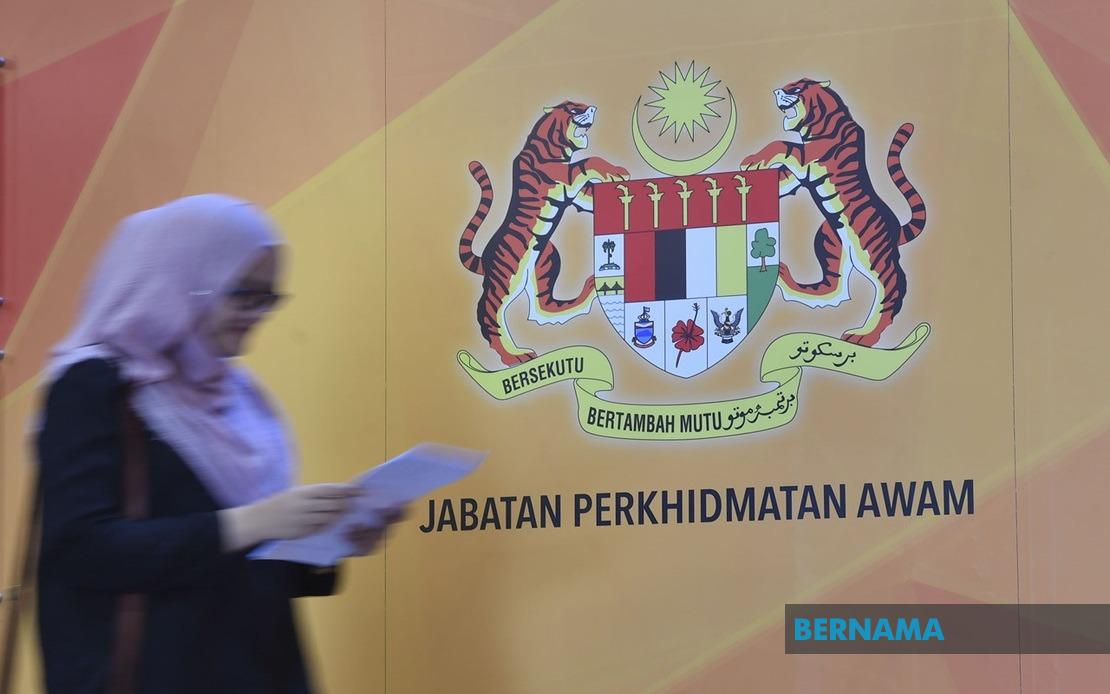
The Public Service Department (JPA) has announced a substantial intake of 640 sponsorship positions destined for the cohort of students graduating from secondary school examinations in 2026, reinforcing the government's strategic investment in cultivating skilled professionals who will form the backbone of Malaysia's civil service and broader economic ambitions.
This sponsorship initiative represents a deliberate policy response aligned with the MADANI Government's developmental agenda, which emphasises the cultivation of high-calibre human resources capable of sustaining Malaysia's economic trajectory and strengthening its standing on the international stage. The allocation reflects recognition that accessible quality education, particularly for academically gifted individuals from diverse socioeconomic backgrounds, serves as a cornerstone for institutional strength and national competitiveness.
The 640 positions are distributed across four distinct sponsorship pathways, each targeting different strategic objectives. The National Sponsorship Programme provides 30 slots, while the Special Programme for Japan, Korea, France and Germany accounts for 140 openings, enabling Malaysian students to access educational opportunities in critical markets that offer technological and research advantages. The Special Programme for Domestic SPM Graduates comprises 200 positions, allowing top-performing students to advance their studies within Malaysia's own higher education ecosystem. The final allocation of 270 slots falls under the JPA-MARA Special Programme (PKJM), a collaborative framework designed to combine institutional expertise.
Geographically, the sponsorships extend across both developed and strategically important regions. Students successfully selected through these schemes may pursue tertiary education at internationally recognised institutions in the United States, Australia, Japan, South Korea, France, Germany, the United Kingdom, and New Zealand, alongside premier domestic universities. This geographic diversification ensures that Malaysian scholars gain exposure to varied educational philosophies, research methodologies, and professional networks that extend beyond national borders, a consideration increasingly vital in globalised knowledge economies.
The fields targeted by these sponsorships centre on strategic national priorities. Engineering disciplines, science and technology programmes, and social sciences collectively form the sponsorship menu, reflecting government analysis of sectors where Malaysia faces either skills shortages or requires enhanced capacity. This focus on critical disciplines distinguishes the initiative from broader scholarship schemes and indicates deliberate workforce planning by the civil service machinery.
A significant innovation embedded within this sponsorship cycle involves the Academic Merit-Based Convertible Loan (PBUA) framework, introduced by JPA in June 2025. Under this mechanism, successful applicants receive funding structured as a convertible loan rather than an outright grant, creating a hybrid financing model that incentivises sustained academic performance. Recipients who maintain prescribed academic standards throughout their studies may see portions of their loan obligations converted to grants, effectively rewarding excellence while maintaining fiscal discipline. This approach represents an evolution in scholarship philosophy, balancing accessibility with accountability.
The application results window reveals the administrative efficiency JPA has implemented for this cycle. Candidates who submitted applications gained access to their outcomes through the department's designated online portal, with results becoming available from 10 am on the announcement date through 5 pm on 22 June. This concentrated window necessitates that applicants remain alert to official communication channels and avoid missing critical deadlines that could affect their advancement prospects.
For Malaysian secondary school graduates, this sponsorship announcement carries particular significance as it represents one of the primary pathways through which top-performing students transition from secondary education into tertiary study without bearing full financial burden. The distribution of 640 positions across a cohort of approximately 300,000-plus annual SPM candidates means the opportunities remain highly competitive, with selection typically determined by merit-based criteria encompassing examination performance, co-curricular achievements, and demonstrated potential.
The emphasis on both domestic and international placement options within this initiative acknowledges a reality of contemporary higher education: certain specialisms achieve greater depth and research intensity in particular jurisdictions. By maintaining both pathways, JPA ensures that student allocation responds to genuine pedagogical advantages rather than pursuing internationalisation as an end in itself. A Malaysian engineering student may find superior infrastructure and industrial partnerships in Germany, while a social sciences scholar might benefit from Malaysia's own contextual advantages and research focus.
From a Southeast Asian perspective, Malaysia's continued investment in sponsoring advanced study abroad carries implications for regional knowledge circulation and professional networks. Graduates trained in advanced economies frequently return with expertise and international connections that strengthen Malaysian institutions and corporations, creating knowledge transfer dynamics that benefit the broader regional economy. Simultaneously, the maintenance of domestic slots ensures that higher education capacity within Malaysia itself continues developing rather than being entirely subordinated to international options.
The JPA initiative also addresses an implicit equity question within Malaysian education: ensuring that financial constraints do not prevent talented students from disadvantaged backgrounds from accessing tertiary opportunities. While merit remains the determining criterion, the removal of financial barriers represents a practical acknowledgment that talent distribution across society does not correlate with wealth distribution, and that national competitiveness demands capturing capability regardless of family economic circumstances.
Successful applicants will now transition into preparation phases for their tertiary studies, whether locally or internationally. For those selected for overseas programmes, this typically involves visa procedures, pre-departure orientation, and coordination with host institutions. The staggered nature of the sponsorship programmes means that not all recipients commence studies simultaneously, with different cohorts potentially beginning their programmes across the 2026 calendar year depending on their destination institution's academic calendar.
Looking forward, the scale of this sponsorship commitment signals JPA's confidence in the pipeline of Malaysian talent emerging from secondary education and represents sustained institutional investment in the proposition that developing human capital through strategic sponsorship constitutes sound long-term policy. As Malaysian graduates return from international study or progress through domestic programmes, their accumulating expertise will progressively enhance the calibre of Malaysia's civil service and broader professional landscape, a delayed but substantial return on the investment represented by these 640 sponsorship positions.

