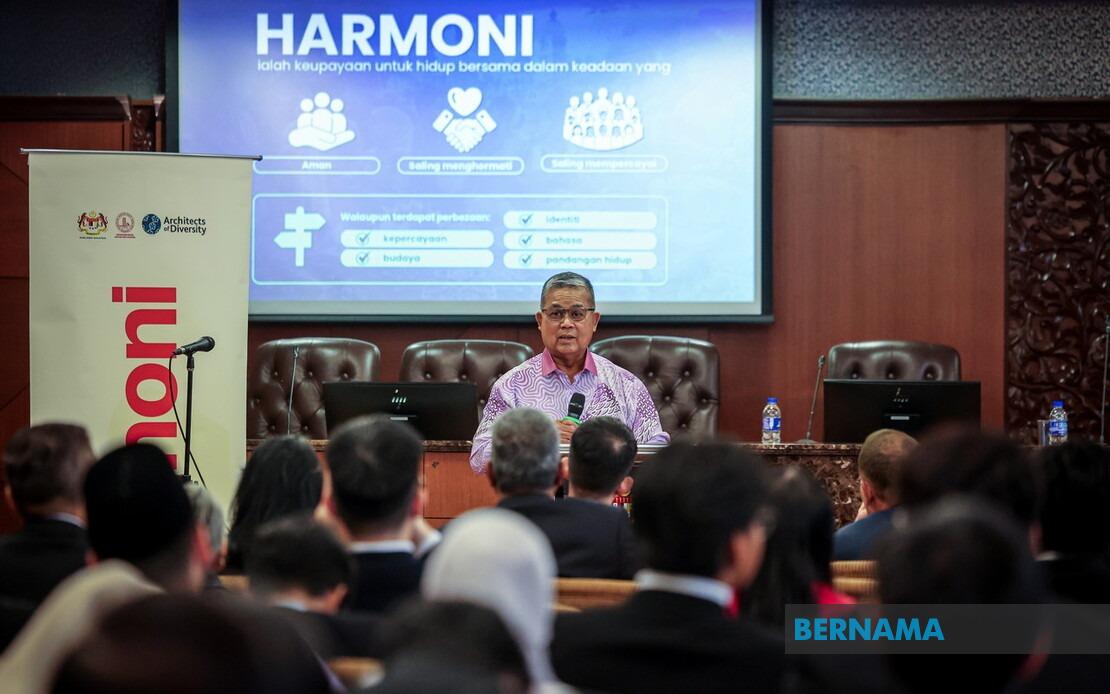
The Department of National Unity and National Integration has launched a comprehensive study to create a Community Tension Index designed to systematically measure the state of social cohesion across Malaysia and track emerging sensitivities surrounding race and religion. Minister of National Unity Datuk Aaron Ago Dagang outlined the initiative at the 2026 Harmony Symposium organised by the Secretariat of the Malaysian Parliamentary Cross-Party Group on Racial and Religious Harmony at Parliament Building in Kuala Lumpur, framing it as a crucial instrument for understanding the nation's social fabric during an increasingly complex period.
The index will serve as an intelligence tool for government policymakers, enabling them to identify trends, anticipate flashpoints, and design targeted interventions before tensions escalate into serious incidents. Rather than waiting for crises to emerge, the index aims to provide early warning signals that allow authorities to address underlying grievances and misunderstandings proactively. This preventive approach represents a shift toward data-driven governance in matters of national unity, moving beyond traditional ad-hoc responses to social friction.
Aaron highlighted the urgency of this development by noting that the nature of threats to national cohesion has fundamentally transformed. The Malaysian Communications and Multimedia Commission removed 1,493 pieces of online content related to religion, royalty and race between January 1 and January 31, 2026, demonstrating the scale of digital discourse violations that authorities now monitor. This enforcement action illustrates both the persistence of divisive content online and the sustained government effort to maintain boundaries around sensitive national issues in the digital realm.
The proliferation of such content reflects a broader structural problem inherent in how modern social media platforms operate. Aaron pointed out that algorithmic systems increasingly create what researchers term "filter bubbles" and "echo chambers"—digital environments where users encounter primarily viewpoints that align with their existing beliefs. These mechanisms systematically narrow exposure to diverse perspectives, reducing opportunities for genuine cross-community dialogue and deepening mutual incomprehension. The consequence is accelerated polarisation where citizens inhabit increasingly separate informational universes, making genuine national conversation more elusive.
For Malaysian readers, the implications are particularly acute given the nation's multicultural composition and historical sensitivity around communal relations. The digital architecture that amplifies divisive content can rapidly translate online sentiment into real-world tensions, as has occurred in other diverse democracies. The government's recognition that this dynamic requires systematic monitoring and intervention suggests a maturing understanding of how social media dynamics intersect with traditional community relations challenges.
Beyond the tension index, JPNIN is simultaneously pursuing a complementary institutional initiative. The department has conducted stakeholder engagement sessions to gather feedback on proposals for a National Harmony Commission, which would function as a dedicated body focused on prevention, mediation and conflict resolution. This commission would also have investigative capacity to examine matters that potentially threaten national harmony, creating a dedicated institutional home for managing communal relations rather than leaving such issues scattered across multiple agencies.
The proposed commission represents an acknowledgment that Malaysia's existing institutional framework may have gaps in addressing modern manifestations of communal tension. By consolidating prevention, early intervention and mediation functions under a single entity, the government hopes to develop expertise, ensure consistency in approach, and create a trusted forum where different communities can engage around sensitive matters. Such institutions exist in other divided societies and often serve valuable functions in defusing tensions before they become intractable.
The timing of these initiatives reflects broader regional and global trends. Southeast Asia has witnessed rising social polarisation across platforms, with Myanmar, Indonesia and Thailand all experiencing episodes where online discourse accelerated offline conflict. Malaysia's proactive approach to developing measurement tools and institutional mechanisms positions it as a potential regional leader in addressing the intersection of social media and communal harmony—an issue that will only grow more pressing as digital penetration deepens across the region.
For Malaysian citizens and organisations, these developments suggest that national unity policy is entering a new phase characterised by greater sophistication in understanding root causes of tension and more systematic attempts to monitor and address them. The Community Tension Index and National Harmony Commission, when operationalised, will likely affect how government agencies prioritise work, allocate resources and engage with communities. They may also create new expectations around accountability and transparency in how national unity challenges are identified and addressed.
The challenge ahead lies in implementation. Creating effective indices requires careful methodology to ensure they genuinely measure underlying social dynamics rather than reflecting the biases of those designing them. Similarly, the National Harmony Commission must navigate the delicate task of intervening in sensitive matters without appearing to favour particular communities or suppress legitimate discourse. Success will depend on inclusive design processes, genuine stakeholder buy-in and transparent operations that earn trust across Malaysia's diverse communities.

