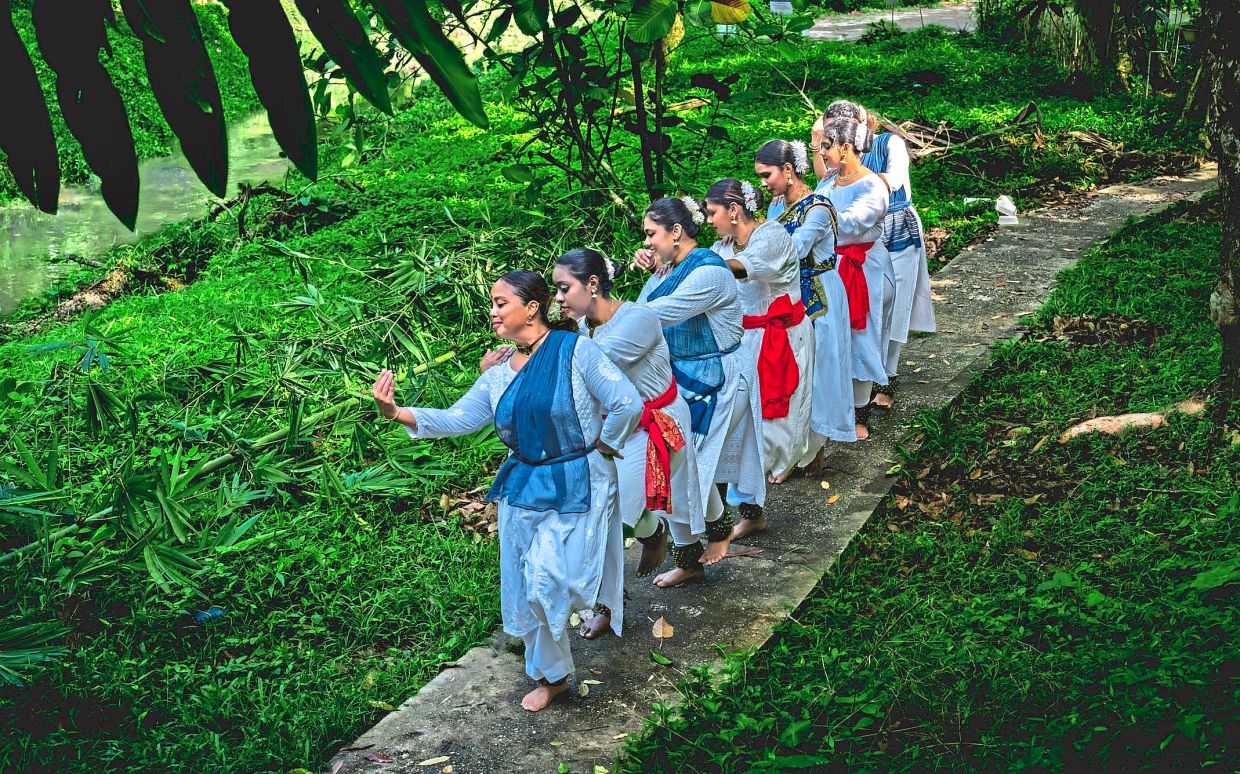
Kalpana Dance Theatre (KDT), the Kuala Lumpur-based classical dance institution, arrives at its 30th anniversary this year having navigated the volatile landscape of Malaysian arts funding and audience preferences with remarkable resilience. Founder-director Shangita Namasivayam is marking the milestone with an ambitious bharatanatyam concert at the Shantanand Auditorium, Temple of Fine Arts on August 8, one that extends far beyond traditional artistic parameters to engage her dancers in environmental stewardship alongside cultural transmission.
The survival of any independent arts organisation in Southeast Asia demands continuous adaptation and creative reinvention. For Shangita, this has meant balancing the preservation of bharatanatyam's classical vocabulary with contemporary relevance, ensuring each production speaks to audiences grappling with present-day challenges while honouring the dance form's spiritual and aesthetic foundations. This production represents that philosophy in tangible form: a celebration of heritage that simultaneously addresses urgent global concerns about water scarcity and pollution.
The concert's conceptual framework draws upon two revered rivers in India—the Ganga in the north and the Kaveri in the south—as vessels for exploring humanity's relationship with nature. The Ganga holds supreme spiritual significance across Hindu civilisation, its waters believed to purify and absolve, while the Kaveri, termed the Ganga of the South, sustains agricultural communities and irrigation systems across the Deccan plateau. Both waterways have inspired centuries of Indian classical and folk artistic traditions, their mythological narratives embedded within dance vocabulary passed down through generations. By centering her production on these rivers, Shangita leverages the emotive power of bharatanatyam to communicate environmental messages to her young dancers and audiences alike.
Shangita articulates the metaphorical richness these rivers embody: the Ganga represents compassion's shores where spiritual cleansing occurs, whilst the Kaveri symbolises prosperity's maternal abundance where life flourishes. Together, they transcend their literal form as water bodies to become philosophical statements about peace and interconnectedness. She recognised an opportunity to use this thematic richness to educate her dancers about contemporary water crises—the pollution, neglect and abuse that threaten these once-sacred rivers and their surrounding ecosystems. Rather than treating environmental consciousness as extraneous to dance training, she has woven it through her production's DNA.
To translate this vision into tangible community impact, KDT partnered with The Alliance of River Three (ART!), a volunteer-led environmental organisation founded in 2018 by Kennedy Michael dedicated to rehabilitating the Klang River through community-built parks and ecosystem restoration initiatives. ART! received recognition as a Golden Hearts Awards winner in 2020 for pioneering innovative urban river restoration models. Since January, KDT's dancers have participated in regular cleanup operations at Taman Melawati River Three SDG Park and Mid Valley River Three SDG Park, initiatives ART! aims to complete by 2030. For dancers accustomed to studio environments, this direct exposure to environmental degradation and community-led restoration work has proven transformative, confronting them with the material reality behind their artistic narratives.
The collaborative creative process behind the production reflects Shangita's long-standing relationships with distinguished artists from Chennai. Choreographer PT Narendran, musician OS Arun and scriptwriter Dr Va Ve Subramanian have collaborated with her for decades, bringing their respective expertise to develop a 90-minute presentation that achieves artistic sophistication whilst maintaining philosophical coherence. This extended artistic partnership enables the kind of creative depth impossible to achieve through transient collaborations, allowing each artist to build upon accumulated understanding and shared aesthetic sensibilities developed over multiple productions.
The cast comprises 54 performers ranging from six to 62 years old, deliberately including differently-abled dancers to foster inclusive artistic community. Significantly, the production features no soloists or highlighted performers—each dancer receives equivalent choreographic attention and performance opportunity. This structural choice embodies values of collective participation over individual virtuosity, suggesting that environmental responsibility and cultural continuity are collective endeavours rather than the province of elite performers. The bilingual script in Tamil and English, crafted by Subramanian, achieves poetic resonance whilst remaining philosophically grounded, designed to communicate across generational and linguistic boundaries.
The accompanying music ensemble comprises 30 artists, a substantial force that creates logistical challenges around bringing all collaborators to Malaysia. To address these constraints while maintaining artistic standards, Shangita has prioritised creating mentorship opportunities between international master musicians and young Malaysian performers. These interactions transmit not merely technical refinement but deeper appreciation for bharatanatyam's aesthetic richness and evolving possibilities. Young dancers gain exposure to distinctive pedagogical approaches and philosophical frameworks, developing into more intellectually engaged and culturally sophisticated artistes capable of understanding their craft as living tradition rather than frozen heritage.
Producing theatrical performances within Malaysia's underfunded arts ecosystem presents formidable challenges, yet Shangita views them as integral rather than peripheral to her mission. She resists the temptation to eliminate live performance from her curriculum, recognising that stage experience generates a qualitatively different engagement than studio training alone. Performing arts education, she insists, demands actual performance contexts to fully realise their transformative potential. Her commitment to staging shows despite financial constraints reflects conviction that young dancers deserve embodied experiences of moving before audiences, carrying forward heritage not as abstract knowledge but as lived, performed practice.
The August 8 performance represents culmination of these intersecting commitments: celebrating classical tradition, fostering environmental consciousness, facilitating international artistic exchange and providing young dancers with meaningful performance opportunities. For Malaysian audiences, the concert offers rare opportunity to witness bharatanatyam of professional calibre whilst engaging with meditation on water's cultural and ecological significance—particularly relevant in a region increasingly conscious of water security challenges. KDT's three-decade journey exemplifies how regional arts institutions, despite precarious funding and limited institutional support, can remain culturally vital whilst addressing contemporary concerns through their particular artistic vocabularies.

